

Maddy summaryThe New England Coastal Protection Act prohibits the federal government from issuing new leases for oil and gas exploration, development, or production in the Outer Continental Shelf off the coasts of Maine, New Hampshire, Massachusetts, Rhode Island, and Connecticut. This bill directly affects energy companies seeking offshore drilling permits and the federal government, which would no longer be allowed to grant such leases. The key mechanism amends the Outer Continental Shelf Lands Act to add a specific prohibition banning all new oil and gas leasing in the designated coastal states. The bill would prevent future oil and gas development in these waters but does not impact existing leases or operations.
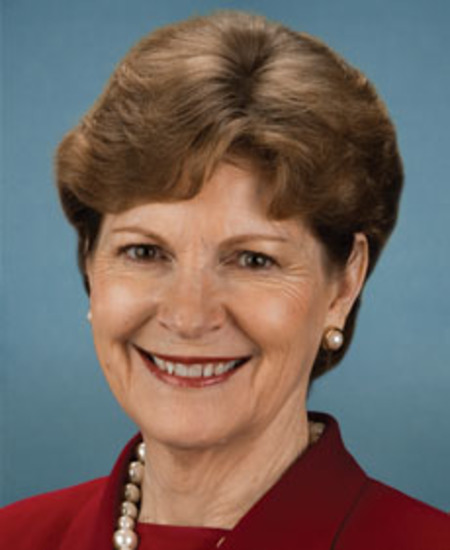
Sen. Jeanne Shaheen
Sponsored bills
Maddy summaryThe COAST Anti-Drilling Act of 2025 prohibits new oil and gas leasing in four specific coastal planning areas of the outer Continental Shelf: the North Atlantic, Mid-Atlantic, South Atlantic, and Straits of Florida. It amends the Outer Continental Shelf Lands Act to require the Secretary not to issue any leases or authorizations for exploration or production in these areas. The bill directly affects oil and gas companies seeking to develop resources in these coastal regions by blocking new federal leasing activities. This policy change prevents future drilling permits in these designated zones, as defined in the 2023 Bureau of Ocean Energy Management leasing program.
Maddy summaryThis bill prohibits federal agencies from awarding contracts, grants, or related payments to companies where any owner holding 5% or more of the company's equity was a "special government employee" (a current or recent federal employee in a specific role) on or after January 1, 2025. It directly affects companies with significant ownership ties to federal employees, requiring such owners to cease their government employment before any federal payment can be made. The law uses existing SEC definitions for "beneficial owner" (5%+ equity stake) and "special government employee" (per 18 U.S.C. §202(a)). The prohibition applies to all federal payments related to contracts, grants, or cooperative agreements made after the effective date.
Maddy summaryThe GOSAFE Act prohibits the import, sale, manufacture, transfer, or possession of gas-operated semi-automatic firearms and large capacity ammunition feeding devices (those holding more than 10 rounds). It defines gas-operated firearms as those using gas pressure to cycle the action and requires the Attorney General to publish a list of prohibited firearms within 180 days. The bill includes exemptions for single-shot weapons, muzzle-loaders, firearms with permanently fixed magazines under 10 rounds, and certain other specific types. Manufacturers must now seek approval for new semi-automatic firearms through a process requiring detailed documentation, and the bill establishes a Firearm Safety Trust Fund to cover administrative costs. Violations of these provisions can result in fines up to $5,000 or up to 12 months in prison.
Maddy summaryThe BUMP Act (S 1374) bans devices that increase the firing rate of semiautomatic firearms to mimic machineguns, directly affecting owners of modified firearms. It prohibits importing, selling, or possessing devices (like "bump stocks") that speed up firing or eliminate the need for separate trigger pulls, and requires registration of existing modified semiautomatics within 120 days. The law exempts government agencies and pre-enactment modifications that are registered. This targets specific firearm modifications, not all semiautomatic weapons.
Maddy summaryThis bill, the Tax Cut for Workers Act of 2025, expands the Earned Income Credit (EIC) to make it more accessible and generous for low-income workers without children. It lowers the minimum age for the credit from 25 to 19 (with exceptions for students, former foster youth, and homeless youth), removes the maximum age limit, and increases the credit amount and income thresholds. The bill also adjusts these amounts for inflation and allows taxpayers to use their prior year’s earned income if it was higher, applying to taxable years starting after 2025. These changes extend the credit to U.S. territories like Puerto Rico and American Samoa without prior time limits.
Maddy summaryThe REPAIR Act requires motor vehicle manufacturers to provide consumers and repair facilities with access to vehicle data, repair information, tools, and parts necessary for maintenance and repairs. It prohibits manufacturers from using technological or contractual barriers that restrict consumers' ability to choose repair facilities or use alternative parts, including aftermarket, recycled, or remanufactured components. The law mandates that manufacturers make critical repair information available to repair shops and alternative parts manufacturers at fair, reasonable costs, and ensures owners can access vehicle data without restrictions. The Federal Trade Commission will enforce these requirements, with penalties for violations, and an advisory committee will monitor implementation and identify barriers to competition. This legislation directly affects car owners, independent repair shops, parts manufacturers, and vehicle manufacturers by promoting competition and consumer choice in vehicle repair.
Maddy summaryThe American Family Act creates a new monthly child tax credit that would provide $300 per month for each child under age 6 and $300 per month for each child age 6 and older, with income-based eligibility limits. The credit would be refundable, meaning it could be paid even if a family owes no income tax, and would replace the current annual child tax credit. The bill establishes income thresholds ($150,000 for joint filers) above which the credit begins to phase out, with full phase-out at $400,000 for joint filers. It also includes provisions for "presumptive eligibility" to allow for advance payments based on previous tax returns or government program data. The bill would terminate the existing annual child tax credit after 2024, replacing it with this monthly payment system.
Maddy summaryS.1329, the PEER Support Act, establishes formal standards for peer support specialists in mental health and substance use recovery. It defines the profession (requiring lived experience and certification), mandates the federal government to create a new occupational category for these specialists by 2026, and creates an Office of Recovery within SAMHSA to support workforce development and best practices. The bill also requires a federal report analyzing state criminal background check policies for peer specialists and recommending ways to reduce barriers to certification. This legislation directly affects peer support specialists, state certification agencies, and federal agencies like SAMHSA, aiming to professionalize the field and improve access to recovery support services.
Maddy summaryThe BRAIN Act creates new research initiatives to improve brain tumor treatment and care. It establishes a searchable database of NIH-funded brain tumor biospecimens, funds a Glioblastoma Therapeutics Network with $50 million annually, and supports cellular immunotherapy research with $10 million annually. The bill also mandates a national awareness campaign about clinical trials and biomarker testing, and funds pilot programs to improve care coordination for brain tumor survivors. These provisions directly affect over 1 million Americans living with brain tumors and aim to improve research coordination, treatment options, and quality of life through concrete funding and policy changes.