Small Business Cyber Training Act of 2022 This bill requires the Small Business Administration to establish a program for certifying at least 5 or 10% of the total number of employees of a small business development center to provide cybersecurity planning assistance to small businesses.
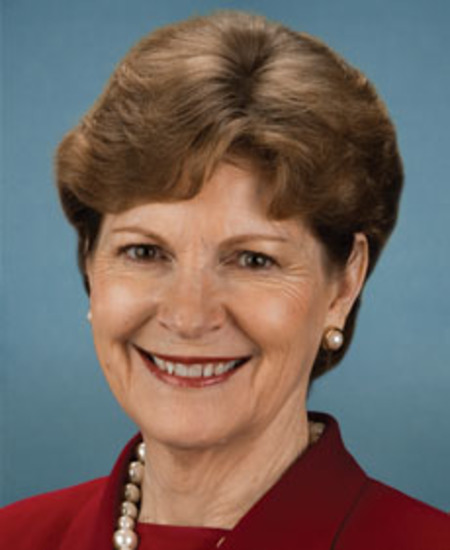
Sen. Jeanne Shaheen
Sponsored bills
Supply Chain Disruptions Relief Act This bill modifies the treatment of liquidations of new motor vehicle inventory as qualified LIFO (last in first out accounting method) inventory. It allows new motor vehicle dealers to elect to wait until the end of 2025 to replace their inventory for purposes of determining income attributable to the sale of such inventory during 2020 and 2021.
Pro bono Work to Empower and Represent Act of 2021 or the POWER 2.0 Act This act makes permanent the requirement for the chief judge of each federal judicial district to lead, at least annually, a public event to promote pro bono legal services for survivors of domestic violence, dating violence, sexual assault, and stalking. The requirement was enacted in 2018; it is scheduled to sunset after a four-year period.
Disaster Assistance for Rural Communities Act This bill authorizes the Small Business Administration (SBA) to declare a disaster in rural areas where significant damage has been incurred for the purpose of providing certain assistance. A rural area is a county or political subdivision designated as such by the Census Bureau. Significant damage means uninsured losses of not less than 40% of the fair replacement value or pre-disaster fair market value of the damaged property (whichever is less). For a rural area where the President has declared a major disaster, the SBA may declare a disaster for the purpose of providing economic injury disaster loans if (1) the state or tribal government wherein the rural area is located requests the declaration; and (2) any home, small business, private nonprofit organization, or small agricultural cooperative has incurred significant damage. The Government Accountability Office must report on (1) any unique challenges to communities in rural areas compared to communities in urbanized areas when seeking economic injury disaster assistance, and (2) any legislative recommendations for improving access to disaster assistance for communities in rural areas.
Protecting Firefighters from Adverse Substances Act or the PFAS Act This act requires the Department of Homeland Security (DHS) to develop guidance for firefighters and other emergency response personnel on training, education programs, and best practices to protect them from exposure to perfluoroalkyl and polyfluoroalkyl substances, commonly referred to as PFASs, from firefighting foam and to prevent the release of PFASs into the environment. These substances are man-made and may have adverse human health effects. A variety of products contain the compounds, such as nonstick cookware or weatherproof clothing. DHS shall make available a curriculum designed to reduce and eliminate exposure to PFAS from firefighting foam and personal protective equipment (PPE); prevent the release of PFAS from firefighting foam into the environment; and educate firefighters and other emergency response personnel on foams and non-foam alternatives, PPE, and other firefighting tools and equipment that do not contain PFAS. The U.S. Fire Administration shall make recommendations to DHS as to the content of the curriculum. DHS must create an online public repository on tools and best practices to reduce, limit, and prevent the release of and exposure to PFASs.

Cooper Davis Act This bill establishes requirements for electronic communication service providers and remote computing service providers to report knowledge of various drug-related offenses (e.g., unlawful distribution of a controlled substance or a counterfeit substance) to the Drug Enforcement Administration.
Safeguarding American Innovation Act This bill addresses the security of federally funded research and development grants and export-controlled goods, technologies, or sensitive information. The bill establishes in the Office of Management and Budget a Federal Research Security Council to develop federally funded research and development grant making policy and management guidance to protect the national and economic security interests of the United States. Each executive agency on the council shall be responsible for assessing federal research security risks posed by persons participating in federally funded research and development. The bill prohibits any individual from knowingly (1) preparing or submitting a federal grant application that fails to disclose the receipt of any outside compensation, including foreign compensation, by the individual; or (2) forging, counterfeiting, or otherwise falsifying a document to obtain a federal grant. An alien shall be inadmissible to the United States if a consulate or the Department of Justice knows the alien seeks to enter the United States to acquire export-controlled goods, technologies, or sensitive information if the Department of State has determined that such acquisition would be contrary to U.S. national security (including economic security). The bill revises provisions relating to the disclosure of foreign gifts.
Access for Veterans to Records Act of 2022 This bill directs the Office of the Archivist of the United States to submit to Congress a comprehensive plan for eliminating the backlog of requests for records from, and improving the efficiency and responsiveness of operations at, the National Personnel Records Center. Such plan must include the number and percentage of unresolved veteran record requests that have been pending for more than 20 days, 90 days, and one year; target time frames to eliminate the backlog; a detailed plan for using existing funds to improve technology infrastructure, including secure access to appropriate agency federal records, to prevent future backlogs; actions to improve customer service for requesters; measurable goals with respect to the comprehensive plan and metrics for tracking progress toward such goals; and strategies to prevent future record request backlogs, including backlogs caused by an event that prevents employees of the center from reporting to work in person. The office must submit updates of such plan at specified intervals.
Simplifying Access to Student Loan Information Act of 2022 This bill expands the National Student Loan Data System (NSLDS) to include information about private education loans. Specifically, the bill requires private educational lenders to submit to the NSLDS information regarding private education loans made to borrowers, including the outstanding balances and interest rates of such loans. Currently, only federal student loan information is available in the NSLDS. The bill requires the Department of Education to ensure that a cosigner of a private education loan for which information is included in the NSLDS has access only to that information in a separate account, ensure that a private educational lender has access to the NSLDS only to submit information regarding the lender's loans, and establish a functionality within the NSLDS that enables a student borrower of federal student loans to input the information necessary to compare repayment plans.
This bill establishes energy efficiency standards for consumer room air cleaners under the Energy Policy and Conservation Act (EPCA). The bill defines consumer room air cleaners as cleaners that (1) are portable or wall-mounted (fixed) units; (2) plug into an electrical outlet; (3) operate with a fan for air circulation; and (4) contain a means to remove, destroy, or deactivate particulates. The bill enumerates energy efficiency standards for air cleaners manufactured on December 31, 2023–December 30, 2025, as well as air cleaners manufactured on or after December 31, 2025. It also prescribes procedures to test the energy efficiency of air cleaners. Energy efficiency labeling requirements apply to air cleaners beginning on December 31, 2023.