

Maddy summaryThe Better Care Better Jobs Act (S 100) aims to improve access to home and community-based services (HCBS) for Medicaid beneficiaries by providing federal funding to states for developing improvement plans and implementing an HCBS Infrastructure Improvement Program. The bill offers enhanced federal funding (a 10 percentage point increase in Medicaid matching rates) to states that meet requirements including maintaining or expanding HCBS access, improving direct care worker wages and training, and implementing quality measurement systems. States must develop detailed plans assessing current HCBS availability, workforce conditions, and barriers to access, and then report annually on progress toward specific benchmarks. The bill also makes permanent certain Medicaid provisions related to spousal impoverishment protection and extends the Money Follows the Person program, directly affecting Medicaid beneficiaries and direct care workers.
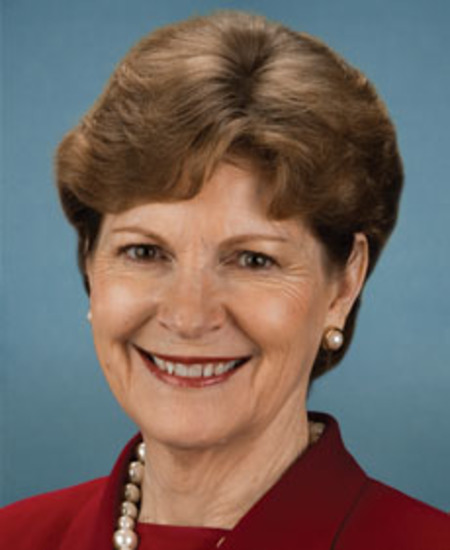
Sen. Jeanne Shaheen
Sponsored bills
Maddy summaryThe STEP Improvement Act of 2023 updates the Small Business Administration's State Trade Expansion Program (STEP), which provides grants to states to help small businesses expand exports. It requires the SBA to publish clear application guidelines by March 31 each year, set fixed deadlines for submissions (June 1-May 31), and explain award amounts to applicants. The bill also mandates annual surveys of grantee states to collect feedback, detailed annual reports with disaggregated data on business outcomes (e.g., by women-owned or rural businesses), and streamlined processes for budget revisions. These changes aim to increase transparency, improve program effectiveness, and extend funding authorization through 2028.
Maddy summaryThis bill would admit Washington, D.C. as the 51st state, officially named "State of Washington, Douglass Commonwealth," granting it full representation in Congress with two Senators and one Representative. It would establish a "Capital" area within the new state that remains under federal jurisdiction, including the White House, Capitol Building, and other key government properties. The bill would repeal the District of Columbia's congressional delegate position and the 23rd Amendment, which currently provides D.C. with electoral votes in presidential elections. It would also provide for the transition of federal properties, courts, and government functions while maintaining federal control over the Capital area.
Maddy summaryThis bill increases the tax credit limit for homeowners installing qualifying biomass stoves and boilers. It raises the maximum credit to $2,000 for certain stoves/boilers and $8,000 for others under the energy efficient home improvement tax credit. The change directly affects homeowners who purchase and install eligible biomass heating systems after December 31, 2022. The policy amendment modifies the Internal Revenue Code to expand the financial incentive for these energy-efficient home upgrades.
Maddy summaryThis bill expands health insurance subsidies under the Affordable Care Act for people with household incomes up to 800% of the federal poverty line (up from 400%), directly affecting millions of middle-income Americans purchasing coverage through health insurance marketplaces. Key provisions adjust the sliding-scale subsidy system to lower premium percentages across income tiers - like reducing the maximum payment from 8.5% to 6% for incomes between 300%-400% of poverty - and increase cost-sharing reductions for lower-income enrollees. It also modifies eligibility thresholds, raising the income limit for the highest savings tier from 150% to 200% of poverty and increasing the percentage of out-of-pocket costs covered. These changes aim to make premiums and deductibles more affordable by expanding subsidy eligibility and refining how payments are calculated.
Maddy summaryS 24 establishes a federal grant program to address homelessness by funding housing and supportive services through two grant types: 5-year implementation grants (up to $25 million each) for direct services like housing and mental health care, and 1-year planning grants (up to $100,000 each) for community planning. Eligible applicants include local governments, tribes, and tribal organizations that must provide services for homeless individuals, families, and children - including mental health support, job training, and child-focused care - and report annually on outcomes like housing stability and school enrollment. The program is authorized to spend $1 billion annually from 2023-2028, with at least 5% of funds reserved for tribal entities. It requires grantees to meet specific service standards, such as trauma-informed care and case management ratios (1:20), and to coordinate with local agencies to identify at-risk populations.
Maddy summaryThis bill would ban the sale, manufacture, transfer, and possession of most semiautomatic rifles, pistols, and shotguns meeting specific criteria defined as "assault weapons," as well as large capacity ammunition magazines holding more than 10 rounds. The ban would not apply to weapons already owned before enactment, or to certain types like bolt-action rifles, antique firearms, or weapons used by law enforcement. The bill would require identification markings on new assault weapons and magazines, require background checks for transfers of "grandfathered" weapons, and authorize federal buy-back programs for banned weapons through Byrne grants. It includes exemptions for military, law enforcement, and certain historical firearms.
Justice for Victims of War Crimes Act This act broadens the scope of individuals who are subject to federal prosecution for war crime offenses. Currently, the federal war crimes statute provides federal jurisdiction over war crime offenses committed anywhere (i.e., inside or outside the United States) if the victim or offender is a member of the Armed Forces or a U.S. national. First, this act extends federal jurisdiction over war crime offenses committed anywhere to offenses where (1) the victim or offender is an alien lawfully admitted for permanent residence; or (2) the offender is present in the United States, regardless of the nationality of the victim or the offender. Second, the act expands federal jurisdiction over war crime offenses to include offenses that occur in whole or in part within the United States, regardless of whether the victim or offender is a member of the Armed Forces, a U.S. national, or an alien lawfully admitted for permanent residence. The act allows an indictment for certain war crime offenses to be instituted any time, making the statute of limitations inapplicable. To undertake a prosecution for war crime offenses, the act requires written certification that prosecution is in the public interest and is necessary to secure substantial justice. The certification is not subject to judicial review.
Emmett Till and Mamie Till-Mobley Congressional Gold Medal Act of 2021 This act provides for the posthumous presentation of a Congressional Gold Medal in commemoration of Emmett Till and Mamie Till-Mobley. After it is awarded, the medal shall be given to the National Museum of African American History and Culture.
Iran Hostages Congressional Gold Medal Act This bill provides for the award of a Congressional Gold Medal to the 53 hostages of the Iran Hostage Crisis (November 4, 1979-January 21, 1981) in recognition of their bravery and endurance throughout their captivity.