

Maddy summaryS 2423, the Streamlining Rural Housing Act of 2025, aims to simplify the approval process for rural housing projects funded by the Department of Housing and Urban Development (HUD) or the Department of Agriculture (USDA). It requires HUD and USDA to create a shared process within 180 days to streamline environmental reviews, designate a lead agency for projects, and establish an advisory group with housing stakeholders (including nonprofits, developers, residents, and public housing agencies). The bill mandates a report within one year with recommendations to speed up project approvals while maintaining safety, resident costs, and environmental standards. This directly affects rural housing developers, public housing agencies, and residents of HUD/USDA-funded housing projects by reducing bureaucratic delays in construction.
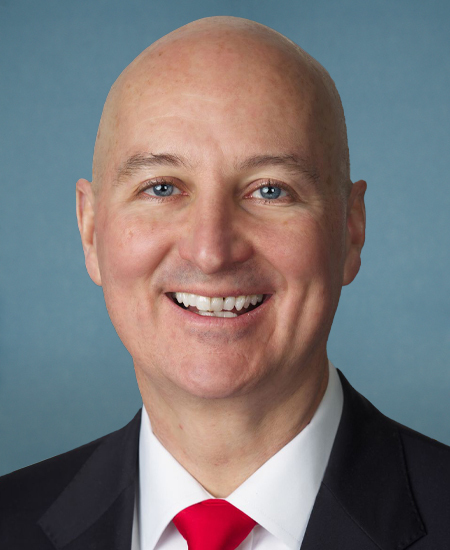
Sen. Pete Ricketts
Sponsored bills
Maddy summaryS 2380, the Quad Economic Security Act, establishes a framework for the U.S. to negotiate an Economic Security Working Group with Australia, India, and Japan (the Quad countries). The Working Group would coordinate on securing critical supply chains, safeguarding infrastructure, countering economic coercion, and responding to supply chain crises through crisis simulations and emergency communication. The bill requires the Secretary of State to submit annual reports to Congress on negotiation progress and identify critical supply chains and regional partners in the Indo-Pacific. It does not authorize new funding, directing implementation using existing appropriations. This procedural bill directly affects U.S. foreign economic coordination with the Quad partners.
Maddy summaryS 2362, the Ending Lending to China Act of 2025, directs the U.S. Treasury to instruct American representatives at multilateral development banks (like the World Bank and Asian Development Bank) to oppose all new loans and financial assistance to China. It targets China specifically because the bill states China has "graduated" from needing such aid (exceeding the income threshold for borrowing since 2016). The bill requires the Treasury to submit annual reports to Congress on China’s borrowing status, voting power at these banks, and efforts to encourage other countries to graduate from borrowing eligibility. This legislation changes U.S. voting policy at these institutions but does not alter China’s actual eligibility or stop existing loans.
Maddy summaryThis bill protects U.S. businesses and citizens whose property (specifically ports, harbors, or marine terminals) in Western Hemisphere countries with U.S. free trade agreements has been taken without compensation by foreign governments. It requires the Secretary of Homeland Security to identify and publicly list these "prohibited properties" within 60 days of the bill's enactment. The law then prohibits vessels using these listed ports from importing goods into the U.S., docking passenger vessels, or conducting maintenance in U.S. ports. It directly affects U.S. property owners in those countries and foreign governments that have seized such assets.
Guiding and Establishing National Innovation for U.S. Stablecoins Act or the GENIUS Act This act establishes a regulatory framework for payment stablecoins (digital assets which an issuer must redeem for a fixed value). Under the act, only permitted issuers may issue a payment stablecoin for use by U.S. persons, subject to certain exceptions and safe harbors. Permitted issuers must be a subsidiary of an insured depository institution, a federal-qualified nonbank payment stablecoin issuer, or a state-qualified payment stablecoin issuer. Permitted issuers must be regulated by the appropriate federal or state regulator. Permitted issuers may choose federal or state regulation; however, state regulation is limited to those with a stablecoin issuance of $10 billion or less. Permitted issuers must maintain reserves backing the stablecoin on a one-to-one basis using U.S. currency or other similarly liquid assets, as specified. Permitted issuers must also publicly disclose their redemption policy and publish monthly the details of their reserves. The act specifies requirements for (1) reusing reserves; (2) providing safekeeping services for stablecoins; and (3) supervisory, examination, and enforcement authority over federal-qualified issuers. The act allows foreign issuers of stablecoins to offer, sell, or make available in the United States stablecoins using digital asset service providers, subject to requirements, including a determination by the Department of Treasury that they are subject to comparable foreign regulations. Under the act, permitted payment stablecoins are not considered securities or commodities under law. However, permitted issuers are subject to the Bank Secrecy Act for anti-money laundering and related purposes. (Sec. 3) This section establishes that only payment stablecoin issuers permitted under this act are allowed to issue a payment stablecoin in the United States. Knowing violations of this requirement shall be subject to a fine of up to $1 million for each violation, up to 5 years imprisonment, or both. Treasury may issue regulations establishing limited safe harbors from this requirement that are consistent with the act's purposes, limited in scope, and apply to a de minimus volume of transactions. Three years after the date of enactment, digital asset service providers are prohibited from offering or selling stablecoins that are not issued by permitted issuers. Providers are also prohibited from offering, selling, or otherwise making available in the United States a foreign-issued payment stablecoin, unless it complies with requirements provided in section 18 of the act. (Sec. 4) This section establishes requirements for permitted issuers. Issuers must maintain reserves on a one-to-one basis. Reserves must be comprised of U.S. coins and currency; demand deposits or shares at an insured depository institution; certain Treasury acts, notes, or bonds; money received under certain repurchase agreements or reverse repurchase agreements; certain investment company securities and money market funds invested in certain approved assets on this list; similarly liquid federal assets approved by regulators; or certain listed reserves in tokenized forms. Issuers must comply with redemption requirements, such as establishing timely redemption procedures and disclosing such procedures and associated fees. Issuers must also report on the monthly composition of the issuer's reserves. These reports must be examined by a registered public accounting firm and certified by the chief executive officer and chief financial officer of the issuer. The section prohibits the rehypothecation, or reuse, of reserves with limited exceptions. Primary federal payment stablecoin regulators (federal regulators) and state payment stablecoin regulators (state regulators), where applicable, must issue regulations to implement capital requirements, liquidity reserve standards, reserve asset diversification standards, and risk management standards. Issuers are subject to the anti-money laundering and counterterrorism requirements that are applicable to financial institutions. The section sets forth requirements regarding activities of a permitted issuer, including by prohibiting issuers from providing services on the condition that a customer obtains an additional paid product or service from the issuer or a subsidiary. Large issuers (those with more than $50 billion in consolidated total outstanding issuance) must publish an audited annual financial statement in accordance with generally accepted accounting principles. The section prohibits a public nonfinancial services company from issuing payment stablecoins unless the company obtains unanimous approval from the Stablecoin Certification Review Committee. A state qualified payment stablecoin issuer with a consolidated total outstanding issuance of not more than $10 billion may opt for state regulation if such regulation is substantially similar to the federal regulatory framework under this act. If the issuance exceeds that amount, the issuer must transition to federal regulation, receive a waiver from the federal regulator to remain under state regulation, or stop issuing stablecoins until the issuance is under the threshold. (Sec. 5) This section establishes requirements for stablecoins issued by subsidiaries of insured depository institutions and certain entities chartered by the Office of the Comptroller of the Currency (OCC) to issue payment stablecoins. Federal regulators must establish an application process and a supervision framework for such entities. The section sets forth requirements for the review of applications, explanations for denials, and an appeals process. (Sec. 6) This section sets forth supervision, examination, and enforcement requirements for payment stablecoin issuers under federal supervision. The provisions include reporting on financial conditions, risk management, compliance with the act, and compliance with sanctions and anti-money laundering requirements. The section specifies that payment stablecoin issuers with less than $10 billion in consolidated total outstanding issuance are subject to federal supervision if they are not state qualified payment stablecoin issuers. The section establishes civil penalties for violations of this act that are committed by those subject to federal supervision. (Sec. 7) This section establishes state regulatory authority over issuers that qualify for and elect state regulation. The Federal Reserve Board may exercise enforcement authority over state issuers in unusual and exigent circumstances. The OCC must exercise enforcement authority over nonbank state issuers in these circumstances. (Sec. 8) This section requires foreign issuers to comply with the terms of lawful orders to be allowed to offer, sell, or make available for trading a payment stablecoin in the United States. The section sets forth enforcement and appeal provisions. Treasury may waive the prohibition against the secondary trading of foreign payment stablecoins in the United States from noncompliant foreign issuers on a case-by-case basis if certain criteria are met. (Sec. 9) Treasury must seek public comment regarding methods, techniques, or strategies for financial institutions to detect illicit activities involving digital assets and perform research and risk assessments on such methods, techniques, or strategies. Treasury must report their legislative recommendations to Congress and the Financial Crimes Enforcement Network must issue rules based on the results. (Sec. 10) This section establishes requirements for custodial or safekeeping services for payment stablecoin reserves, collateral, and the private keys used to issue stablecoins. Among other requirements, such property must be separately accounted for and not comingled with other assets of the custodian. (Sec. 11) This section addresses the treatment of payment stablecoins and stablecoin issuers in bankruptcy and insolvency proceedings, including their claim priority, conditions for an automatic stay, and the treatment of reserves as property of the estate. Federal regulators must also report on topics regarding potential insolvency proceedings of issuers. (Sec. 12) Federal regulators may, if determined necessary after an assessment, prescribe technical standards for issuers to promote compatibility and interoperability with other issuers and the broader digital finance system. (Sec. 13) This section requires regulators to issue regulations to carry out the act, with federal and state regulators and Treasury coordinating as appropriate. (Sec. 14) This section requires Treasury to study and report on nonpayment stablecoins, including endogenously collateralized payment stablecoins (a digital asset the originator of which has represented will be converted, redeemed, or repurchased for a fixed amount of monetary value and that relies solely on the value of another digital asset created or maintained by the same originator to maintain the fixed price). (Sec. 15) This section requires federal regulators to annually report on payment stablecoin activity trends, the number of payment stablecoin issuer applicants, and the potential financial stability risks to the safety and soundness of the broader financial system posed by payment stablecoin activities. (Sec. 16) This section defines authorities related to the act, such as by providing that the act does not limit the authority of a depository institution, credit union, national bank, or trust company to issue digital assets to represent deposits or shares. Federal financial regulators may not require a financial institution to include certain digital assets held in its custody as a liability on financial statements or balance sheets. (Sec. 17) This section establishes that payment stablecoins issued by permitted issuers are not securities or commodities under federal law. (Sec. 18) This section provides an exception to the act's prohibition on foreign-issued payment stablecoins. For the exception to apply, foreign issuers must be subject to regulation and supervision by a foreign country that is comparable to the requirements under this act, as determined by Treasury. The foreign issuer must also be registered with the OCC, hold sufficient reserves in a U.S. financial institution (subject to exceptions), and the country where the issuer is domiciled must not be subject to U.S. sanctions. The section sets forth requirements for Treasury's determination as to whether a foreign country has comparable regulatory and supervisory requirements, including the process of requesting a determination, the deadline for Treasury to render a decision, and the process by which Treasury may rescind a previous determination. The section also sets forth OCC registration requirements. Treasury may implement reciprocal or bilateral agreements between the United States and jurisdictions with comparable regulatory requirements. (Sec. 19) This section requires certain federal employees to disclose holdings over $5,000 of permitted payment stablecoins as part of required financial disclosures. (Sec. 20) The act takes effect on the earlier of (1) 18 months after the date of enactment, or (2) 120 days after federal regulators issue final regulations implementing the act.
Maddy summaryThis bill requires certain U.S. tax-exempt nonprofits receiving funding from governments or entities of specific "foreign countries of concern" (including China, Russia, Iran, Cuba, Venezuela, and North Korea) to register as foreign agents under the Foreign Agents Registration Act. It mandates detailed reporting about foreign-funded activities, including copies of agreements or full statements of activities, and prohibits exemptions that normally apply to lobbying or humanitarian fundraising groups. The law directly affects nonprofits organized under Section 501(c) of the Internal Revenue Code that accept money or resources from these designated foreign governments or entities. Key provisions include defining "foreign country of concern" and specifying the exact information nonprofits must disclose to the government. The bill takes effect 30 days after enactment.
Halt All Lethal Trafficking of Fentanyl Act or the HALT Fentanyl Act This act permanently places fentanyl-related substances as a class into schedule I of the Controlled Substances Act. A schedule I controlled substance is a drug, substance, or chemical that has a high potential for abuse; has no currently accepted medical value; and is subject to regulatory controls and administrative, civil, and criminal penalties under the Controlled Substances Act. Under the act, offenses involving fentanyl-related substances are triggered by the same quantity thresholds and subject to the same penalties as offenses involving fentanyl analogues (e.g., offenses involving 100 grams or more trigger a 10-year mandatory minimum prison term). Additionally, the act establishes a new, alternative registration process for certain schedule I research. The act also makes several other changes to registration requirements for conducting research with controlled substances, including permitting a single registration for related research sites in certain circumstances, waiving the requirement for a new inspection in certain situations, and allowing a registered researcher to perform certain manufacturing activities with small quantities of a substance without obtaining a manufacturing registration. Finally, the act expresses the sense that Congress agrees with the interpretation of the Controlled Substances Act in United States v. McCray , a 2018 case decided by the U.S. District Court for the Western District of New York. In that case, the court held that butyryl fentanyl, a controlled substance, can be considered an analogue of fentanyl even though, under the Controlled Substances Act, the term controlled substance analogue specifically excludes a controlled substance.
Maddy summaryThis bill requires the EPA to adjust emissions calculations so that flexible fuel vehicles (FFVs) using E85 ethanol count as having 31% lower carbon emissions per mile compared to standard gasoline vehicles. It directly affects automakers who must meet fleet-wide CO2 emissions standards under current regulations. The change would allow manufacturers to use a reduced CO2 value for FFVs in their emissions calculations, based on EPA's assessment that E85 reduces emissions by 37% compared to gasoline. This adjustment applies to how the EPA determines compliance for FFVs under existing Clean Air Act standards.
Maddy summaryThis Senate resolution (SRES 283) designates July 6, 2025 - the 90th birthday of the 14th Dalai Lama - as "A Day of Compassion." It affirms U.S. support for the Tibetan people’s human rights, including their distinct religious, cultural, linguistic, and historical identity. The resolution references the 2020 Tibetan Policy and Support Act, emphasizing that decisions about Tibetan Buddhist leadership (including future Dalai Lamas) must be determined by religious authorities within Tibetan Buddhism, not by the Chinese government. As a ceremonial resolution, it expresses symbolic support but does not create new legal obligations.
Maddy summaryThis bill requires adding a citizenship checkbox to the 2030 and future decennial censuses, asking respondents about their U.S. citizenship status for themselves and all household members. It mandates that the Census Bureau publicly release each state's total citizen and noncitizen population counts within 120 days after each census. The bill then changes how congressional representation is calculated by excluding noncitizens from the population numbers used to apportion House seats and electoral votes starting with the 2030 census. This directly affects how states' representation in Congress and the Electoral College is determined based on citizen population counts rather than total population.