

Maddy summaryThis bill prohibits noncitizens from voting in all District of Columbia elections, including local elections for public office and ballot initiatives. It directly affects noncitizen residents of Washington D.C. who previously could vote under the repealed 2022 law. The bill repeals the Local Resident Voting Rights Amendment Act of 2022, restoring the prior rule that limited voting in D.C. elections to U.S. citizens. This change would require noncitizen D.C. residents to obtain citizenship to vote in local elections.
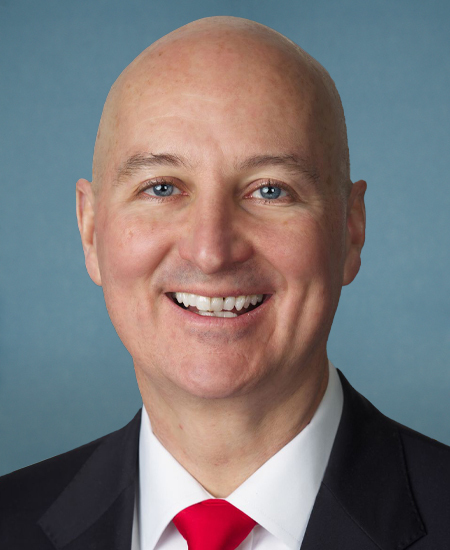
Sen. Pete Ricketts
Sponsored bills
Maddy summaryS 2547 ("Kate's Law") increases penalties for non-citizens who enter the U.S. unlawfully or reenter after removal. It raises the mandatory prison term for aliens who enter without inspection (e.g., evading border checks) and later commit crimes punishable by over one year in prison from 2 to 5 years. For reentry offenses, it mandates minimum 10-year prison sentences for those convicted of serious crimes before removal, or who reenter after multiple removals or specific prior convictions. The bill directly affects non-citizens facing immigration enforcement actions under Sections 275 and 276 of the Immigration and Nationality Act.
Veterans' Assuring Critical Care Expansions to Support Servicemembers (ACCESS) Act of 2025 This bill addresses the administration of the Veterans Community Care Program (VCCP) and other Department of Veterans Affairs (VA) health care matters. Among other provisions regarding the VCCP, the bill establishes in statute access standards that determine when a veteran is eligible to receive non-VA care through the VCCP, requires the VA to notify veterans regarding their eligibility for care within two business days after the VA is aware the veteran is seeking care, and extends the deadline for the submittal of claims under the VCCP by health care entities and providers. The VA must address its mental health treatment programs by establishing a standardized screening process to determine whether a veteran satisfies criteria for priority or routine admission to a mental health residential rehabilitation treatment program or a program for residential care for mental health and substance abuse disorders, tracking the performance of medical facilities and Veterans Integrated Service Networks in meeting the requirements for mental health treatment screenings and timely admission to treatment programs under such screenings, and establishing an appeal process for when a veteran is denied admission to a covered treatment program or is accepted into a program but not offered bed placement in a timely manner. Additionally, the VA must establish an online self-service module for veterans to request and manage appointments, track referrals, and appeal and track decisions related to requests for care.
Maddy summaryThis bill establishes that food products cannot use dairy product names like "yogurt," "milk," or "cheese" unless they meet specific U.S. Food and Drug Administration (FDA) standards for dairy. It directly affects food manufacturers who currently market non-dairy products (e.g., plant-based milks) using traditional dairy names. The bill amends federal law to require that any food using such names must be made primarily from mammal milk (lacteal secretion), not plant-based ingredients, and clarifies that the FDA will enforce this rule through new guidance. The FDA must issue enforcement guidance within 180 days and report on enforcement actions to Congress within two years.
Maddy summaryThe Primacy Certainty Act of 2025 sets clear deadlines for the EPA to review state applications for primary control over Class VI wells (used for carbon dioxide storage). It requires the EPA to provide detailed written explanations if it misses a 180-day deadline for reviewing applications, and automatically approves applications if the EPA fails to act within 30 days after that deadline. States seeking control must already have primary enforcement authority for other well types, and the bill mandates EPA transfer of pending permits to states once approval is granted. This directly affects states applying to manage Class VI well regulations, reducing uncertainty in the approval process.
Maddy summaryThis is a ceremonial Senate resolution designating July 26, 2025, as "National Day of the American Cowboy." It symbolically recognizes the cultural significance of cowboys and cowgirls, their values (like integrity and work ethic), economic contributions through ranching, and their role in American traditions like rodeo. The resolution encourages the public to observe the day with ceremonies but does not create new laws or affect specific groups or policies.
Maddy summaryS 2428, the STUDENT Act, amends the federal charter of the National Education Association (NEA) to restrict its political activities and membership practices. It requires NEA members (public school teachers) to explicitly consent to dues payments (banning payroll deductions), prohibits the NEA from engaging in political lobbying or supporting candidates, and bans advocacy of specific concepts like critical race theory or antisemitic beliefs. The bill also mandates annual reporting to Congress and prohibits strikes by NEA-affiliated staff in public schools. These provisions directly affect the NEA’s operations and its members’ financial and political engagement.
Maddy summaryThis bill (S 2449, "Recovery of Stolen Checks Act") allows taxpayers who have had paper tax refunds lost or stolen to elect receiving replacement refunds via direct deposit instead of a paper check. It amends the Internal Revenue Code to require the IRS to establish regulations within six months enabling this election process for eligible taxpayers. The key provision creates a new option for individuals needing replacement refunds for lost or stolen paper checks, shifting the method from physical mail to direct deposit. This directly affects taxpayers who previously received paper refunds but now face loss or theft. The bill focuses on streamlining the replacement process without changing tax rates or eligibility.
Maddy summaryThis bill extends tax deferral for company stock sold to employee stock ownership plans (ESOPs) and fixes a rule that previously caused small businesses to lose government benefits after 49% ownership transferred to an ESOP. It creates a new Treasury Department office to provide education and technical assistance for companies adopting ESOPs, and establishes a Labor Department Advocate for Employee Ownership to coordinate federal efforts and promote employee ownership. These changes directly affect S corporations considering ESOPs, current ESOP-owned businesses, and small businesses seeking to maintain eligibility for government programs. The bill focuses on removing barriers to employee ownership through concrete tax, eligibility, and support mechanisms.
Maddy summaryThis bill clarifies that the federal Consumer Financial Protection Bureau (CFPB) cannot enforce its rules on insurance companies regulated by state insurance departments when those companies are engaged in insurance activities. It directly affects insurance companies operating under state regulation by limiting the CFPB's authority over their insurance-related business. The key provision amends federal law to state that the CFPB may not enforce its rules regarding insurance business, and requires federal enforcement of related laws to be narrowly construed when insurance is involved. A new rule of construction explicitly favors state insurance regulators' authority over such companies.