Maddy summaryThis bill amends the Higher Education Act to require lenders to disclose the total interest cost of federal student loans over their full term, using the standard repayment plan. It directly affects borrowers by adding this total interest figure to existing disclosure forms under Section 433(a). The key change mandates that loan agreements clearly show the cumulative interest a borrower would pay, helping them understand the full financial impact of their loan. This is a disclosure requirement, not a new benefit or program.
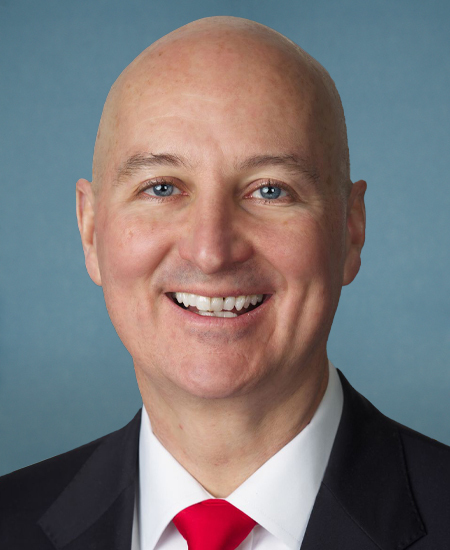
Sen. Pete Ricketts
Sponsored bills
Maddy summaryThis bill amends the Clean Air Act to require renewable fuel components in fuel for ocean-going vessels, alongside existing requirements for home heating oil and jet fuel. It directly affects shipping companies operating ocean vessels by mandating renewable fuel content starting in the second calendar year after enactment. The key mechanism updates the definition in the Clean Air Act to explicitly include "fuel for ocean-going vessels" in the renewable fuel requirements. The Environmental Protection Agency must issue implementing regulations within one year of the bill's enactment and submit a report to Congress one year after those regulations are finalized.
Maddy summaryThe Prevent Government Shutdowns Act of 2025 would prevent government shutdowns by automatically continuing funding for federal programs at previous year's levels if Congress fails to pass regular appropriations bills. If a lapse in appropriations occurs, the bill would provide automatic funding for 14 days, extendable for additional 14-day periods until a new appropriations bill is enacted, with funds charged to the appropriate account once legislation is passed. The bill also restricts official travel for certain government employees and congressional staff during a lapse, with limited exceptions for returning to Washington, D.C. or responding to national security events. It establishes procedures requiring Congress to prioritize appropriations legislation during a funding gap and would take effect on September 30, 2025.
Maddy summaryThis bill increases funding limits and modifies terms for the Rural Microentrepreneur Assistance Program. It raises the maximum microloan amount from $50,000 to $75,000 per borrower and allows loans to cover up to 50% of real estate improvement costs (like construction or demolition) for business projects. The bill also changes repayment terms to require 100% repayment (up from 75%) and extends the program's funding period from 2019-2023 to 2026-2030. These changes directly affect rural microentrepreneurs seeking small business loans for startup or expansion, particularly those needing physical space improvements.
This bill requires the Department of Veterans Affairs (VA) to provide quarterly budget briefings to Congress, prohibits the VA from providing specified pay incentives to senior-level employees, and establishes an office to carry out customer service initiatives of the VA. Protecting Regular Order for Veterans Act of 2025 or the PRO Veterans Act of 2025 (Sec. 1) This section requires the VA to provide quarterly budget briefings to Congress, which must include information on any budget shortfalls the VA may be experiencing. The VA must present its plans to address or mitigate shortfalls during such briefings. Next, the section prohibits the VA from providing certain senior-level employees with a critical skill incentive, which is generally a payment bonus for employees possessing a high-demand skill or skill that is at a shortage. Specifically, the VA may not provide such an incentive to an employee in a Senior Executive Service position or other comparable position in the VA Central Office, regardless of the actual location where the employee performs the functions of the position. Senior-level employees whose positions are primarily in the VA Central Office but perform some portion of their job function based out of non-Central Office VA facilities are eligible for an incentive for their non-Central Office work. The section also provides that an incentive may only be provided to senior-level employees on an individual basis and upon approval by specified officers (e.g., the Under Secretary for Health). The VA must report to Congress annually regarding senior-level employees who were provided a critical skill incentive. Improving Veterans’ Experience Act of 2025 (Sec. 2) This section establishes the Veterans Experience Office through FY2028 to carry out the key customer experience initiatives of the VA relating to veteran and beneficiary satisfaction with and usage of VA benefits and services. The Government Accountability Office must complete an analysis of and report on the methodology, effectiveness, and implementation of findings and feedback of veterans and beneficiaries used by the VA, including the Veterans Experience Office, to improve customer experience and satisfaction.

Maddy summaryThe LETITIA Act (S 2680) increases penalties for public officials convicted of bank fraud, falsifying loan/credit applications, or falsifying tax filings. For a first or second offense, public officials face fines up to $1.5 million and prison terms of 1-35 years (up from $1 million and 30 years), while third or subsequent offenses carry fines up to $2 million and prison terms of 5-40 years. The bill defines "public official" broadly to include federal, state, and local government employees or representatives acting in their official capacity. It also requires the Justice Department and Treasury to issue new investigative guidelines within 90 days for prosecuting these offenses involving public officials.
Maddy summarySRES 364 is a Senate resolution recognizing the 20th anniversary of the Renewable Fuel Standard (RFS), a policy established in 2005 and expanded in 2007. It acknowledges the RFS's role in supporting domestic renewable fuel production, strengthening energy security, aiding rural economies, and reducing transportation emissions through mandated renewable fuel targets. The resolution does not create new policy or funding but formally commends the RFS's achievements over two decades, including its contribution to U.S. economic output, job creation, and environmental performance.
Maddy summaryThis resolution commemorates the one-year anniversary of the July 13, 2024, attempted assassination of President Donald J. Trump in Butler, Pennsylvania. It condemns the attack and other threats against political officials, honors victims Corey D. Comperatore (who died shielding his family), David Dutch, and James Copenhaver (who were injured), and expresses gratitude to first responders. The resolution also condemns incitement of violence against elected officials and calls for unity against political violence. As a symbolic gesture, it does not create new laws or policies but formally states the Senate’s position.
Maddy summaryThe Biomanufacturing and Jobs Act of 2025 aims to strengthen the U.S. biobased products industry by increasing federal procurement of products made from renewable agricultural resources like corn and soybeans. The bill establishes clear definitions for terms such as "biobased product" and "bio-attributed plastic," requires federal agencies to annually increase their purchase of biobased products, and creates a USDA task force to coordinate programs and make recommendations for improvement. It also sets labeling standards to prevent misleading claims about bioproducts and mandates training for federal procurement staff on biobased product purchasing. This legislation directly affects the Department of Agriculture, federal procurement agencies, and manufacturers of biobased products, with the goal of supporting rural economies and reducing reliance on petroleum-based products.
Maddy summaryThis bill renames the Endangered Species Act of 1973 to the "Endangered Species Recovery Act" and updates all federal references to the law to reflect the new name. It does not change any conservation protections, listing procedures, or recovery requirements for species. The bill directly affects federal agencies, courts, and documents that cite the law, requiring them to use the new title. This is a procedural change with no substantive policy impact on species protection.