

Maddy summaryThis bill, S 1326 (Food Security and Farm Protection Act), prohibits state and local governments from imposing additional production standards on agricultural products sold across state lines. It directly affects farmers, food producers, and businesses involved in interstate agricultural trade by preventing states from creating new rules for farming that occurs in another state, unless federal or the producing state's rules already cover it. Key mechanisms include banning such extra state rules and creating a federal court process for affected parties (like producers or distributors) to challenge those rules and seek damages. The law also requires courts to issue temporary injunctions against enforcement of challenged regulations while cases are resolved, unless the state proves it will likely win and would suffer severe harm without the rule.
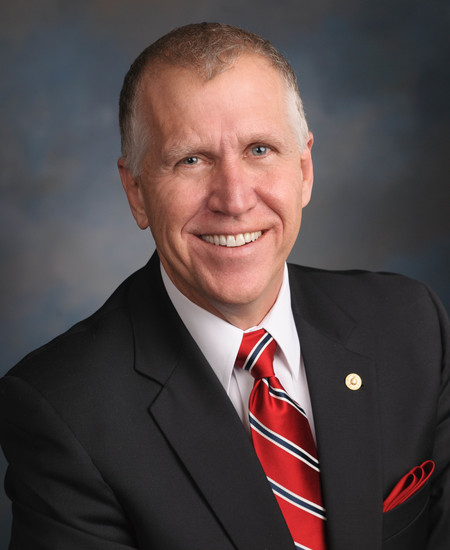
Sen. Thom Tillis
Sponsored bills
Maddy summaryS.1329, the PEER Support Act, establishes formal standards for peer support specialists in mental health and substance use recovery. It defines the profession (requiring lived experience and certification), mandates the federal government to create a new occupational category for these specialists by 2026, and creates an Office of Recovery within SAMHSA to support workforce development and best practices. The bill also requires a federal report analyzing state criminal background check policies for peer specialists and recommending ways to reduce barriers to certification. This legislation directly affects peer support specialists, state certification agencies, and federal agencies like SAMHSA, aiming to professionalize the field and improve access to recovery support services.
Maddy summaryThis bill increases the maximum percentage of a Real Estate Investment Trust's (REIT) assets that can be held in taxable subsidiary companies from 20% to 25%. It directly affects REITs by allowing them to allocate a larger portion of their investments to these subsidiary entities, which operate under different tax rules. The key provision amends the Internal Revenue Code to change the asset limit percentage, effective for taxable years starting after December 31, 2025. This adjustment provides REITs with slightly more flexibility in structuring their investments.
Maddy summaryThis bill, titled misleadingly as the "Secure Family Futures Act of 2025," actually modifies tax rules for specific insurance companies, not family-related policies. It directly affects "applicable insurance companies" (defined as most domestic insurers not using special tax elections or foreign entities) by: (1) excluding their debt holdings (like bonds) from being counted as capital assets for tax purposes, and (2) allowing capital losses incurred by these companies to be carried forward over 10 years instead of the standard period. These changes apply to debt acquired and losses arising after December 31, 2025. The bill contains no provisions related to families, child welfare, or social programs.
Maddy summaryThe Sister City Transparency Act (S 1351) mandates a study by the government's auditor (Comptroller General) into U.S. local governments' sister city partnerships with foreign communities in countries scoring 45 or below on Transparency International's corruption index. It examines transparency in contracts, economic risks, potential espionage vulnerabilities, and impacts on free expression within these partnerships. The study will assess how these partnerships operate, including cultural exchanges and economic activities, and identify best practices for transparency. The findings will be reported to specific congressional committees within nine months, with no new requirements imposed on local governments.
Maddy summaryThis resolution (SRES 159) is a ceremonial Senate measure honoring the late Senator John Bennett Johnston, Jr. (1932-2024), who represented Louisiana in the U.S. Senate from 1972 to 1997. It commemorates his career, including his work on energy policy, flood control, and Louisiana conservation efforts, and requests the Senate adjourn in his memory while sending condolences to his family. As a non-binding resolution, it has no policy impact or direct effect on any individuals or laws.
Maddy summaryThis bill (S 1308, VETS Opportunity Act of 2025) changes how the U.S. Department of Veterans Affairs (VA) counts independent study programs toward education benefits for veterans. It requires these programs to include regular, substantive interaction between students and instructors to qualify for VA funding. The bill also specifies that only institutions participating in federal student aid programs (Title IV of the Higher Education Act) can offer qualifying independent study courses. These changes apply to education terms starting August 1, 2025, directly affecting veterans pursuing VA-covered independent study courses.
Maddy summaryThe Agility in Manufacturing Preparedness Act of 2025 (S 1305) amends federal law to require the Biomedical Advanced Research and Development Authority (BARDA) to coordinate strategic initiatives involving "manufacturing technologies, platforms" for public health countermeasures. It mandates BARDA to collaborate with Manufacturing USA institutes - specifically their biomanufacturing programs - to develop and deploy technologies that improve medical preparedness. This bill directly affects BARDA’s coordination process and the Manufacturing USA institutes, focusing on accelerating biomanufacturing capabilities. The key provision updates existing law to explicitly include manufacturing technology development in BARDA’s strategic planning for public health emergencies.
Maddy summaryThis bill requires the President to notify Congress within 48 hours when imposing or increasing most import duties on goods entering the U.S., including an explanation of the reason and an assessment of impacts on U.S. businesses and consumers. Any new duty would automatically expire after 60 days unless Congress passes a joint resolution approving it. Congress can also disapprove a duty by passing a resolution, which would immediately end the duty. The bill does not apply to anti-dumping or countervailing duties under existing law.
Restoring Industry Development in Entertainment Act or the RIDE Act This bill makes certain workers with a traveling carnival or circus eligible for P visas (nonimmigrant visas for athletes, artists, and entertainers). Such visas shall be available for workers who perform functions that are integral and essential to the carnival or circus, such as transporting and assembling relevant structures and equipment. Such visas shall only be available for a position if (1) there are not sufficient U.S. workers available, and (2) employing a non-U.S. national ( alien under federal law) will not adversely affect the wages and working conditions of similarly employed U.S. workers.