

Maddy summaryThis bill, the Richard L. Trumka Protecting the Right to Organize Act of 2025, aims to strengthen workers' rights to organize and bargain collectively. It would make it harder for employers to classify workers as independent contractors by changing the definition of "employee," restricts employers from threatening to permanently replace workers who strike, and prohibits them from requiring employees to give up their right to pursue class or collective claims. The bill also changes election procedures to make it easier for workers to form unions, requires employers to post notices about workers' rights in conspicuous locations, and increases penalties for unfair labor practices. It directly affects employers and workers across various industries by altering the landscape of labor organizing and collective bargaining.
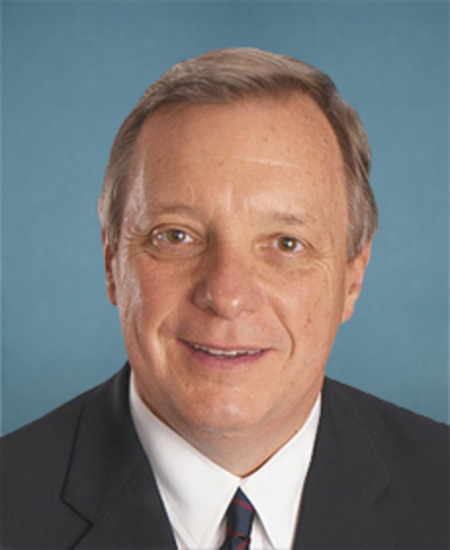
Sen. Richard J. Durbin
Sponsored bills
Maddy summarySRES 105 is a Senate resolution condemning the February 2025 mass terminations of 2,400 Department of Veterans Affairs (VA) employees by Secretary Doug Collins, without justification or analysis of impacts on veterans. The resolution states the Senate opposes these terminations - specifically noting the lack of transparency about effects on critical services like mental health care, claims processing, and cybersecurity - and calls for all affected employees to be reinstated. This resolution does not change VA policy but expresses the Senate’s formal disapproval of the terminations and demands accountability. It was introduced by 30 Senators on March 4, 2025.
Maddy summaryS 835, the Reduce Food Loss and Waste Act of 2025, establishes a voluntary USDA certification program for organizations that reduce food waste. It directly affects food businesses (like restaurants and grocers), schools, government entities, and nonprofits that donate or redirect excess food. To earn certification, participants must document 12 months of food donations to those in need or alternative disposal (e.g., composting), verified by accredited third parties. The program promotes certified entities through voluntary labels and USDA website listings, with $3 million annually for implementation and coordination between USDA, FDA, and EPA.
Maddy summaryThis bill repeals four executive orders issued on January 20, 2025, which related to energy policy and environmental agreements. It directly affects federal agencies responsible for implementing those orders, prohibiting the use of federal funds for any of their provisions. The key mechanism is an immediate ban on funding for the orders' implementation upon the bill's enactment, effectively canceling their legal force.
Maddy summaryThis bill requires the President to create a strategy to increase U.S. exports to Africa and Latin America and the Caribbean by 200% in real dollar value over 10 years, with input from Congress, federal agencies, and private sector groups. It establishes two special coordinators within the Commerce Department to oversee the strategy and coordinate with agencies like the Export-Import Bank and development agencies. The bill also mandates trade missions to these regions within one year and standardizes training for U.S. officials on export promotion tools to support the strategy.
Maddy summaryThis bill closes tax loopholes by equalizing excise tax rates across all tobacco products. It increases cigarette taxes to $100.66 per pack, matches pipe tobacco tax to $49.56 per pound, sets smokeless tobacco at $26.84 per pound (with a new $100.66 tax per thousand single-use units), and imposes a new tax of $50.33 per 1,810 milligrams on nicotine for vaping products. The bill also establishes an annual inflation adjustment for tax rates starting in 2026 and requires manufacturers of nicotine to pay the tax unless products are FDA-approved for medical use. These changes primarily affect tobacco manufacturers and importers who will pay higher taxes on their products.
Maddy summaryThis resolution (SRES 103) condemns the U.S. government's vote against United Nations General Assembly Resolution A/ES-11/L.10 (2025), which called for a "comprehensive, just and lasting peace in Ukraine" and condemned Russia's illegal invasion of Ukraine. It directly addresses the U.S. position at the UN, specifically referencing the rejection of the UN resolution that labeled Russia's invasion as illegal. As a symbolic Senate resolution (not a law), it has no binding effect but formally expresses the Senate's disapproval of the U.S. vote at the UN. The resolution focuses on the procedural rejection of the UN measure, not on advocating for specific policy changes.
Maddy summaryThe Invest to Protect Act of 2025 establishes a federal grant program to support local law enforcement agencies with fewer than 175 officers. Eligible communities - including counties, municipalities, and Tribal governments - can use funds for de-escalation training, mental health and domestic violence response training, officer retention bonuses, graduate education stipends, and access to behavioral health services for officers. The program requires grantees to report on outcomes and publicly disclose bonus amounts, with strict audit requirements to prevent misuse of funds. It authorizes $50 million annually from 2026 to 2030 to advance these concrete safety and support initiatives.
Maddy summaryThe SAFE Lending Act of 2025 aims to protect consumers from abusive lending practices in small-dollar credit transactions. It prohibits unauthorized remotely created checks (checks not created by the consumer's bank and without their signature), requires written consumer consent for such checks (which can be revoked anytime), and bans fees for overdrafts on prepaid accounts. The bill also establishes a registration requirement for small-dollar lenders (those offering credit under $5,000 with specific repayment terms) and restricts lead generation activities that collect sensitive financial information without directly providing credit. Additionally, it mandates a study on small-dollar credit availability and impact on Native American Tribal members.
Maddy summaryS 803, the Keep Americans Safe Act, prohibits the import, sale, manufacture, transfer, or possession of large capacity ammunition feeding devices (devices holding more than 10 rounds, excluding specific .22 caliber tubular devices) in interstate or foreign commerce. It directly affects the general public, while exempting law enforcement officers (including campus police), retired officers with agency-issued devices, nuclear security personnel, and manufacturers testing under federal authorization. Key provisions include requiring serial numbers on new devices, expanding forfeiture for violations, and allowing federal Byrne grants to fund buy-back programs for surrendered devices. The bill takes effect upon enactment, with existing devices lawfully owned before enactment remaining legal.