

Maddy summaryThe ATTAIN Mental Health Act requires the U.S. Department of Health and Human Services to create a public online dashboard that makes federal mental health and substance use disorder grant information easier to find. The dashboard will list grant names, show current application status (open, closed, or awarded), and provide direct links to apply, while being accessible under the Americans with Disabilities Act. It will help schools, health providers, tribal organizations, community groups, and other potential applicants quickly locate funding opportunities by location and program type. The dashboard must be updated regularly to reflect current grant openings and be designed with input from diverse stakeholders like hospitals and tribal entities.
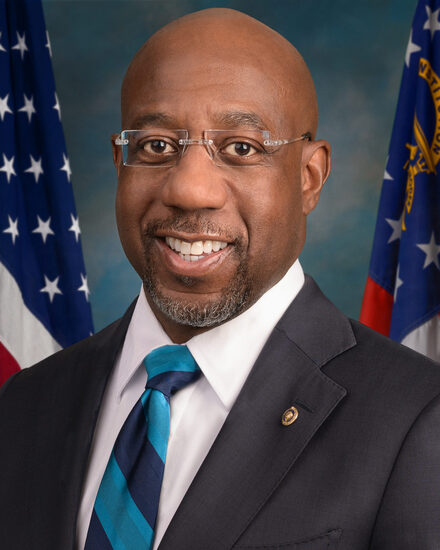
Sen. Raphael G. Warnock
Sponsored bills
Maddy summaryThis bill, S 2396, prohibits debt collectors from threatening servicemembers or their eligible dependents with rank reduction, security clearance revocation, or military prosecution (under the Uniform Code of Military Justice) when collecting debts. It directly affects active-duty service members, recent veterans (within 365 days of separation), and their dependents as defined in the bill. Key provisions amend the Fair Debt Collection Practices Act to ban these specific threats in debt collection communications and representations. The bill also requires a Government Accountability Office (GAO) study to assess its impact on military readiness, national security, and timely information delivery to covered members.
Maddy summaryThis bill creates an online cybersecurity clearinghouse within the National Telecommunications and Information Administration (NTIA) to support food and agriculture businesses. The clearinghouse will provide free, publicly available resources - including annual FAQs, ransomware response guides, and small business tools - specifically for farms, processors, distributors, and their IT systems. It will consolidate voluntary cybersecurity recommendations covering system protection, incident response, and data security for the industry. The bill also mandates a government study on current cybersecurity efforts in the sector, to be completed within 90 days of enactment.
Maddy summaryS 2372, the Accelerating Kids’ Access to Care Act, streamlines enrollment for out-of-state healthcare providers who treat Medicaid-eligible children under 21 with medically complex conditions. It requires states to adopt a process allowing these providers to join state Medicaid/CHIP programs without extra state-level screening, provided they already meet federal Medicare or home-state program requirements and pose low fraud risk. The bill establishes a 5-year enrollment period for eligible providers, directly affecting children needing specialized care across state lines and the providers serving them. Key provisions remove barriers to interstate care coordination while maintaining federal oversight standards.
Maddy summaryS 2370 (BARK Act of 2023) amends the Bill Emerson Good Samaritan Food Donation Act to expand liability protections for donations of pet food and supplies. It adds definitions for "pet," "emotional support animal," and "pet supply" to the law, and creates new protections ensuring donors and receiving organizations (nonprofits or local governments) cannot face legal liability for the condition of donated pet food/supplies given in good faith for pets, service animals, or emotional support animals. This directly affects pet owners, animal welfare organizations, and businesses donating pet-related items. The key change extends existing food donation protections to cover pet food and supplies, removing legal barriers to such donations.
Maddy summary# Summary of Comprehensive Election Reform Bill This document is a comprehensive voting rights and election reform bill containing multiple titles with various provisions designed to: 1. **Restore voting rights** for citizens with criminal convictions (Democracy Restoration Act) - Restores voting rights for citizens not serving felony sentences in correctional institutions - Requires states to notify individuals of restored voting rights upon release or probation - Establishes enforcement mechanisms through civil actions 2. **Strengthen voter identification requirements** - Establishes a broad list of acceptable identification documents - Requires states to provide government-issued identification at no cost - Allows for provisional ballots with sworn statements for those without ID - Includes provisions for electronic documents and copies 3. **Prohibit voter caging and improper voter list maintenance** - Bans the use of "voter caging" documents or lists as evidence for challenging voter eligibility - Establishes strict conditions for removing voters from registration lists - Requires objective and reliable evidence for removals - Mandates notification procedures for voters removed from lists 4. **Enhance election integrity protections** - Prohibits interference with voter registration (including hindering, interfering with, or preventing registration) - Restricts removal of local election administrators to cases of inefficiency, neglect, or malfeasance - Protects election workers from intimidation and harassment - Bans deceptive practices regarding election information within 60 days of an election - Establishes criminal penalties for deceptive election practices 5. **Provides enforcement mechanisms** - Establishes private rights of action for violations - Includes civil and criminal penalties for violations - Requires reports to the Department of Justice for removals of election administrators - Sets specific timeframes for notification and corrective actions The bill aims to expand voting access while maintaining election integrity, with provisions designed to protect voting rights, prevent discrimination, and ensure fair administration of elections for Federal office.
Maddy summaryThe Paycheck Fairness Act aims to reduce gender-based pay disparities by strengthening protections against wage discrimination. It modifies the "bona fide factor" defense to require employers to prove pay differences are based on job-related factors rather than sex, prohibits reliance on salary history when making hiring decisions, and requires employers with 100+ employees to collect and report pay data disaggregated by sex, race, and ethnicity. The bill enhances penalties for violations, including compensatory and punitive damages, and strengthens non-retaliation protections for employees discussing wages. These changes directly affect employers, employees, and prospective employees, with particular focus on addressing pay gaps that disproportionately impact women and women of color. The act also creates a National Award for Pay Equity in the Workplace to recognize employers making progress in eliminating pay discrimination.
Maddy summaryThe Richard L. Trumka Protecting the Right to Organize Act of 2023 strengthens workers' rights to organize and bargain collectively by amending key labor laws. It clarifies that multiple employers can be held accountable for labor practices (joint employer definition), makes it harder for employers to misclassify workers as independent contractors, and prohibits employers from permanently replacing workers who strike. The bill requires employers to provide detailed voter lists for union elections, strengthens protections against anti-union discrimination, and increases penalties for unfair labor practices (up to $100,000 for repeat violations). It directly affects workers seeking union representation, employers who must comply with new requirements, and labor organizations conducting organizing campaigns. The bill aims to make it easier for workers to form unions and negotiate better wages and working conditions.
Maddy summarySRES 298 is a symbolic Senate resolution designating July 30, 2023, as "National Whistleblower Appreciation Day." It commemorates the historical date of July 30, 1778, when the Continental Congress passed early whistleblower protections. The resolution asks all federal agencies to recognize the day by informing employees, contractors, and the public about their legal right to report misconduct, fraud, or crimes through proper channels. It does not create new legal protections or funding but encourages agencies to acknowledge whistleblowers' role in saving taxpayer dollars and promoting ethical government. This is a procedural resolution focused on awareness, not policy change.
Maddy summaryThe LIFT Homebuyers Act of 2023 creates a new program to help low-income first-time homebuyers purchase single-family homes. It establishes a government fund to subsidize mortgage payments, capping them at 100-110% of standard 30-year FHA loan payments for eligible buyers earning under 120% of local median income (140% in high-cost areas). The program requires borrowers to self-attest to eligibility - such as being a first-time homebuyer with no parental home ownership history - without additional verification. It applies to mortgages insured by HUD or USDA with case numbers issued by December 2025, aiming to expand access through simplified loan terms and reduced upfront costs.