

Maddy summaryThe Better CARE for Animals Act of 2023 strengthens enforcement of the existing Animal Welfare Act by requiring dealers and exhibitors to maintain valid licenses for animal sales or transport. It expands enforcement authority for both the USDA and the Attorney General to pursue civil penalties (up to $10,000 per violation per day), seize animals in violation cases, and use penalty funds to cover temporary care costs for animals during legal proceedings. The bill also clarifies that enforcement applies to rules and regulations under the Act, and mandates a new coordination agreement between the USDA and DOJ to address repeat violators. These changes directly affect animal dealers, exhibitors, and federal enforcement agencies, improving accountability for animal welfare violations.
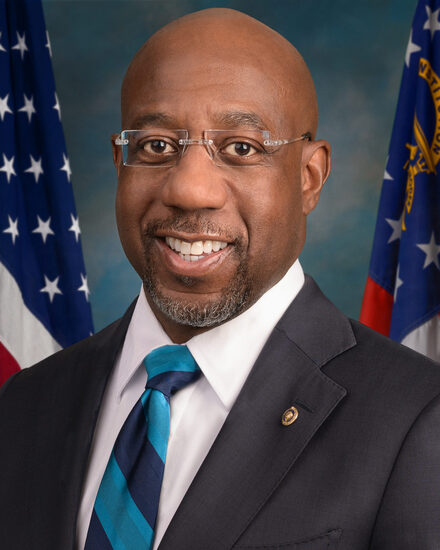
Sen. Raphael G. Warnock
Sponsored bills
Maddy summarySRES 312 is a non-binding Senate resolution recognizing the role of the Americans with Disabilities Act (ADA) in enabling independent living for people with disabilities and highlighting ongoing challenges like institutional segregation and disparities in healthcare, employment, and accessibility. It calls on federal agencies - including the Departments of Labor, Health and Human Services, Housing, and Transportation - to take specific actions to improve home- and community-based services, accessibility, and economic opportunities for people with disabilities. The resolution emphasizes addressing barriers identified 33 years after the ADA's passage, including pandemic impacts and racial disparities affecting disabled communities. As a symbolic resolution, it does not create new laws or funding but urges bipartisan collaboration and agency action to advance ADA goals.
Maddy summaryThis bill increases the Commodity Futures Trading Commission's (CFTC) whistleblower fund from $100 million to $300 million and creates a separate account within the fund. The new account, capped at $10 million, specifically covers education initiatives and administrative costs for the CFTC's whistleblower program staff. It modifies the program's funding to be "until expended" instead of "until the fund is exhausted" and removes an outdated funding paragraph. The bill directly affects the CFTC's ability to manage its whistleblower program and support staff handling fraud reports in commodity markets.
Maddy summaryThe LAST ACRE Act of 2023 establishes a federal program to provide grants and loans to broadband providers for connecting agricultural land that lacks high-speed internet access. The program targets "unserved" land (with less than 25 Mbps downstream/3 Mbps upstream) and "underserved" land (with less than 100 Mbps downstream/20 Mbps upstream), prioritizing remote areas. It requires providers to offer connectivity with at least 100 Mbps downstream and 20 Mbps upstream speeds specifically designed for precision agriculture applications like farm equipment, sensors, and data collection. The program includes cybersecurity requirements for recipients and mandates annual reporting to Congress on program outcomes.
Maddy summaryThe Farm Board Act of 2023 amends the Federal Crop Insurance Act to change the composition of the Board of Directors for the Federal Crop Insurance Corporation. It requires future appointments to include one specialty crop producer, one producer with both livestock and crop production, and one underserved producer (as defined in existing law). These new requirements apply to appointments made on or after the bill's enactment date for terms beginning October 1, 2024, or for the October 1, 2024 election. The bill directly affects who is appointed to this board, which oversees federal crop insurance programs.
Maddy summarySCONRES 2 is a symbolic congressional resolution commending Iranian protesters who risked their safety to demonstrate against the Iranian regime's human rights abuses, particularly following the death of Mahsa Amini after her arrest by morality police for alleged hijab violations. It specifically highlights protests in over 133 cities where demonstrators, including women removing headscarves, have faced violent crackdowns, with reports of over 500 deaths and 19,000 arrests. The resolution condemns the regime's brutality, supports internet freedom tools to bypass censorship, and urges the administration to impose human rights sanctions on officials responsible for repression. As a non-binding resolution, it expresses congressional support for protesters but does not enact new laws or policies.
This resolution (1) designates July 2023 as National Blueberry Month; and (2) recognizes the contributions of blueberry growers in the United States and their families, and that purchasing blueberries grown in the United States supports farmers, jobs, communities, and the economy of the United States.
Maddy summaryThe Raise the Wage Act of 2023 would gradually increase the federal minimum wage to $17.00 per hour by 2028, with specific annual steps: $9.50 in year one, $11.00 in year two, $12.50 in year three, $14.00 in year four, $15.50 in year five, and $17.00 starting in year six. It also phases out separate minimum wage rates for tipped workers (raising their base wage to match the standard minimum wage by year six) and for workers under 20 (phasing out their lower rate by year five). The bill requires annual minimum wage adjustments after year six based on increases in the median hourly wage of all employees, as tracked by the Bureau of Labor Statistics. Additionally, it eliminates special minimum wage certificates for workers with disabilities by 2028, requiring all such workers to receive the standard minimum wage.
Maddy summary# Summary of Proposed Election Reform Legislation This comprehensive legislative document outlines a wide-ranging election reform bill with multiple titles addressing various aspects of voting rights, election administration, and election integrity. Key provisions include: 1. **Democracy Restoration** (Title I): - Restores voting rights for citizens with criminal convictions (except those serving felony sentences in correctional institutions) - Requires states to notify individuals of restored voting rights upon completion of sentence or release from custody - Includes enforcement mechanisms for states to comply with the restoration provisions 2. **Voter Identification Requirements** (Title II): - Establishes a standardized system for voter identification requirements - Specifies acceptable forms of identification (including many government-issued documents) - Requires states to provide free identification documents to eligible voters - Includes funding ($5 million annually for 5 years) to cover costs 3. **Voter List Maintenance** (Title III): - Prohibits "voter caging" (using undeliverable mail to challenge voter eligibility) - Requires states to verify voter ineligibility using objective and reliable evidence - Limits removal of voters from registration lists to specific circumstances (death, permanent move) - Mandates notice requirements for voters removed from lists 4. **Election Integrity** (Title IV): - Prohibits interference with voter registration (Section 612) - Restricts removal of local election administrators to cases of inefficiency, neglect, or malfeasance - Prohibits harassment and intimidation of election workers - Bans deceptive practices in elections (false information about voting procedures, qualifications, or endorsements) The legislation aims to expand voting access while maintaining election integrity, with specific focus on eliminating barriers for people with criminal convictions, ensuring fair voter list maintenance, and protecting election workers from harassment and intimidation. It also includes provisions for enforcement through civil actions, criminal penalties, and reporting requirements.
Maddy summaryS 2478 designates the National Museum of the Mighty Eighth Air Force in Pooler, Georgia (located at 175 Bourne Avenue) as the official National Museum for the Mighty Eighth Air Force. The bill explicitly states the museum will not be part of the National Park System and clarifies it does not appropriate or authorize any federal funding for the museum. This is a symbolic designation with no financial or operational changes to the museum's current status.