

Maddy summaryThe Farmers Feeding America Act of 2023 increases funding and improves access to food assistance for low-income individuals through the Emergency Food Assistance Program (EFAP). It raises annual storage and distribution funding from $100 million to $200 million and allocates $500 million yearly for food commodities from 2024 through 2028. The bill specifically helps geographically isolated states (Hawaii, Alaska, Puerto Rico, and U.S. territories) by allowing alternative delivery methods for food shipments and permitting up to 20% of allocated commodities to be used as cash for locally grown food purchases. Additionally, it requires the program to prioritize nutritious food by considering factors like product variety and transportation distance when buying fresh produce.
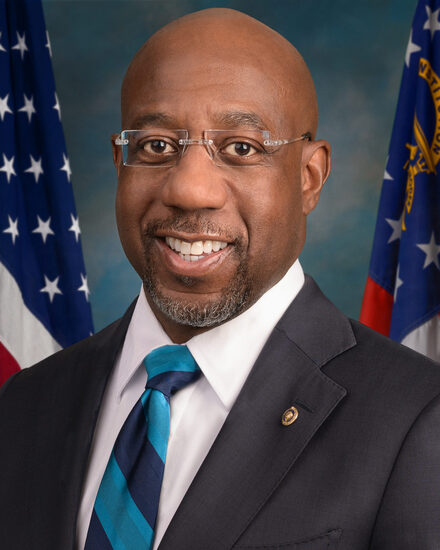
Sen. Raphael G. Warnock
Sponsored bills
Maddy summaryThe Preventing Election Subversion Act of 2023 restricts how state officials can remove local election administrators who manage federal elections. It requires removals to be based only on proven inefficiency, neglect of duty, or misconduct - prohibiting politically motivated removals - and allows affected local officials to challenge improper removals in federal court. States must report removals to the Justice Department within 30 days (or 48 hours if near an election) for oversight. The bill also adds new rules to limit last-minute challenges to voter eligibility on Election Day, requiring documented, good-faith challenges with sworn statements.
Maddy summaryThe Break the Cycle of Violence Act creates federal grant programs to fund community-based violence intervention initiatives that aim to reduce gun violence in high-risk communities. It authorizes $300 million in 2024, increasing to $700 million annually from 2026-2031, for grants to community organizations and local governments to implement evidence-based strategies that provide trauma-informed services, job training, and wraparound support to individuals at high risk of violence. The bill establishes a National Community Violence Response Center to coordinate efforts, collect data, and share best practices, while also creating IMPACT grants for job training programs targeting opportunity youth in communities disproportionately affected by gun violence. The legislation specifically addresses racial disparities in violence exposure, with findings showing Black children and teens are over 12 times more likely to be shot to death than White peers. The program requires grantees to use strategies that reduce violence without contributing to mass incarceration, and to partner with community organizations reflecting the populations impacted by violence.
Maddy summaryThis bill amends the Federal Crop Insurance Act to improve the Whole Farm Revenue Protection Program for farmers. It directly affects producers who use this insurance, expanding eligible marketing methods to include direct-to-consumer sales, local/regionally sold products, and identity-preserved crops. Key changes include requiring crop rotation (replacing "may" with "shall"), allowing IRS Schedule F tax forms as sufficient revenue proof (with limited exceptions), reducing paperwork for farms with $1 million+ gross revenue, and expanding discounts to cover at least 10 commodities. The bill also sets a $500,000 limit on revenue growth adjustments and includes provisions to better account for disaster payments in revenue calculations.
Maddy summaryThe CDFI Fund Transparency Act (S 2674) requires the Treasury Secretary (or their designee) to provide annual testimony to Senate and House financial committees about the operations of the Community Development Financial Institutions (CDFI) Fund. This testimony would cover the previous fiscal year's activities and is scheduled at the discretion of the relevant committee chairs. The bill directly affects how the CDFI Fund, which supports community development lenders, reports its work to Congress. It adds a transparency mechanism without altering the fund's programs or funding levels.
Maddy summaryThis bill clarifies that equipment used to test for fentanyl or xylazine in substances is not subject to restrictions under the Controlled Substances Act. It directly affects people who use drugs and harm reduction organizations providing testing supplies. The key provision amends Section 422 of the Act to explicitly state that testing equipment for these substances is exempt from legal restrictions on possession, sale, or transportation. This allows safer access to testing tools without legal penalties. The bill does not create new programs or funding, only adjusting existing legal language.
Maddy summaryThis bill amends the federal Tree Assistance Program to better support orchardists and nursery tree growers affected by tree loss. It removes a 15% mortality threshold (replacing it with "normal mortality"), allowing assistance for losses beyond typical rates without adjustment. The bill also permits growers to replant using different tree varieties, densities, or locations (within cost limits), requires decisions on applications within 120 days, and exempts farmers with 75%+ income from farming from gross income restrictions. These changes streamline the program to address tree loss more flexibly while maintaining clear timelines and eligibility rules.
Maddy summaryThis bill (S 2647, SHINE for Autumn Act of 2023) provides federal funding to improve stillbirth data collection, research, and education. It authorizes $5 million annually for states to collect stillbirth data using existing health records while protecting privacy, $1 million for developing standardized data collection guidelines and public educational materials, and $3 million for specialized training programs in perinatal pathology and stillbirth research. The bill directly affects state health departments, medical professionals (like obstetricians and pathologists), and families impacted by stillbirth through improved data systems and educational resources. Key provisions require standardized data reporting, consultation with affected families and healthcare providers, and mandatory reports on program progress within five years of enactment.
Maddy summaryThe Behavioral Health Information Technology Coordination Act creates a federal grant program to help behavioral health providers - including mental health clinics, psychiatric hospitals, community centers, and specialized treatment facilities - adopt certified health information technology. Grants of up to $2 million per provider for two years will fund technology that shares patient data with primary care doctors, hospitals, and emergency departments, meeting federal interoperability standards. The program requires grantees to report on improvements in care coordination, data sharing, and outcomes, with $20 million authorized annually from 2025 through 2029. This directly supports providers serving individuals with mental health and substance use disorders by modernizing their technology systems.
Maddy summaryThe FRIDGE Act of 2023 authorizes $1 million annually (2024-2028) to provide technical assistance to developing countries for improving refrigeration and storage infrastructure. This helps developing nations build better cold chain systems, which directly prevents the loss of U.S. agricultural exports due to poor infrastructure. The assistance includes needs assessments, training, and support for port improvements and cold chain capacity to ensure U.S. food and agricultural products reach markets without damage. It targets specific infrastructure gaps identified in Congress as a major barrier to expanding U.S. agricultural exports globally.