

Maddy summaryThe International Children with Disabilities Protection Act of 2023 establishes a U.S. government program to support organizations working to keep children with disabilities in family settings rather than residential institutions worldwide. The program provides grants to nongovernmental organizations with disability rights expertise, prioritizing those working in countries with large populations of children in residential care. It funds capacity-building efforts to develop disability leaders, provides training on successful family inclusion models, and creates online programs to share best practices globally. The bill requires annual briefings and triennial reports to Congress on the program's implementation, with funding authorized at $2 million for 2024 and $10 million annually through 2029. This legislation aims to advance policies that ensure children with disabilities grow up with their families and transition to independent living as adults.
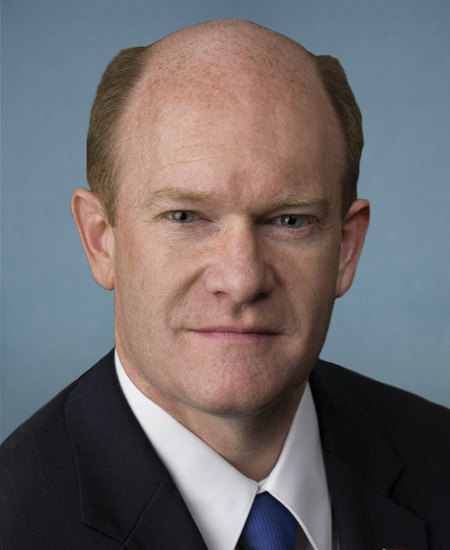
Sen. Christopher A. Coons
Sponsored bills
Maddy summaryThis bill requires the U.S. President to annually certify whether Hong Kong Economic and Trade Offices (HKETOs) in the U.S. deserve diplomatic privileges (like immunity from local laws). If the President certifies they no longer merit these privileges, HKETOs must close within 180 days. It also mandates that U.S. government agencies seeking partnerships with HKETOs must first obtain a certification confirming such agreements don’t promote Chinese efforts to undermine Hong Kong’s autonomy. Congress can block a certification within 90 days using a disapproval resolution, which would require expedited Senate and House procedures. The bill directly affects HKETOs operating in the U.S. and U.S. agencies engaging with them.
Maddy summary# Summary of Department of State, Foreign Operations, and Related Programs Appropriations Bill This appropriations bill allocates funding for U.S. diplomatic and development programs with specific requirements, restrictions, and funding levels across numerous program areas. ## Key Funding Areas and Requirements: 1. **Global Health Programs**: $600 million minimum for family planning/reproductive health, with additional funding for pandemic response and global health security initiatives. 2. **Gender Equality & Women's Empowerment**: - $250 million minimum for gender-based violence prevention and response - $50 million for the Madeleine K. Albright Women's Leadership Program - $150 million for women, peace, and security initiatives 3. **Education**: - $640.555 million for basic education (Nita M. Lowey Basic Education Fund) - $231.566 million for higher education - $7 million for scholar rescue programs 4. **Environment & Climate**: - $400 million minimum for biodiversity conservation - $200 million for sustainable landscapes - $285 million for adaptation programs - $275 million for clean energy programs 5. **Food Security**: $1.1106 billion minimum for food security and agricultural development 6. **Other Key Programs**: - $300 million for Countering Russian Influence Fund - $103 million for Global Internet Freedom programs - $171.633 million for micro, small, and medium-sized enterprises - $116.4 million for anti-trafficking programs ## Significant Restrictions: 1. **Prohibited Funding**: - No funds for the Russian Federation government - No funds for countries supporting Russian annexation of Crimea - No funds for governments that have refused to extradite individuals for serious crimes - No funds for torture or cruel, inhuman, or degrading treatment 2. **Country Restrictions**: - Restrictions on funding for countries with poor human rights records - Specific prohibitions on funding for certain countries in conflict zones 3. **Management Requirements**: - Detailed spend plans required for all major programs - Prior consultation with Congress required for reorganizations - Strict reporting requirements for all international organizations - Specific requirements for transparency in international organizations 4. **Accountability Measures**: - Mandatory certifications of compliance with financial management policies - Requirements for transparency in international organization funding - Restrictions on use of funds for certain activities (e.g., abortion funding in China) The bill emphasizes transparency, accountability, and specific programmatic requirements while maintaining significant restrictions on funding for certain countries and activities that conflict with U.S. foreign policy objectives.
Maddy summaryThis bill expands Medicare coverage for obesity treatment. It allows more healthcare providers - including nurse practitioners, dietitians, and clinical psychologists - to offer intensive behavioral therapy for obesity, with requirements for coordination with primary care physicians. It also adds Medicare Part D coverage for FDA-approved medications used to treat obesity or manage weight in adults with related health conditions (like diabetes or high blood pressure). These changes directly affect Medicare beneficiaries with obesity, aiming to improve access to proven treatment options. The bill requires annual reports to Congress on implementation progress.
Maddy summaryThe PATHS to Tutor Act of 2023 establishes a federal grant program to fund high-quality tutoring in high-need schools, primarily benefiting students in schools struggling with teacher retention or high new-teacher turnover. It provides $500 million in grants to local partnerships (including schools, educator programs, and community groups) to hire and train tutors - such as college students in teacher prep programs or certified educators - to deliver small-group tutoring aligned with school curriculum. Grants cover tutor stipends, materials, transportation, meals, and professional development, with 85% of funds required to directly support students. The program prioritizes schools serving underserved communities and requires tutors to supplement, not replace, existing teaching staff.
Maddy summaryThe I CAN Act (S 2418) removes barriers for nurse practitioners, certified registered nurse anesthetists, and certified nurse-midwives under Medicare and Medicaid. It allows nurse practitioners to certify patients for cardiac/pulmonary rehabilitation, prescribe exercise, and bill for services previously restricted to physicians. The bill also clarifies that certified registered nurse anesthetists can be reimbursed for evaluation services and removes unnecessary supervision requirements. For certified nurse-midwives, it expands access to home health services and improves coverage for their care under Medicare. These changes aim to increase patient access to care by expanding the scope of practice for advanced nursing professionals.
Maddy summaryS 2372, the Accelerating Kids’ Access to Care Act, streamlines enrollment for out-of-state healthcare providers who treat Medicaid-eligible children under 21 with medically complex conditions. It requires states to adopt a process allowing these providers to join state Medicaid/CHIP programs without extra state-level screening, provided they already meet federal Medicare or home-state program requirements and pose low fraud risk. The bill establishes a 5-year enrollment period for eligible providers, directly affecting children needing specialized care across state lines and the providers serving them. Key provisions remove barriers to interstate care coordination while maintaining federal oversight standards.
Maddy summaryThis bill creates new NIH funding for early-career pediatric researchers, directly supporting scientists focused on children's health. It establishes "Trans-NIH Awards" prioritizing researchers from underrepresented groups (like women and racial minorities) and institutions serving those communities, with funding focused on key areas like childhood cancer, mental health, and rare diseases. The bill also creates an NIH Pediatric Research Consortium to coordinate pediatric research across NIH institutes, requiring annual reports on funded projects, diversity metrics, and collaboration opportunities. These provisions aim to strengthen pediatric research capacity without replacing existing funding.
Maddy summary# Summary of Comprehensive Election Reform Bill This document is a comprehensive voting rights and election reform bill containing multiple titles with various provisions designed to: 1. **Restore voting rights** for citizens with criminal convictions (Democracy Restoration Act) - Restores voting rights for citizens not serving felony sentences in correctional institutions - Requires states to notify individuals of restored voting rights upon release or probation - Establishes enforcement mechanisms through civil actions 2. **Strengthen voter identification requirements** - Establishes a broad list of acceptable identification documents - Requires states to provide government-issued identification at no cost - Allows for provisional ballots with sworn statements for those without ID - Includes provisions for electronic documents and copies 3. **Prohibit voter caging and improper voter list maintenance** - Bans the use of "voter caging" documents or lists as evidence for challenging voter eligibility - Establishes strict conditions for removing voters from registration lists - Requires objective and reliable evidence for removals - Mandates notification procedures for voters removed from lists 4. **Enhance election integrity protections** - Prohibits interference with voter registration (including hindering, interfering with, or preventing registration) - Restricts removal of local election administrators to cases of inefficiency, neglect, or malfeasance - Protects election workers from intimidation and harassment - Bans deceptive practices regarding election information within 60 days of an election - Establishes criminal penalties for deceptive election practices 5. **Provides enforcement mechanisms** - Establishes private rights of action for violations - Includes civil and criminal penalties for violations - Requires reports to the Department of Justice for removals of election administrators - Sets specific timeframes for notification and corrective actions The bill aims to expand voting access while maintaining election integrity, with provisions designed to protect voting rights, prevent discrimination, and ensure fair administration of elections for Federal office.
Maddy summaryThe Healthy Families Act requires most employers (with 15 or more employees) to provide workers with up to 56 hours of paid sick leave annually, earned at a rate of 1 hour for every 30 hours worked. Employees can use this leave for their own illness, medical care, caring for family members with health conditions, or addressing domestic violence, sexual assault, or stalking situations. The law prohibits employers from retaliating against workers who use this leave and mandates that employers post notices about the policy. Smaller employers (with fewer than 15 employees) may provide up to 56 hours of unpaid sick leave instead of paid leave. The Act includes enforcement mechanisms allowing employees to file complaints with the Department of Labor and seek damages for violations.