

Maddy summaryS 2789, the African Diaspora Heritage Month Act of 2023, would require the President to annually designate a month as "African Diaspora Heritage Month" through a formal proclamation. The proclamation would call on state and local governments and the public to observe the month with programs and activities celebrating the contributions of the African diaspora community. This bill does not create new government programs or funding but adds a recurring national observance to federal law. The African diaspora community - encompassing people of diverse African heritage living in the United States - would be the focus of this recognition.
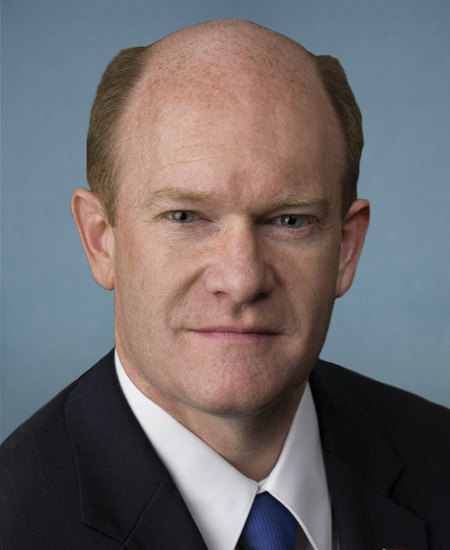
Sen. Christopher A. Coons
Sponsored bills
Maddy summaryThe Increasing Access to Dental Insurance Act (S 2771) would amend the Affordable Care Act to allow individuals to enroll in standalone dental insurance plans through health insurance marketplaces without needing to also have a health insurance plan. This change removes a current barrier that previously prevented people from accessing dental coverage if they weren't enrolled in a health plan. The bill directly affects people seeking dental insurance who do not have or do not want a comprehensive health insurance plan. By prohibiting restrictions based on health insurance status, the law aims to make dental coverage more accessible for these individuals.
Maddy summaryThis bill requires car manufacturers to include AM radio receivers as standard equipment in all new vehicles sold in the U.S., without additional cost to buyers. It mandates that AM radio controls be clearly visible on the dashboard for drivers. For vehicles sold before the rule takes effect, manufacturers must label them to disclose the absence of AM radio. The bill aims to maintain access to AM radio broadcasts, which are used for emergency alerts, but does not mandate new emergency systems.
Maddy summaryThe JUDGES Act authorizes 66 new permanent federal district court judgeships across 16 states, primarily in high-filing districts like California, Texas, Florida, and New York, to address case backlogs. It schedules appointments for 2025 and 2029, including 2 temporary judgeships in Oklahoma (with vacancies not filled after 5 years) and converts existing temporary judgeships in Missouri, Arizona, and other districts to permanent status. The bill also requires a GAO report identifying underused federal courthouses within one year. These changes directly affect the judicial capacity of specific districts, aiming to reduce pending case loads by increasing judicial staffing.
Maddy summaryThis bill (S 2757) freezes current payment rates for veterans' transportation services provided through "special modes" (like non-emergency medical transport) starting January 1, 2023, preventing the VA from lowering these rates without strict conditions. It directly affects veterans relying on these transportation services and the contractors providing them. The key provision allows rate increases but requires the VA to conduct a detailed economic impact review, consult with veterans' groups and industry experts, and ensure new rates cover actual costs before any decrease can occur. This aims to protect veterans' access to care by preventing rate cuts that could disrupt transportation services.
Maddy summaryThis bill requires the Supreme Court to establish a code of conduct for justices within 180 days of enactment, with public access to these rules on the Court's website. It sets minimum disclosure standards for gifts, income, and reimbursements received by justices and their law clerks, and strengthens recusal requirements when justices have financial ties to parties in cases. The bill creates procedures for filing complaints about justices' conduct and establishes a judicial investigation panel to review such complaints, while also requiring parties and amicus curiae to disclose gifts to justices and lobbying activities related to the nomination of justices. These provisions aim to increase transparency and accountability in Supreme Court operations.
Maddy summarySCONRES 19 is a non-binding concurrent resolution introduced in the U.S. Senate on July 27, 2023, by Senators Booker, Coons, and others. It urges the President to establish a United States Commission on Truth, Racial Healing, and Transformation to address historical racial inequities. The resolution identifies over 400 years of systemic oppression against Black, Indigenous, and other people of color, including discriminatory policies like the Chinese Exclusion Act and residential segregation. The proposed commission would aim to "jettison the belief in a hierarchy of human value," "embrace our common humanity," and eliminate persistent racial inequities. As a resolution, it does not create the commission itself but formally calls on the executive branch to take action.
Maddy summarySenate Resolution SRES 320 calls for the immediate release of Eyvin Hernandez, a U.S. citizen and Los Angeles County public defender wrongfully detained in Venezuela since March 2022. It urges the Biden administration, including the Secretary of State and Special Presidential Envoy for Hostage Affairs, to use all available tools to secure his release and condemns Venezuela’s practice of detaining U.S. citizens for political purposes. The resolution also expresses support for all U.S. citizens wrongfully detained abroad and solidarity with Hernandez and his advocates. As a non-binding resolution, it does not create new law but formally states the Senate’s position on this specific case.
Maddy summarySRES 325 is a non-binding Senate resolution designating August as "National Anti-Counterfeiting and Consumer Education and Awareness Month." It aims to raise public awareness about the dangers of counterfeit products, which can endanger consumer safety (especially for vulnerable groups like children and seniors) and harm the economy. The resolution supports existing efforts by federal agencies, businesses, and organizations to educate consumers about identifying and avoiding counterfeit goods in both physical and online marketplaces. It does not create new laws or penalties but encourages educational campaigns to reduce demand for counterfeit items.
Maddy summaryThis non-binding Senate resolution expresses the chamber's support for nuclear power as a clean, reliable energy source critical to achieving a secure, low-emission grid. It commits the Senate to promoting nuclear energy development, including establishing domestic uranium production, strengthening the nuclear supply chain, and cultivating a skilled workforce. The resolution also highlights nuclear energy as an export opportunity for U.S. manufacturing expertise. As a procedural resolution, it does not create new laws or directly affect policy implementation.