

Maddy summaryThis bill repeals four executive orders issued on January 20, 2025, which related to energy policy and environmental agreements. It directly affects federal agencies responsible for implementing those orders, prohibiting the use of federal funds for any of their provisions. The key mechanism is an immediate ban on funding for the orders' implementation upon the bill's enactment, effectively canceling their legal force.
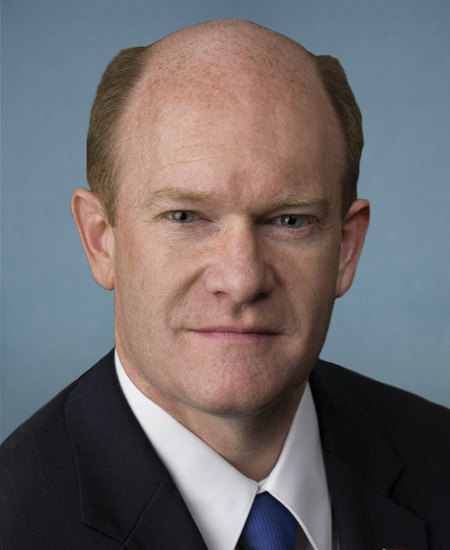
Sen. Christopher A. Coons
Sponsored bills
Maddy summaryThe ACRE Act of 2025 excludes interest income from certain rural and agricultural loans from taxable income for specific lenders. It directly affects qualified lenders (like banks, farm credit institutions, and insurance companies) and borrowers securing loans for rural property, including single-family homes in rural areas or agricultural land. Key provisions allow lenders to not count interest on qualifying loans as taxable income, provided the loans are secured by eligible rural/agricultural property, don’t exceed $750,000 for single-family homes, and avoid "foreign adversary entities" (like China, Russia, or Iran). The bill also requires a Treasury report on the policy’s impact after five years.
Maddy summaryThis bill increases tax benefits for working families by expanding child care tax credits. It raises the employer-provided child care credit from 25% to 50% of qualified expenses (with the maximum credit increasing from $150,000 to $500,000), and adds a new refundable household care credit allowing up to 50% of eligible expenses (capped at $5,000 for one child or $8,000 for two+ children). Small businesses receive enhanced benefits, with a 60% credit rate and higher maximum ($600,000) for qualifying employers. The changes directly affect working parents, caregivers, and small businesses that provide or support child care.
Maddy summaryThis bill requires the President to create a strategy to increase U.S. exports to Africa and Latin America and the Caribbean by 200% in real dollar value over 10 years, with input from Congress, federal agencies, and private sector groups. It establishes two special coordinators within the Commerce Department to oversee the strategy and coordinate with agencies like the Export-Import Bank and development agencies. The bill also mandates trade missions to these regions within one year and standardizes training for U.S. officials on export promotion tools to support the strategy.
Maddy summaryThe Invest to Protect Act of 2025 establishes a federal grant program to support local law enforcement agencies with fewer than 175 officers. Eligible communities - including counties, municipalities, and Tribal governments - can use funds for de-escalation training, mental health and domestic violence response training, officer retention bonuses, graduate education stipends, and access to behavioral health services for officers. The program requires grantees to report on outcomes and publicly disclose bonus amounts, with strict audit requirements to prevent misuse of funds. It authorizes $50 million annually from 2026 to 2030 to advance these concrete safety and support initiatives.
Maddy summaryS 776 (UNITED Act) authorizes the President to negotiate a new comprehensive trade agreement with the United Kingdom to reduce tariff and non-tariff barriers affecting U.S. businesses and workers. It requires negotiations to begin within 180 days of enactment, mandates specific limits on tariff changes (e.g., no duty reductions below 50% of current rates for most goods), and sets a deadline of March 1, 2029, for concluding the agreement. The bill also requires congressional consultation during negotiations and aligns implementation with existing trade law procedures, directly affecting U.S. trade policy and future U.S.-UK economic relations.
Maddy summaryS 797, the Family Building FEHB Fairness Act, adds fertility treatment benefits to the Federal Employees Health Benefits (FEHB) program. This bill directly affects federal employees and their families enrolled in FEHB plans by requiring these plans to cover specified fertility treatments, including in vitro fertilization, embryo preservation, genetic testing, and related medications. Key provisions define "fertility treatment" to include procedures like artificial insemination, assisted reproductive technology, and gamete donation, as determined by the Office of Personnel Management and Health and Human Services. The change takes effect one year after the bill is enacted, making these services a standard covered benefit under FEHB.
Maddy summaryS 807, the Guarding Readiness Resources Act, clarifies how the National Guard Bureau handles reimbursement funds from states and territories. It requires that money received from states (like California or Puerto Rico) for using military property must be returned to the specific account that covered the original costs or a similar account. These funds can only be used by the Department of Defense for repairing, maintaining, replacing, or similar upkeep of assets directly used by National Guard units during state duty. The bill directly affects the National Guard Bureau and state/territorial governments managing these reimbursements.
Maddy summaryS 803, the Keep Americans Safe Act, prohibits the import, sale, manufacture, transfer, or possession of large capacity ammunition feeding devices (devices holding more than 10 rounds, excluding specific .22 caliber tubular devices) in interstate or foreign commerce. It directly affects the general public, while exempting law enforcement officers (including campus police), retired officers with agency-issued devices, nuclear security personnel, and manufacturers testing under federal authorization. Key provisions include requiring serial numbers on new devices, expanding forfeiture for violations, and allowing federal Byrne grants to fund buy-back programs for surrendered devices. The bill takes effect upon enactment, with existing devices lawfully owned before enactment remaining legal.
This resolution recognizes Black History Month as an opportunity to reflect on U.S. history and to commemorate the contributions of African Americans. It calls for the United States to (1) honor the contribution of pioneers who helped to ensure its legacy; and (2) move forward as a nation "indivisible, with liberty and justice for all."