

Maddy summarySRES 57 is a Senate resolution honoring David Ferdinand Durenberger, a former U.S. Senator from Minnesota (served 1978-1989). It commemorates his life and career, highlighting his role as the lead Republican sponsor of the Americans with Disabilities Act and his work protecting Minnesota's natural resources like the Boundary Waters Canoe Area Wilderness. The resolution directs the Senate to formally recognize his passing and transmit a copy to his family. This is a ceremonial resolution with no policy changes or direct impact on constituents.
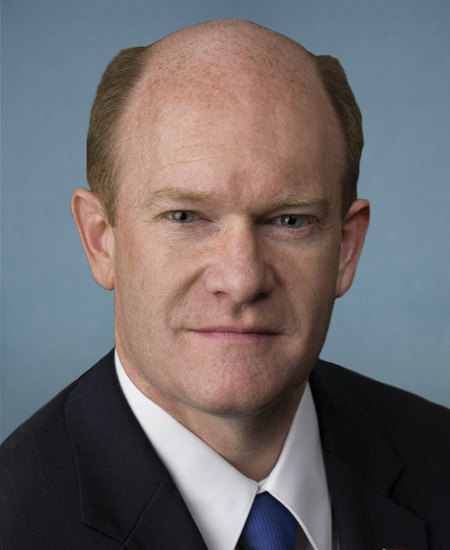
Sen. Christopher A. Coons
Sponsored bills
Maddy summaryThis bill authorizes the presentation of a Congressional Gold Medal to honor Navy pilot Everett Alvarez, Jr., for his service as a Vietnam War POW and subsequent public service. It directs the Speaker of the House and Senate President pro tempore to arrange for the medal's presentation, specifying it must bear his name and image. Bronze duplicates may be sold to cover production costs, with proceeds deposited into the U.S. Mint fund. The bill is purely ceremonial, recognizing Alvarez's 8+ years as a prisoner of war and his post-military career. It does not create new policies or affect any government programs.
Maddy summaryThe Safe Step Act requires health insurance plans and employer-sponsored health coverage to create a transparent process for patients or their doctors to request exceptions to medication step therapy protocols. These protocols typically mandate trying a lower-cost drug first before covering a more expensive alternative. Exceptions must be approved if previous treatments failed, delaying coverage would cause severe harm, the required drug is unsafe, or the patient is stable on the requested drug. Health plans must respond to requests within 72 hours (or 24 hours in emergencies) and make the process details available online.
Maddy summaryThe Hydrogen for Ports Act of 2023 establishes a $100 million annual grant program (2024-2028) to fund port infrastructure using hydrogen or ammonia as clean fuel. It directly affects ports, state/local governments, tribal entities, and port authorities by providing competitive grants for projects like fuel cell cargo handlers, ships, trucks, and fueling infrastructure. Key provisions require grant recipients to monitor fuel leaks, prioritize projects benefiting low-income communities, and focus on reducing port-related emissions and improving air quality. The program mandates training for staff handling these fuels and prioritizes projects that create U.S. jobs and maximize emission reductions.
Maddy summaryThe Hydrogen for Trucks Act of 2023 establishes a federal grant program to support the adoption of hydrogen-powered heavy-duty trucks and related infrastructure. It provides funding for eligible entities - such as truck fleet operators, public agencies, fueling station developers, and partnerships - to purchase at least 7 hydrogen fuel cell trucks or build hydrogen fueling stations, with requirements for public access and regional diversity. Grants cover capital costs (up to $500,000 per truck or station), operational expenses, and safety training, while requiring recipients to report on fuel use, reliability, and emissions data. The program aims to demonstrate vehicle performance across different regions, reduce costs, and accelerate market deployment of hydrogen trucks by 2028, with priority given to projects benefiting disadvantaged communities.
Maddy summaryThe Hydrogen for Industry Act of 2023 establishes a federal grant program to fund demonstration projects using hydrogen in heavy industry to reduce greenhouse gas emissions. It provides grants (up to $400 million per project) for commercial-scale applications in sectors like steel, cement, fertilizer, and chemical manufacturing, requiring at least 50% hydrogen blends by volume. Priority is given to projects that maximize emissions reductions, benefit low-income or disadvantaged communities, create high-quality domestic jobs, and demonstrate safe hydrogen use. The bill authorizes $1.2 billion for fiscal years 2024-2028 and mandates a study on hydrogen safety, cost-effectiveness, and environmental impacts for industrial use.
Maddy summaryS 629, the UNITED Act, authorizes the President to negotiate a comprehensive trade agreement with the United Kingdom to reduce tariff and non-tariff barriers within 180 days of enactment, with the authority expiring March 1, 2025. It requires the President to consult Congress throughout negotiations and submit implementing bills to Congress before March 1, 2025, for approval. The bill includes specific limits on modifying tariffs (e.g., no duty reductions below 50% of current rates for most goods, and no cuts below Uruguay Round levels for sensitive agricultural products). It directly affects U.S. businesses, workers, farmers, and ranchers by aiming to expand market access and align trade terms with U.S. economic priorities. The agreement must also comply with the Good Friday Agreement regarding Ireland and Northern Ireland.
Maddy summaryThis bill establishes the Hydrogen Infrastructure Finance and Innovation Act (HIFIA) pilot program to fund hydrogen infrastructure projects. It provides grants and low-cost loans (up to 80% of costs) to eligible entities like corporations, governments, and nonprofits building hydrogen pipelines, storage, or delivery systems - especially projects retrofitted for hydrogen blends or new pure-hydrogen lines. Priority is given to projects reducing emissions, minimizing environmental impact, serving disadvantaged communities, and creating U.S. jobs. The program requires mandatory leak monitoring and limits annual federal funding to $100 million for fiscal years 2024-2028.
Maddy summaryThis bill amends the tax code to allow employers to claim a work opportunity tax credit for hiring spouses of active-duty military members. It adds "qualified military spouse" as a new category for the credit, defined as an individual certified by a local agency as married to a military service member at the time of hire. Employers who hire such individuals after the bill's enactment date can claim this credit for their wages. The change directly affects employers seeking tax incentives and military spouses seeking employment opportunities. The provision applies to hiring that occurs after the bill becomes law.
Maddy summaryS 617, the COAST Anti-Drilling Act, prohibits the federal government from issuing oil and gas leases in four specific offshore areas: the Mid-Atlantic, South Atlantic, North Atlantic, and Straits of Florida planning areas. The bill amends federal law to require the Secretary of the Interior to deny all permits for exploration, development, or production of oil, natural gas, or minerals in these regions. This directly affects oil and gas companies seeking to operate in those federal waters and aims to prevent offshore drilling activities in these coastal zones.