

Maddy summaryThe HCBS Access Act (S 762) requires states to provide Medicaid coverage for home and community-based services (HCBS) to eligible individuals with disabilities and older adults, aiming to eliminate waiting lists and ensure access to community-based care. The bill establishes a comprehensive definition of HCBS that includes personal assistance, transportation, respite care, housing support, and other services necessary for community living. It mandates states to develop implementation plans to expand access, improve compensation and working conditions for direct care workers, and report on quality measures and demographic data related to HCBS access. The bill also creates a national technical assistance center to support workforce development and ensures services are provided in settings meeting specific quality standards.
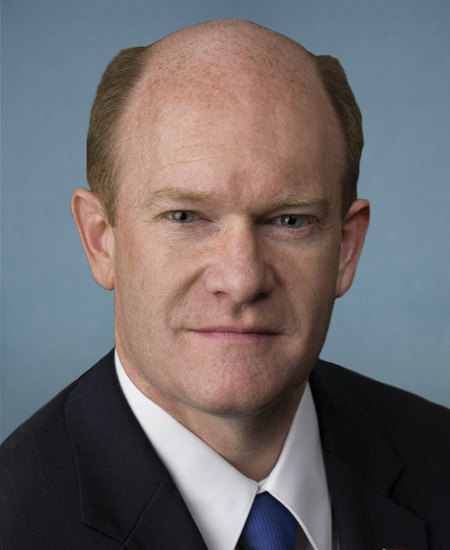
Sen. Christopher A. Coons
Sponsored bills
Maddy summaryS 701, the Women’s Health Protection Act of 2023, prohibits states from imposing restrictions on abortion that are more burdensome than those for comparable medical procedures. It protects access to abortion before fetal viability (when a fetus could survive outside the womb) by banning requirements like unnecessary in-person visits, medically inaccurate counseling, or facility restrictions not applied to similar care. Post-viability abortions remain protected when medically necessary to safeguard a patient’s life or health. The bill preempts conflicting state laws and ensures enforcement through federal courts to uphold these access protections for patients and health care providers.
Maddy summaryThis bill authorizes the U.S. Mint to produce commemorative coins honoring working dogs, including $5 gold, $1 silver, and half-dollar coins, to be sold starting January 1, 2025. A surcharge of $35 per gold coin, $10 per silver coin, and $5 per half-dollar coin will be added to the sale price, with all surcharge funds directed to America’s VetDogs to support its service dog programs for veterans and people with disabilities. The coins are legal tender but will only be issued for one year (2025), with production limited to specified quantities (50,000 gold, 500,000 silver, 750,000 half-dollars). The bill does not create new government programs but uses commemorative coin sales to fund existing service dog initiatives.
Maddy summaryThe REDI Act (S 704) amends the Higher Education Act to create a loan deferment option for medical and dental residents. It directly affects borrowers with federal student loans who are enrolled in medical or dental internship or residency programs. The key provision allows these borrowers to temporarily pause both principal payments and interest accrual on their loans during their residency training. This change applies to loans made under the Higher Education Act and is designed to ease financial pressure during these critical training years.
Maddy summaryS 692 requires the Social Security Administration to update its terminology in all materials by January 1, 2025. It mandates replacing "early eligibility age" with "minimum benefit age," "full retirement age" and "normal retirement age" with "standard benefit age," and removing "delayed retirement credit" while using "maximum benefit age" instead of age 70 references. This change directly affects individuals interacting with Social Security rules, forms, and online resources, ensuring consistent terminology for clarity. The bill focuses solely on renaming terms, not altering benefit calculations or eligibility rules.
Maddy summaryThis bill requires the Attorney General to develop a report within 150 days of enactment, proposing programs to provide mental health care for public safety officers. It directly affects police officers, firefighters, EMTs, and 911 dispatchers - groups identified as having higher rates of PTSD and suicide risk than the general population. The report must outline evidence-based treatment options (including telehealth), confidentiality protections, and efficient state/local implementation methods, plus draft grant conditions and funding estimates. The bill does not fund programs directly but sets a process for creating them.
Maddy summaryThis bill reauthorizes the Conrad State 30 program, which allows U.S. states to request waivers enabling foreign medical graduates (J-1 visa holders) to work in medically underserved areas without having to return to their home countries. It extends the program's expiration date, creates new mechanisms for physicians to maintain legal status after completing service requirements, and adds protections against non-compete clauses in employment contracts. The bill modifies requirements for foreign medical graduates to work in underserved areas, including clarifying the 3-year service requirement and establishing a process for states to recapture waiver slots when physicians move between states. It also requires annual reporting on program usage by state and includes provisions for academic medical centers to request waivers without geographic constraints. The bill directly affects foreign-trained physicians, U.S. states, and health care facilities in underserved areas.
Maddy summaryThis bill eliminates waiting periods for disability benefits and Medicare coverage for people diagnosed with metastatic breast cancer. It amends two sections of the Social Security Act to add "metastatic breast cancer" to the list of conditions (alongside ALS) that qualify for immediate access to disability insurance benefits and Medicare coverage, bypassing the standard 24-month waiting period. Specifically, it modifies eligibility under Section 223(a) for disability benefits and Section 226(h) for Medicare coverage. The changes apply to applications or benefits filed/beginning after the bill's enactment date.
Maddy summaryS 664 requires the Social Security Administration to mail paper statements to all individuals with Social Security numbers under specific age-based schedules: upon starting a new job, then every 5 years starting at age 25, every 2 years at age 55, and annually after age 60. The bill mandates these paper statements be sent regardless of whether an individual has an online "my Social Security" account, and includes an opt-out option for recipients. It applies directly to all U.S. workers and Social Security account holders, ensuring regular updates on their earnings and benefit estimates. The bill also authorizes funding for administrative costs to implement this requirement.
Maddy summarySRES 91 is a non-binding Senate resolution expressing support for negotiating a tax treaty between the United States and Taiwan. It recognizes Taiwan as the U.S.'s eighth-largest trading partner (supporting over 188,000 American jobs) and notes the U.S. lacks an income tax treaty with Taiwan despite having agreements with 66 other countries. The resolution encourages the President to begin negotiations and work with Congress on a formal agreement, while also promoting broader U.S.-Taiwan trade and investment ties. This resolution directly affects U.S. economic relations with Taiwan but does not create new law or policy.