

Maddy summaryS 3581, the "No Settlements for January 6 Law Enforcement Assaulters Act," prohibits using federal funds (including the Judgment Fund) to settle claims by individuals convicted of assaulting law enforcement during the January 6, 2021, Capitol breach. It directly affects those convicted under federal or D.C. law for assaulting officers during the Capitol events, banning settlements for claims related to harm suffered during the events or prosecution for those acts. The bill's key mechanism blocks all federal financial obligations for such settlements, regardless of the claim's basis. This is a substantive policy change affecting legal settlements for specific convicted individuals, not a procedural measure.
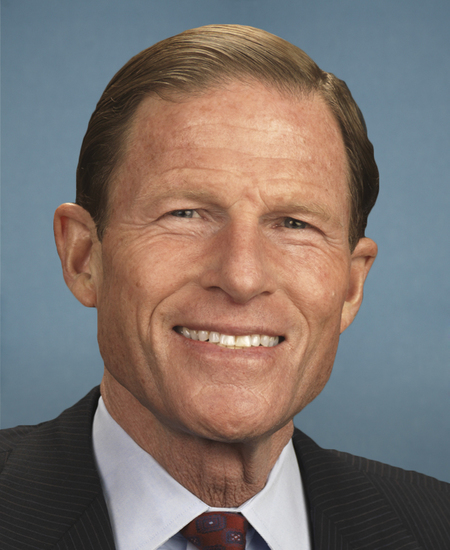
Sen. Richard Blumenthal
Sponsored bills
Maddy summaryThis bill requires the Department of Veterans Affairs (VA) to create a new project team within 180 days to overhaul how veterans schedule health care appointments. The team must develop a centralized system showing all available appointments across VA facilities and providers, a self-service online platform for veterans to book appointments (including referrals), and a phone-based scheduling option for veterans to book appointments directly. These changes must be completed within one year of the bill's enactment, with progress reports to Congress on costs, challenges, and metrics. The bill directly affects veterans seeking VA health care by aiming to make scheduling more efficient and accessible across all VA services.
Maddy summarySJRES 82 is a joint resolution seeking to block a rule issued by the Department of Health and Human Services (HHS) regarding how the agency should follow the text of the Administrative Procedure Act (APA), a federal law governing how agencies create regulations. The rule, published in March 2025, was identified by the Government Accountability Office as a "rule" subject to the Congressional Review Act. If enacted, this resolution would void the HHS policy, preventing it from taking effect and requiring HHS to disregard this specific internal guideline. The bill directly affects HHS's rulemaking procedures by invalidating the policy statement on APA adherence.
Maddy summaryThis bill defines "buy now, pay later" (BNPL) loans under federal law as short-term payment plans for retail purchases repaid in four or fewer interest-free installments with no fees. It extends existing consumer protections from the Truth in Lending Act to BNPL loans, requiring lenders to follow the same rules as credit card issuers regarding dispute resolution, account protections, and customer rights. The bill directly affects BNPL lenders (who must now comply with these rules) and consumers using BNPL services for retail purchases. The Consumer Financial Protection Bureau must issue implementing rules within one year of the law’s enactment.
Maddy summaryThis bill requires the VA to provide telehealth services, mail-order pharmacy benefits, and mandatory beneficiary travel payments to veterans residing in the Freely Associated States (including Palau, the Marshall Islands, and Micronesia) within one year of enactment. It mandates quarterly reporting to Congress on implementation progress and associated costs. The law directly affects veterans in these Pacific Island nations by expanding access to critical healthcare and travel support services previously not uniformly guaranteed.
Maddy summaryThis non-binding Senate resolution (SRES 566) recognizes the critical role of Department of Veterans Affairs (VA) employees in providing essential health care to veterans. It highlights the VA's service to over 7 million patients, high veteran trust in VA care, and its performance in quality metrics compared to non-VA facilities. The resolution urges the VA to support its employees and reaffirms congressional commitment to ensuring veterans have access to high-quality, veteran-centered care through VA facilities or community providers. It does not create new policies or funding but serves as a symbolic acknowledgment of VA staff contributions.
Maddy summarySRES 549 is a Senate resolution urging the Trump Administration to seize vessels in Russia's "shadow fleet" that transport sanctioned oil. It directly addresses the executive branch, citing that these vessels (561 ships carrying 60-80% of Russia's oil exports) evade sanctions and fund Russia's war in Ukraine. The resolution condemns shadow fleet operations as undermining U.S. sanctions and calls for seizing such vessels, referencing prior U.S. seizures of similar vessels involved in Iran oil smuggling. It does not create new law but formally urges enforcement action.
Maddy summaryThis bill establishes federal funding for research and development of alternative protein sources using biomanufacturing and bioprocessing technologies. It creates Centers of Excellence at agricultural institutions (including 1890 Land-Grant Universities), authorizes $50 million annually for food biomanufacturing facility grants, and provides $25 million yearly for workforce training programs. The bill directly affects research institutions, food biomanufacturing companies, and agricultural workforce development programs by providing grants for scaling production of plant-based and lab-grown proteins. It requires the USDA to develop a national strategy on protein security by 2026, focusing on supply chain resilience, job creation, and U.S. competitiveness in the global protein market. The legislation aims to diversify food systems and support domestic production of protein sources using underutilized biomass.
Maddy summaryThis bill repeals Section 230 of the Communications Act of 1934, which currently shields online platforms from most liability for user-generated content. It would remove this legal protection, potentially making platforms more liable for content posted by users. The bill also updates references to Section 230 in other federal laws (like the Trademark Act and criminal codes) to instead reference Section 223 of the Communications Act. The changes would take effect two years after the bill is enacted.
Maddy summaryThis bill requires manufacturers of self-driving vehicle systems to publicly define and declare the specific conditions (like weather, road types, or time of day) where their technology is designed to operate safely. It mandates that these "operational design domains" be submitted to the National Highway Traffic Safety Administration (NHTSA) and posted on the manufacturer's website. The law prohibits systems from functioning outside these declared domains and adds civil penalties for violations. This directly affects car companies developing autonomous driving technology, imposing new transparency and safety compliance requirements.