Ghost Army Congressional Gold Medal Act This bill directs the Speaker of the House of Representatives and the President pro tempore of the Senate to award a Congressional Gold Medal to the 23rd Headquarters Special Troops and the 3133d Signal Service Company, known as the Ghost Army , collectively, in recognition of its service during World War II.
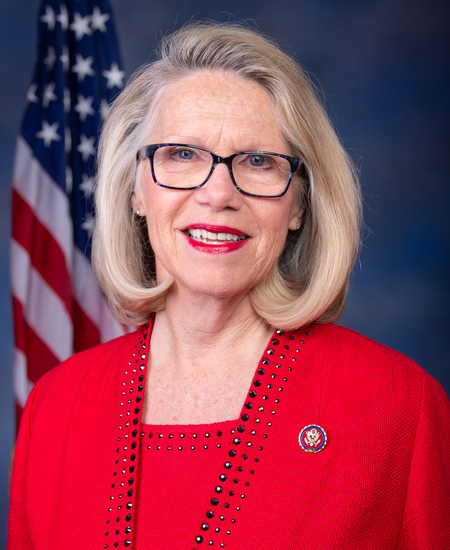
Rep. Carol D. Miller
Sponsored bills
Recognizing the Protection of Motorsports Act of 2019 or the RPM Act of 2019 [ sic ] This bill authorizes the modification of a vehicle's air emission controls for vehicles that are not legal for operation on a street or highway and are used solely for competition.
Gun Owner Registration Information Protection Act This bill prohibits federal funding of, or support for, state databases that list (1) firearms lawfully owned or possessed by individuals, or (2) individuals who lawfully own or possess firearms.
This concurrent resolution expresses the sense of Congress that a carbon tax would be detrimental to American families and businesses and is not in the best interest of the United States.
Combatting COVID Unemployment Fraud Act of 2021 This bill requires additional documentation for individuals seeking pandemic unemployment assistance, requires state unemployment agencies to use designated fraud prevention tools, and otherwise addresses pandemic-related unemployment benefits.
Non-Opioids Prevent Addiction In the Nation Act or the NOPAIN Act This bill temporarily establishes separate payments for certain non-opioid treatments under the Medicare prospective payment system for hospital outpatient department services and the payment system for ambulatory surgical center services. The bill applies to pain management treatments that are able to replace or reduce opioid consumption, as shown through clinical trials or data.
Freedom to Work Act This bill requires federal agencies to review and reduce occupational licensing requirements. Specifically, each executive agency must review relevant laws, policies, and regulations that institute occupational licensing requirements for agency positions, or that cause a state, local, or tribal government to adopt licensing requirements for positions within their jurisdictions, and identify possible changes to eliminate such requirements or to provide alternatives that are the least restrictive while also maintaining consumer protection. Agencies must implement changes to the extent permissible under law. The bill also requires states to describe their plans to reduce occupational licensing barriers as part of their unified state plans for programs under the Workforce Innovation and Opportunity Act. Several executive orders have required similar review of occupational licensing requirements. For example, the executive order titled Increasing Economic and Geographic Mobility, which was issued on December 14, 2020, outlined certain principles for occupational licensing requirements, including that such requirements should be the least restrictive to competition while also maintaining consumer protection; the order directed executive agencies to review and identify changes to their regulations, guidance, and policies in accordance with these principles. Additionally, the executive order titled Promoting Competition in the American Economy , which was issued on July 9, 2021, directs the Federal Trade Commission to consider addressing practices that inhibit competition, including unfair occupational licensing restrictions, through regulations.

This resolution expresses the sense of the House of Representatives that the United States should continue to lead reform efforts and urge member cooperation at the World Trade Organization in order to address barriers to trade, improve living standards across the world, and enhance accountability and dispute settlement mechanisms.
Creating Opportunities Now for Necessary and Effective Care Technologies (CONNECT) for Health Act of 2021 or the CONNECT for Health Act of 2021 This bill expands coverage of telehealth services under Medicare. Among other provisions, the bill allows the Centers for Medicare & Medicaid Services (CMS) to waive certain restrictions, such as restrictions on the types of technology that may be used; permanently removes geographic restrictions on originating sites (i.e., the location of the beneficiary) and allows the home of the beneficiary to serve as the originating site for all services; permanently allows federally qualified health centers and rural health clinics to serve as the distant site (i.e., the location of the health care practitioner); and allows the CMS to generally waive coverage restrictions during any public health emergency. Additionally, the CMS must report on the effects of expanded telehealth services during the COVID-19 public health emergency, including with respect to the utilization, quality, and outcomes of services. The Center for Medicare and Medicaid Innovation may also test alternative payment models relating to expanded telehealth services.
Return Excessive Migrants and Asylees to International Neighbors in Mexico Act of 2021 or the REMAIN in Mexico Act of 2021 This bill requires the Department of Homeland Security (DHS) to implement the Migrant Protection Protocols as outlined in the January 25, 2019, memo titled Policy Guidance for Implementation of the Migrant Protection Protocols . (The protocols generally required aliens who are not clearly admissible, including those seeking asylum, arriving by land along the U.S.-Mexico border to be returned to Mexico while their immigration proceedings are pending, rather than remain in the United States. On January 21, 2021, DHS stopped applying the protocols to newly-arrived individuals.)