

Maddy summaryHR 2533, the EASE Act of 2025, requires Medicare and Medicaid to test a new telehealth model designed to improve specialty care access for rural and underserved Medicare/Medicaid beneficiaries. The bill mandates the Centers for Medicare & Medicaid Services (CMS) to partner with nonprofit provider networks - comprising at least 50 community health centers or rural clinics (half in rural areas) - to deliver specialty care via telehealth and coordinate with primary care providers. Eligible individuals must be enrolled in Medicare Part B, Medicaid, or CHIP and reside in designated rural or underserved areas. The model requires networks to collect and evaluate data on service delivery, with funding subject to existing program rules. This creates a structured pilot program focused on expanding remote specialty care access in underserved regions.
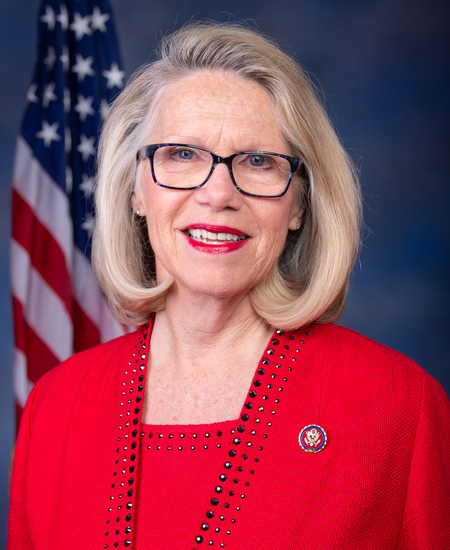
Rep. Carol D. Miller
Sponsored bills
Maddy summaryHR 2509, the COMPLETE Care Act, creates Medicare payment incentives for primary care providers who integrate specific behavioral health services into their practice. It directly affects Medicare providers offering services identified by HCPCS codes 99484, 99492, 99493, 99494, G2214, and G0323 (covering models like Collaborative Care and Primary Care Behavioral Health) during 2027-2029. The bill increases Medicare payments for these services to 125-175% of standard rates (phasing down from 175% in 2027 to 125% in 2029) and waives budget neutrality rules to fund these higher payments. Additionally, it requires the HHS Secretary to provide technical assistance to primary care practices adopting these models by 2026, with dedicated funding for 2025-2029.
Delivering for Rural Seniors Act of 2025 This bill directs the Food and Nutrition Service (FNS) to award competitive grants to state agencies under a home delivery pilot program for participants in the Commodity Supplemental Food Program (CSFP). As background, the CSFP works to improve the health of low-income persons at least 60 years of age by supplementing their diets with nutritious Department of Agriculture foods. Under the pilot program, a state agency must distribute grant funds to an eligible entity (i.e., a local agency or subdistributing agency) to operate projects that facilitate home delivery of commodities to CSFP participants. Grant funds may be used for costs associated with transportation and distribution of commodities to CSFP participants, staffing required to operate home delivery services, and home delivery outreach to CSFP participants or potential participants. A state agency must prioritize eligible entities that serve CSFP participants who reside in rural areas. A state agency must also submit an annual report to FNS about the project, including best practices regarding the use of home delivery to improve the effectiveness of the CSFP.
Maddy summaryHR 1417 establishes a new program within the U.S. Department of Agriculture to provide tailored technical assistance to rural health care facilities. The program directly supports facilities like hospitals, clinics, and health centers in rural areas by helping them identify operational needs, improve financial management, and access USDA loan and grant programs. Key provisions include prioritizing facilities in medically underserved areas or facing financial vulnerability, with a $2 million annual funding limit for fiscal years 2026-2030. The program requires annual reports on outcomes and effectiveness to Congress, focusing on preventing facility closures and strengthening rural health care delivery.
Maddy summaryThe SHORT Act (HR 2395) redefines federal firearm definitions to exclude antique and collector firearms from being classified as firearms, and removes distinctions between short-barreled rifles and shotguns in federal regulations. It prevents state laws from imposing taxes or registration requirements on short-barreled rifles and shotguns, requiring state rules to align with federal compliance instead. The bill also mandates the federal government to destroy specific records related to these firearms within one year of enactment.
Maddy summaryHR 2477, the Portable Ultrasound Reimbursement Equity Act of 2025, would amend Medicare rules to require equal reimbursement for portable ultrasound transportation and setup services as is currently provided for portable X-ray services. This change directly affects Medicare beneficiaries needing portable ultrasound exams and healthcare providers (like mobile clinics) who offer these services. The bill mandates that Medicare pay separately for portable ultrasound transportation and setup in the same way and to the same extent as portable X-ray services, using similar supplier requirements as existing regulations. The policy change would take effect for services provided on or after January 1, 2027.
Maddy summaryHR 2410 creates a 20% federal tax credit for developers converting older non-residential buildings (at least 20 years old) into affordable housing. The credit applies to qualified conversion costs, requiring that 20% of units be rent-restricted for residents earning 80% or less of the area median income for 30 years. It establishes a $12 billion national credit limit, with $3 billion reserved for conversions in economically distressed areas, and mandates state-level allocation plans prioritizing projects near transit and employment. The bill directly affects developers seeking tax incentives for downtown revitalization, not tenants or local governments.
Maddy summaryHR 2423, the Unfair Tax Prevention Act, amends the U.S. tax code to modify how the base erosion tax applies to certain foreign-owned businesses. It directly affects foreign-controlled entities operating under specific foreign tax systems that impose taxes based on ownership chains, such as those linked to foreign corporations. Key provisions include treating these entities as "applicable taxpayers" for tax purposes, changing a deadline from December 31, 2025, to the bill's enactment date, and counting 50% of their cost of goods sold as a tax benefit while excluding certain other tax rules. The changes apply to taxable years beginning after the bill becomes law.
Maddy summaryHR 2398, the Rural Veterinary Workforce Act, amends federal tax law to exempt certain student loan repayment or forgiveness assistance from income tax for veterinarians working in rural areas. It specifically expands existing tax exclusions to include programs under the National Agricultural Research, Extension, and Teaching Policy Act (7 U.S.C. 3151a) and similar state-level programs designed to increase rural veterinary access. This change directly affects veterinarians participating in qualifying loan repayment or forgiveness programs in states prioritizing rural veterinary services. The policy change modifies IRS tax treatment to reduce the financial burden on veterinarians serving underserved rural communities.
Maddy summaryThe PHIT Act of 2025 allows taxpayers to deduct certain fitness-related expenses as medical costs on their federal tax returns. It directly affects individuals and families who pay for qualifying physical activity programs, such as gym memberships, fitness classes, or approved equipment. Key provisions include setting annual limits ($1,000 per person or $2,000 for joint returns), defining eligible fitness facilities (excluding golf courses or private clubs), and specifying that equipment must be used exclusively for physical activity. The bill amends the Internal Revenue Code to treat these expenses as deductible medical costs, effective for taxable years after its enactment.