

Maddy summaryHR 2872 (the RESILIENCE Act of 2025) amends the tax code to change how public utilities can deduct repair and maintenance costs for certain infrastructure. It requires utilities to reduce their taxable income by the same amount they deduct for these repairs on their financial statements, specifically for property owned by the utility and accounted for as depreciation. This applies to utilities owning infrastructure covered under Section 168(i)(10) of the tax code, aligning their tax deductions with financial reporting. The change takes effect for taxable years starting after December 31, 2024.
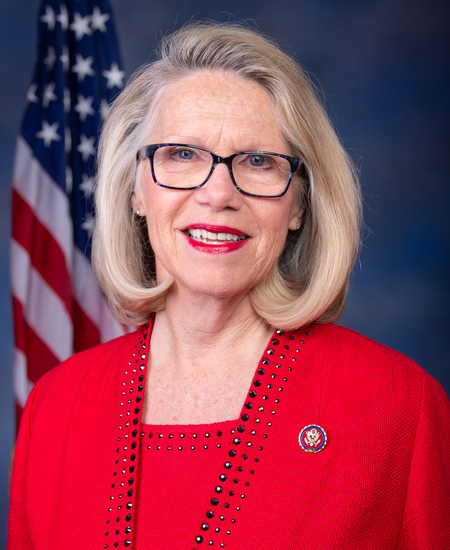
Rep. Carol D. Miller
Sponsored bills
Maddy summaryThis is a symbolic resolution (HRES 318) designating the week of April 24-29, 2025, as "Small Businesses in For-Hire Transportation Week." It expresses congressional support for small businesses in the for-hire transportation industry (including taxis, limousines, medical transport, and shuttles) without creating new laws or altering policy. The resolution highlights these businesses' role in employing over 276,000 drivers and nearly a million workers, serving communities, and supporting vulnerable populations. As a non-binding expression of support, it does not impose requirements or provide funding.
Maddy summaryThis bill increases the income limit for deducting mortgage insurance premiums on federal income taxes. It doubles the cap from $100,000 (or $50,000 for married filing separately) to $200,000 (or $100,000 for married filing separately) under IRS Code Section 163(h)(3)(E), making the deduction permanent for qualifying taxpayers. The change directly affects middle-income homeowners who pay mortgage insurance premiums and itemize deductions on their tax returns. The policy takes effect for tax years beginning after December 31, 2025.
Maddy summaryThe Affordable Housing Credit Improvement Act of 2025 would reform the Low-Income Housing Credit program, which provides tax credits to developers of affordable housing. It would increase state allocations based on population with annual cost-of-living adjustments, modify tenant eligibility rules to allow higher income limits for some residents, and add protections for domestic violence victims in housing. The bill would simplify rules for rural and Native American housing projects, clarify credit eligibility requirements, and require greater transparency in program administration. These changes would directly affect developers, property owners, and low-income tenants in housing projects that receive LIHC tax credits.
Maddy summaryThe Retirement Savings for Americans Act of 2025 creates a new retirement savings program called the American Worker Retirement Fund to help workers without access to employer-sponsored retirement plans. It requires businesses to automatically enroll qualifying workers (those without existing retirement plans) at a 3% contribution rate, with the option to opt out. The program includes a government match tax credit that provides up to 5% of a worker's income as matching contributions, phasing out for higher earners. The Fund will be managed by a Board and Executive Director, offering multiple investment options and maintaining accounts until retirement or withdrawal.
Maddy summaryThis bill, HR 2102 (Major Richard Star Act), allows veterans with combat-related disabilities to receive both full military retired pay and veterans' disability compensation simultaneously, without the previous offset that reduced retired pay. It directly affects veterans already eligible for both benefits due to combat-related injuries, removing the requirement that their retired pay be reduced by the disability compensation amount. The key provision amends Title 10 and Title 38 to eliminate the offset rule (sections 5304 and 5305 of Title 38) for these veterans. The change applies to payments starting after the bill’s enactment date, effective for all qualifying veterans. This is a policy change to increase financial support for affected veterans, not a new benefit.
Maddy summaryThe Manifest Modernization Act of 2025 updates U.S. customs rules for importers by requiring more detailed public disclosure of shipment information on manifests for vessels, vehicles, and aircraft entering the country. It mandates that public disclosure include the Harmonized Tariff Schedule subheading, country of origin, and the last country the cargo passed through before arrival. This applies to all importers and customs authorities handling manifests for sea, land, or air transport arriving after the 30-day implementation period following the law's passage. The bill directly affects businesses and logistics providers managing international shipments entering the United States.
Maddy summaryThe IDEA Full Funding Act (HR 2598) mandates specific annual federal funding levels for the Individuals with Disabilities Education Act (IDEA), directly affecting schools and students with disabilities nationwide. It requires the federal government to appropriate either a fixed dollar amount or a specified percentage (increasing annually from 4.5% to 40%) of a calculated total - based on the number of eligible students and average per-pupil costs - starting in fiscal year 2026 through 2035. The bill sets clear, escalating funding targets, with the higher of two calculated amounts (dollar figure or percentage) becoming available for obligation each fiscal year. This establishes a binding financial commitment to address long-standing underfunding of special education services under IDEA.
Maddy summaryHRES 289 is a symbolic resolution supporting the designation of April 2025 as "Second Chance Month" to raise awareness about barriers faced by people with criminal records. It does not create new laws or programs but encourages public awareness of "collateral consequences" like employment restrictions, housing barriers, and educational access issues that hinder reentry. The resolution calls for communities, employers, and organizations to promote second chances for individuals who have completed their sentences. It is a non-binding gesture aimed at fostering public dialogue, not a policy change.
Maddy summaryThis bill creates a new Medicare payment model (the "Comprehensive Alternative Response for Emergencies Model") that allows Medicare Part B to cover ground ambulance services provided in response to emergency medical calls *without* a full transport. It directly affects Medicare beneficiaries receiving emergency ambulance care and ambulance providers, ensuring they are paid for services like dispatch and initial response that don't include transport. The model requires payment rates to align with standard transport payments, mandates compliance with state protocols, and operates for a 5-year test period. A report by the Comptroller General will evaluate the model's impact on beneficiary access, outcomes, and regional differences after 4 years.