

Maddy summary# Summary of Proposed FEMA Reform Legislation (FEMA Act of 2025) This comprehensive legislative document proposes significant reforms to the Robert T. Stafford Disaster Relief and Emergency Assistance Act, with four main sections addressing: ## 1. Disaster Assistance Reforms - **Expanded eligibility** for assistance, including clarifying that absence of a fixed address doesn't disqualify individuals from sheltering assistance - **Improved rental assistance** with consideration of local post-disaster rent increases - **Direct assistance** for those unable to use financial assistance, with no requirement to show other assistance can cover costs (except insurance) - **Enhanced notices** for applicants, including documentation of denial decisions - **Clarification of displacement assistance** eligibility, stating insurance shouldn't be considered a duplication of benefits ## 2. Mitigation Program Enhancements - **Preapproved project mitigation plans** requiring states to develop plans with peer review processes - **Improved allocation of funds** with formulas prioritizing vulnerable communities, high-risk areas, and rural/economically distressed communities - **Resilient buildings** requirements for housing retrofits using the latest building codes - **Streamlined application processes** for hazard mitigation funds across multiple programs - **Study on mitigation benefits** to evaluate cost savings and effectiveness ## 3. Transparency and Accountability Measures - **Public dashboards** for both individual assistance (431) and public assistance (432) showing application status, approvals, denials, and funding - **Transparency requirements** for disaster declarations with detailed justifications for approvals/denials - **GAO studies** on numerous topics including: - Identity theft in disaster assistance (409) - Insurance utilization for public assistance facilities (410) - Wildfire management plans (411) - Effectiveness of alerting systems (412) - Cost savings of repair/rebuilding reforms (415) - **Prohibition on political discrimination** in assistance distribution ## 4. Workforce and Operational Improvements - **Study on workforce retention** in noncontiguous communities - **Pilot program** for preliminary damage assessments in remote communities - **Fast-moving disasters working group** to develop best practices for rapid response The legislation focuses on improving efficiency, transparency, and effectiveness of disaster relief programs while prioritizing vulnerable populations and communities with higher risk of disasters. It also emphasizes data-driven decision making through required studies and reports to continuously improve disaster management policies.
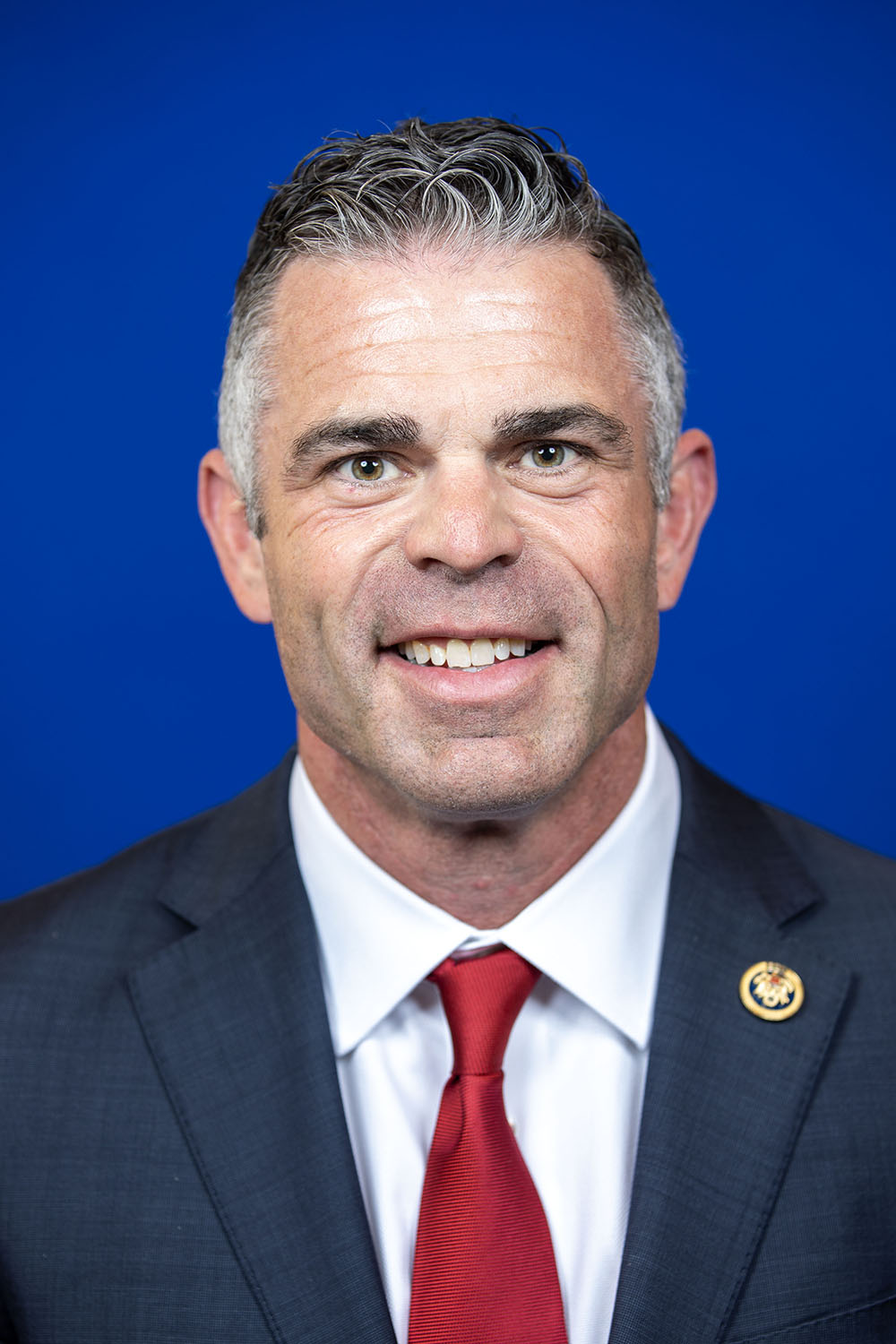
Rep. Tony Wied
Sponsored bills
Maddy summaryThis bill prohibits the U.S. Department of Agriculture (USDA) from using race-based or sex-based criteria when making decisions about 10 specific farm programs. It applies to programs including pandemic aid for farmers, crop insurance, conservation programs like the Conservation Reserve Program, farm loans, and rural development grants. The law requires USDA to administer these programs based on merit, fairness, and equal opportunity for all applicants. It directly affects farmers, ranchers, and agricultural businesses applying for these federal programs.
Maddy summaryHRES 622 is a symbolic resolution honoring small manufacturers of firearms (including handguns, rifles, and accessories) for their economic and cultural contributions. It specifically recognizes their role in supporting 380,000 jobs and $91 billion in annual economic output, while promoting shooting sports traditions like hunting and marksmanship. The resolution formally supports designating August 2025 as "National Shooting Sports Month" and encourages policies to help these businesses innovate and grow. As a non-binding resolution, it does not create new laws but publicly acknowledges the industry’s impact on communities and recreational heritage.
Maddy summaryHR 4788 would amend a 1932 District of Columbia law to allow Members of Congress (Senators and Representatives) to carry concealed firearms in Washington, D.C., if they hold a valid concealed carry license from a state where they are permitted to carry, or are otherwise legally allowed to carry concealed in their home state. The bill requires these members to not be federally prohibited from possessing firearms, to carry a valid state-issued license or proof of residency rights, and to present photo identification. This exception applies only to Members of Congress and does not alter D.C.'s general concealed carry laws for other individuals. The provision would take effect upon the bill's enactment.
Maddy summaryThe PRIME Act exempts custom slaughter facilities from federal meat inspection requirements when they follow state laws and sell meat exclusively within the same state. It specifically allows facilities to slaughter animals and prepare meat without federal oversight if the products go only to household consumers or local businesses (like restaurants, hotels, or grocery stores) serving consumers directly in that state. The bill clarifies that this exemption does not override stricter state regulations governing custom slaughter or meat sales. This primarily affects small-scale slaughter operations and local food businesses operating within a single state's borders.
Maddy summaryHR 4706 prohibits Chinese government-linked entities (including Chinese corporations, CCP-affiliated organizations, and entities controlled by China) from acquiring, leasing, or owning U.S. agricultural land or residential real estate. The bill requires such entities to sell all existing U.S. agricultural land holdings within one year (with a 180-day letter of intent deadline) and residential real estate holdings within one year, imposing daily fines of $100 per acre for agricultural land violations and $1,000 per residential unit. It also voids noncompete agreements between these entities and their employees. The law applies to all 50 states and territories, with enforcement by the Agriculture and Commerce Departments, and includes a 2-year temporary residential purchase ban ending in 2026 (extendable by the President).
Maddy summaryThis bill establishes a federal right for livestock producers to sell meat and dairy products across state lines without facing conflicting state regulations. It prevents states from imposing production standards (like animal welfare rules) on products not raised within that state, ensuring a uniform national market for covered livestock products. The law specifically covers animals raised for meat or dairy (including milk products), but excludes egg production. This aims to eliminate barriers to interstate commerce for these products while aligning with U.S. trade obligations.
Maddy summaryThis bill establishes a new federal program to improve rural roads critical for agriculture. It provides funding for projects that replace weight-limited bridges, enhance access to farms and agricultural facilities, and upgrade safety on high-risk rural roads. The program targets local roads and rural minor collectors, with the federal government covering up to 90% of eligible project costs. It directly affects rural communities and agricultural businesses by addressing infrastructure barriers to farm operations and local economic activity. The funding is allocated through existing highway apportionment formulas under Title 23, U.S. Code.
Maddy summaryThis bill (HR 4622) allows veterans who participated in Operation End Sweep to receive the Vietnam Service Medal. It directly affects veterans who served in this specific military operation. The key provision enables the Secretary of the relevant military department to award the medal upon the veteran's application, streamlining the process for these individuals to gain recognition for their service. The bill makes no changes to existing medal criteria but extends eligibility specifically to Operation End Sweep veterans.
Maddy summaryThe Defending American Property Abroad Act of 2025 protects U.S. property interests in Western Hemisphere countries with U.S. free trade agreements. It requires the Secretary of Homeland Security to identify and list ports, harbors, or marine terminals where a foreign government has nationalized, expropriated, or seized U.S.-owned land (since January 2024) through actions like contract repudiation or forced control. Once listed, the President must prohibit vessels using these sites from importing goods, docking passenger vessels, or conducting maintenance in the United States. This directly affects U.S. persons (citizens or businesses) with property in designated locations.