

Maddy summaryHR 5100 extends the Small Business Innovation Research (SBIR) and Small Business Technology Transfer (STTR) programs through fiscal year 2026, instead of ending on September 30, 2025. This bill directly affects small businesses and research institutions that rely on federal funding for research and development through these programs. The key mechanism is updating expiration dates across multiple program provisions in the Small Business Act to maintain funding authority and program operations for one additional year. The extension does not alter program eligibility, funding levels, or core requirements.
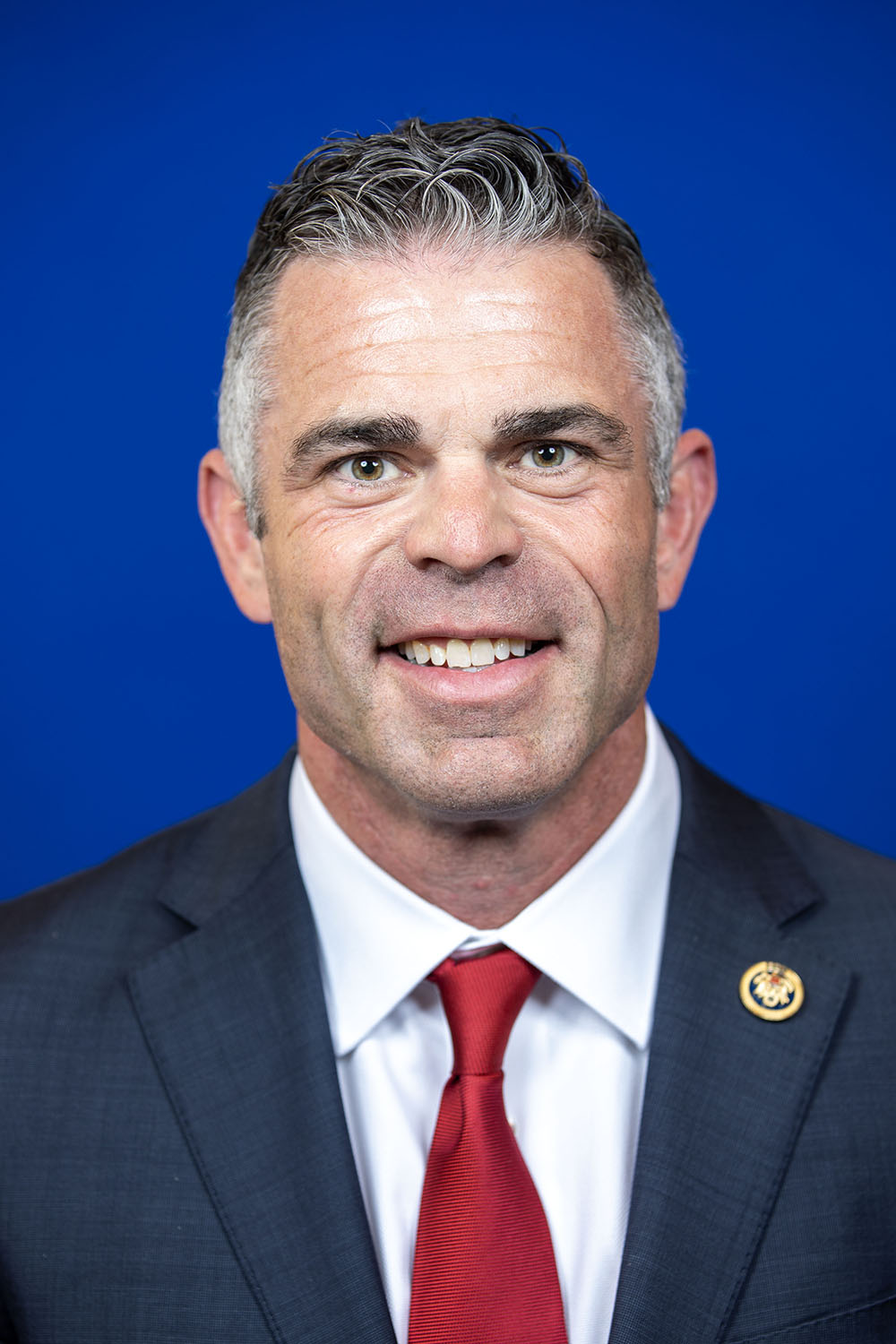
Rep. Tony Wied
Sponsored bills
Maddy summaryThis bill would withhold 50% of federal highway funding from states that issue driver's licenses to people without proof of U.S. citizenship or legal residency status, starting in 2027. To comply, states must ban such licenses and allow local/state officials to share immigration status information with U.S. Customs and Border Protection. The Transportation Secretary would maintain a public database tracking each state's compliance with these requirements. The law directly affects state governments and their access to federal transportation funds, not individual drivers.
Maddy summaryHR 5337 establishes a new standard for businesses (called "covered entities") that contract with motor carriers to ship goods. It requires these businesses to verify 45 days before shipment that a carrier is properly registered, has required insurance, and is confirmed by the Federal Motor Carrier Safety Administration (FMCSA) as meeting safety standards. Individual shippers (like personal movers) are exempt from these verification requirements. The standard expires once the FMCSA issues new safety fitness regulations within one year of the bill's enactment. The bill also creates a public FMCSA confirmation system showing whether carriers meet safety requirements.
Maddy summaryThis symbolic resolution (HRES 700) condemns the assassination of Charlie Kirk, a conservative campus advocate and founder of Turning Point USA, who was killed on September 10, 2025, at Utah Valley University. It expresses the House's deepest condolences to Kirk’s family, including his wife and children, and honors his work promoting civil discourse among college students. The resolution does not create new laws or policies but serves as a formal expression of the House’s stance on the incident. It directly affects no individuals or groups through legislative action, as it is purely a ceremonial statement.
Maddy summaryHRES 695 is a commemorative resolution honoring Charlie Kirk, a conservative speaker and Turning Point USA leader, following his assassination on September 10, 2025, in Orem, Utah. The resolution condemns the attack, offers condolences to his family, and recognizes first responders. It reaffirms the First Amendment right to peaceful assembly and emphasizes that violence cannot silence democratic participation. This non-binding resolution does not create new laws or policies but serves as a symbolic tribute to Kirk's memory and the principles of democratic engagement.
Maddy summaryHR 5258, the Lawsuit Abuse Reduction Act of 2025, amends federal civil procedure rules to strengthen sanctions against attorneys who file frivolous or abusive lawsuits. The bill requires courts to automatically impose sanctions - including compensating the harmed party for reasonable legal expenses and fees - when attorneys violate rules governing pleadings. It directly affects attorneys and their clients by increasing accountability for baseless filings in federal court. Key provisions mandate that courts must order payment for actual costs incurred due to the misconduct, with additional sanctions like dismissing a case permitted if needed. The bill does not restrict new legal claims or defenses under existing laws.
Maddy summaryThis bill amends an existing aviation safety law to clarify that "storage facilities for aircraft deicing equipment and fluids" are explicitly included under regulatory coverage. It directly affects airport operators and federal aviation authorities (FAA) who manage deicing operations at airports. The change corrects a technical omission in the law's definition, ensuring storage facilities for deicing equipment are covered under existing safety regulations without creating new requirements. This is a procedural clarification, not a policy change.
Maddy summaryThe Mental Health in Aviation Act of 2025 requires the Federal Aviation Administration (FAA) to update regulations within two years to encourage pilots and air traffic controllers to seek mental health care and disclose conditions without fear of losing medical clearance. It mandates annual reviews to improve the medical clearance process for mental health conditions - such as approving additional safe medications, enhancing examiner training, and reducing backlogs - and allocates $13.74 million yearly (2026-2029) to hire more aviation medical examiners. The bill also directs the FAA to implement recommendations from a mental health rulemaking committee and fund a public campaign to reduce stigma around mental health care in aviation. These provisions aim to support aviation workers' well-being while streamlining safety-related medical evaluations.
Maddy summaryThis bill, HR 5165 (Go Pack Go Act of 2025), allows subscribers in 13 specific Wisconsin counties (Ashland, Barron, Bayfield, Burnett, Douglas, Dunn, Florence, Iron, Pierce, Polk, Sawyer, St. Croix, and Washburn) to choose between receiving their local network station signal or an "in-State, adjacent-market" network station signal from a neighboring county within Wisconsin. It requires cable and satellite providers to offer this choice to subscribers in those counties, with the provider deemed compliant for local signal carriage obligations if the subscriber selects the adjacent-market signal. The bill clarifies that this choice does not affect providers' status as "qualified carriers" under copyright law or alter existing technical feasibility requirements for satellite providers. The policy change specifically applies only to subscribers in the designated Wisconsin counties and does not alter broader broadcast carriage rules.
Maddy summaryHR 5108 prohibits U.S. states from receiving federal Edward Byrne Memorial Justice Assistance Grant Program funds if they issue driver licenses to individuals without proof of U.S. citizenship or lawful presence, or if they restrict government entities from sharing immigration enforcement data with Homeland Security. States violating these rules must return unspent federal grant funds within 30 days and remain ineligible for future grants until they pass laws requiring driver license eligibility proof and permitting immigration data sharing. The bill directly affects states that currently issue licenses to undocumented immigrants or block information sharing with federal immigration authorities. It imposes concrete financial penalties rather than altering driver licensing rules themselves.