

Maddy summaryThis bill amends U.S. immigration law to automatically bar immigrants from entering the country and require their removal if they have been convicted of, admitted to committing, or are charged with sexual assault. It directly affects non-citizens (aliens) who have been involved in sexual assault offenses, as defined under existing law. Key provisions add new grounds for inadmissibility (preventing entry) and deportability (requiring removal) specifically for such offenses under sections 212(a)(2) and 237(a)(2) of the Immigration and Nationality Act. The bill does not change criminal penalties for sexual assault but modifies immigration consequences for those with such convictions or admissions.
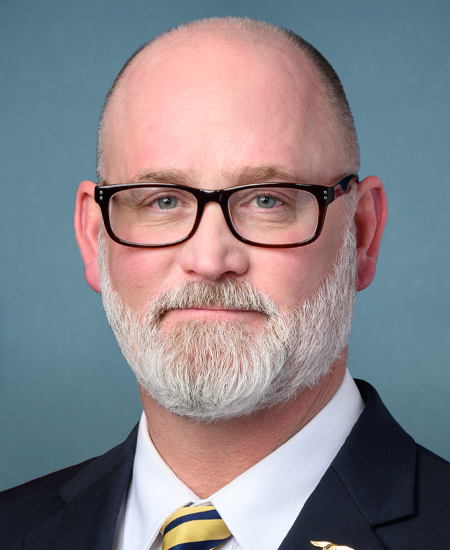
Rep. Derrick Van Orden
Sponsored bills
Maddy summaryHR 6254, the Public Buildings Accountability Act of 2023, requires the Government Accountability Office (GAO) to conduct a comprehensive review of the Public Buildings Service (PBS) within one year of the bill's enactment. The review must assess PBS's management of real estate programs, including staffing levels (employees and contract workers), attendance patterns, historical cost trends over a decade, organizational effectiveness, and building operations costs like travel and training. The GAO must submit a detailed report to the House Transportation and Infrastructure Committee and Senate Environment and Public Works Committee. This bill does not change PBS operations but mandates a formal evaluation to improve transparency and accountability in how federal building services are managed.
Maddy summaryHR 7576, the Reserve and National Guard Military Leave Enhancement Act, increases annual leave entitlement for federal employees serving in the Reserve or National Guard. It amends federal law to provide 30 days of annual leave per fiscal year (up from 15 days) for qualifying employees, removing the prior limit that capped leave at 15 days at the start of each year. This change directly affects federal workers who are members of the Reserve or National Guard, providing them with more time off for military service. The bill makes a concrete policy change by doubling the available leave days without adding new administrative requirements.
Maddy summaryThe Farm to Fly Act of 2023 amends USDA programs to include sustainable aviation fuel (SAF) as a qualifying product for financial assistance, directly affecting farmers, biorefineries, and agricultural producers. It defines SAF as liquid fuel meeting strict environmental standards - requiring at least a 50% reduction in lifecycle greenhouse gas emissions compared to jet fuel and excluding sources like palm oil or petroleum. The bill mandates the Secretary of Agriculture to lead a cross-agency initiative focused on advancing SAF development, leveraging agricultural resources, and fostering public-private partnerships to expand the domestic SAF market. This aims to support rural economic growth, strengthen U.S. energy security, and align with national clean energy goals in aviation.
Maddy summaryHR 7478, the PROTECT Jewish Student and Faculty Act, amends the Higher Education Act to require colleges and universities receiving federal funds to take specific steps against antisemitism. The bill mandates that these institutions include the International Holocaust Remembrance Alliance's definition of antisemitism in all campus conduct documents and explicitly state that antisemitic conduct by students may lead to expulsion, while antisemitic conduct by employees may result in termination. This directly affects all institutions covered under the Higher Education Act by imposing new requirements for policy documentation and disciplinary consequences. The key mechanism is the mandatory inclusion of the IHRA definition and clear statements of penalties, aiming to standardize how institutions address antisemitism on campus.
Maddy summaryHR 7509, the CARE Act, amends immigration law to limit where refugees can be resettled in the U.S. It prohibits resettling refugees in any state or locality that has formally disapproved of refugee resettlement through its governor, state legislature, or local government leadership. This applies for each fiscal year and directly affects refugee resettlement programs by requiring states or localities to actively approve resettlement to receive refugees. The bill changes the process by making local disapproval a legal barrier to resettlement, without altering overall refugee admission numbers.
Maddy summaryThis bill requires the Department of Defense to create a data-sharing agreement with the Department of Education within one year of enactment. It directly helps current and former active-duty military service members and civilian employees who qualify for Public Service Loan Forgiveness (PSLF) under the Higher Education Act. The agreement will automatically certify their employment periods starting October 1, 2007, to meet PSLF eligibility requirements. This change simplifies the process for military personnel to access loan forgiveness benefits they've earned through their service. The bill focuses on removing administrative barriers in the existing loan forgiveness program.
Maddy summaryHR 7361, the Flowers for Fallen Heroes Act of 2024, requires the American Battle Monuments Commission to establish a low-cost program allowing the public to order flowers for military gravesites at Commission-managed cemeteries. The bill mandates the Commission to partner with third-party florists (without excess fees) and create a user-friendly website and phone system for ordering by one year after enactment. It also authorizes credit card and electronic payment processing for these orders, with customers responsible for any third-party processing fees, and requires annual reports to Congress detailing program implementation, including order data and florist engagement. This bill directly affects the public seeking to honor fallen service members and the Commission’s operations at 25 overseas military cemeteries.
Maddy summaryHR 7455, the Sunset Act of 2024, requires federal agencies to automatically expire significant rules after 10 years unless Congress passes a new law extending them. Agencies must submit reports 180 days before expiration, and Congress can extend rules via joint resolution within 3 legislative days of receiving the report. The bill also mandates annual reviews of 10% of active agency rules for 9 years, with rules not extended by Congress after the 10-year period expiring. It applies to all major agency rules (e.g., environmental or safety regulations) and includes limited presidential exemptions for emergencies, but does not affect existing rules already in effect.
Maddy summaryThe SCHEDULES Act of 2024 requires the Department of Veterans Affairs (VA) to establish specific timeframes for scheduling appointments after a veteran is referred for care: 3 business days for VA facility appointments and 7 calendar days for community care. It directly affects veterans seeking VA care by setting measurable standards for timely access to services. The bill mandates quarterly reports to Congress detailing how many referrals meet these standards, broken down by facility, care specialty (like mental health or cardiology), and state, with all data made publicly available online. These reports must also include annual progress updates on VA efforts to meet the scheduling goals. The law focuses on creating transparency and accountability in VA scheduling processes without altering benefits or funding.