Maddy summaryThis bill modifies corporate tax rules to prevent companies from avoiding US taxes by moving operations overseas. It targets tax breaks that companies currently use when they outsource work to foreign countries or reorganize as foreign entities (so-called "inverted corporations"). The bill requires companies to pay tax on foreign profits based on each country where they operate, limits tax deductions for interest by multinational corporations, and treats foreign corporations managed in the US as domestic for tax purposes. These changes aim to close loopholes that allow companies to reduce their US tax burden through foreign operations.
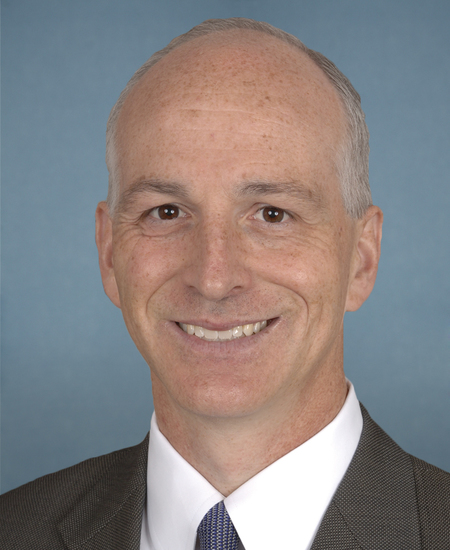
Rep. Adam Smith
Sponsored bills
Maddy summaryThis bill establishes a federal right to access contraception, protecting individuals' ability to obtain contraceptives and health care providers' ability to offer them without government interference. It prohibits states from banning or restricting contraceptive services, products, or information, including laws that force providers to deny care based on personal beliefs or limit access to specific methods. The law immediately overrides conflicting state regulations and ensures that contraception remains available regardless of factors like race, income, disability, or location. It applies to all individuals and providers, building on existing federal protections like the Affordable Care Act's coverage requirements.
Maddy summaryThe Caring for All Families Act expands family medical leave eligibility under the FMLA to include domestic partners, adult children, children of domestic partners, and extended family members such as grandparents, grandchildren, siblings, and in-laws. It also adds new "parental involvement and family wellness" leave allowing employees to attend school activities for their children/grandchildren or meet routine medical needs for themselves, their children, spouse/domestic partner, or elderly individuals with family-like relationships. Employees may take up to 4 hours per 30-day period or 24 hours per year for these purposes, with the leave being in addition to existing FMLA protections. This bill directly affects private sector employees covered by the FMLA and federal employees, broadening who qualifies for leave and expanding leave purposes to include family wellness activities.
This resolution condemns Russia's nuclear escalatory rhetoric and implied threats on the potential use of nuclear weapons in the context of its invasion of Ukraine. The resolution also (1) condemns Russia's purported suspension of participation in the New START Treaty, (2) emphasizes the value of arms control agreements between the United States and Russia, and (3) calls on the administration to continue pursuing nuclear arms control and risk reduction with Russia and China.
Maddy summaryThis bill reauthorizes the Dr. Lorna Breen Health Care Provider Protection Act, extending mental health support programs for healthcare professionals through 2030 (previously ending in 2024). It requires funded programs to specifically address reducing administrative burdens on healthcare workers while continuing to promote access to mental health and substance use disorder services. The legislation directly affects healthcare providers across the U.S. who may access these federally supported resources. Key provisions include extending funding periods and mandating that grant recipients focus on easing workplace administrative tasks, alongside maintaining existing awareness initiatives. The bill does not create new programs but continues and refines existing mental health support for the healthcare workforce.
National Origin-Based Antidiscrimination for Nonimmigrants Act or the NO BAN Act This bill imposes limitations on the President's authority to suspend or restrict aliens from entering the United States. It also prohibits religious discrimination in various immigration-related decisions, such as whether to issue an immigrant or nonimmigrant visa, unless there is a statutory basis for such discrimination. The President may temporarily restrict the entry of any aliens or class of aliens after the Department of State determines that the restriction would address specific and credible facts that threaten U.S. interests such as public safety. The bill also imposes limitations on such restrictions, such as requiring the President, State Department, and the Department of Homeland Security (DHS) to (1) only issue a restriction when required to address a compelling government interest, and (2) narrowly tailor the suspension to use the least restrictive means to achieve such an interest. Before imposing a restriction, the State Department and DHS shall consult with Congress. The State Department and DHS shall report to Congress about the restriction within 48 hours of the restriction's imposition. If such a report is not made, the restriction shall immediately terminate. Individuals or entities present in the United States and unlawfully harmed by such a restriction may sue in federal court. The bill transfers the authority to suspend the entry of aliens traveling to the United States on a commercial airline that failed to comply with regulations related to detecting fraudulent travel documents from the Department of Justice to DHS.

Maddy summaryHR 944, the Access to Counsel Act, requires U.S. immigration officials to provide certain immigrants a meaningful opportunity to consult with legal counsel during key immigration processes. It directly affects U.S. nationals, lawful permanent residents returning from travel, visa holders, refugees, asylees, and parolees subject to secondary or deferred inspection at ports of entry. The bill mandates that officials ensure access to counsel (including via phone) within one hour of inspection starting, allow counsel to present evidence, and accommodate in-person meetings when possible. It also requires officials to provide counsel access before accepting Form I-407 abandonment forms from lawful permanent residents, unless waived in writing. The law takes effect 180 days after enactment and preserves existing rights to counsel under other immigration laws.
Health Care Workforce Innovation Act of 2025 This bill establishes the Health Care Workforce Innovation Program within the Health Resources and Services Administration to provide grants to federally qualified health centers, rural health clinics, and post-secondary vocational programs for developing education and training for allied health professionals (e.g., professionals providing clinical or non-clinical support services, community health workers, and health education specialists). Specifically, grant recipients must use the funds to carry out innovative, community-based programs to train allied health professionals, with a focus on supporting rural and underserved areas. Grant recipients may use the funds to launch or expand health care professional partnerships (e.g., between a grant recipient and a school), establish apprenticeship or other career programs, or invest in training equipment, among other activities.
Maddy summaryHR 897, the Aviation-Impacted Communities Act, makes communities located near airports but outside the current FAA noise standard (65 DNL) eligible for noise mitigation funding and establishes a process for these communities to formally seek designation. It requires the FAA to partner with the National Academy of Sciences to study aviation impacts at major airports, develop a diagnostic tool for community assessments, and create community boards to represent residents. These boards can request assessments, collaborate on action plans to address noise or emissions, and access grants for solutions like sound insulation, air filtration, or flight path changes. The bill authorizes $750 million for noise mitigation funding over 10 years, targeting residential areas, schools, hospitals, and other facilities affected by aircraft noise and emissions.
Maddy summaryHR 898 establishes two grant programs to address aviation noise and pollution impacts on communities near airports. First, it creates a 3-year EPA-funded research initiative (with $2.5-$5 million grants) to measure noise and emissions using advanced technology, producing neighborhood-level data to identify disproportionately affected areas. Second, it launches a mitigation grant program prioritizing communities identified in the research, funding projects like noise-reducing home retrofits, health services, and environmental programs for disadvantaged groups. The bill requires grantees to collaborate with local communities and report annually on services provided, demographic impacts, and how the work addresses environmental justice concerns.