

Maddy summaryHR 3290 designates the Museum of Pop Culture in Seattle, Washington, as the National Museum of Pop Culture. The bill clarifies that this designation does not make the museum part of the National Park System and explicitly states it does not require or permit federal funding for the museum. This is a purely procedural bill with no new funding, regulatory changes, or policy impacts. The museum remains a privately operated institution under its current structure.
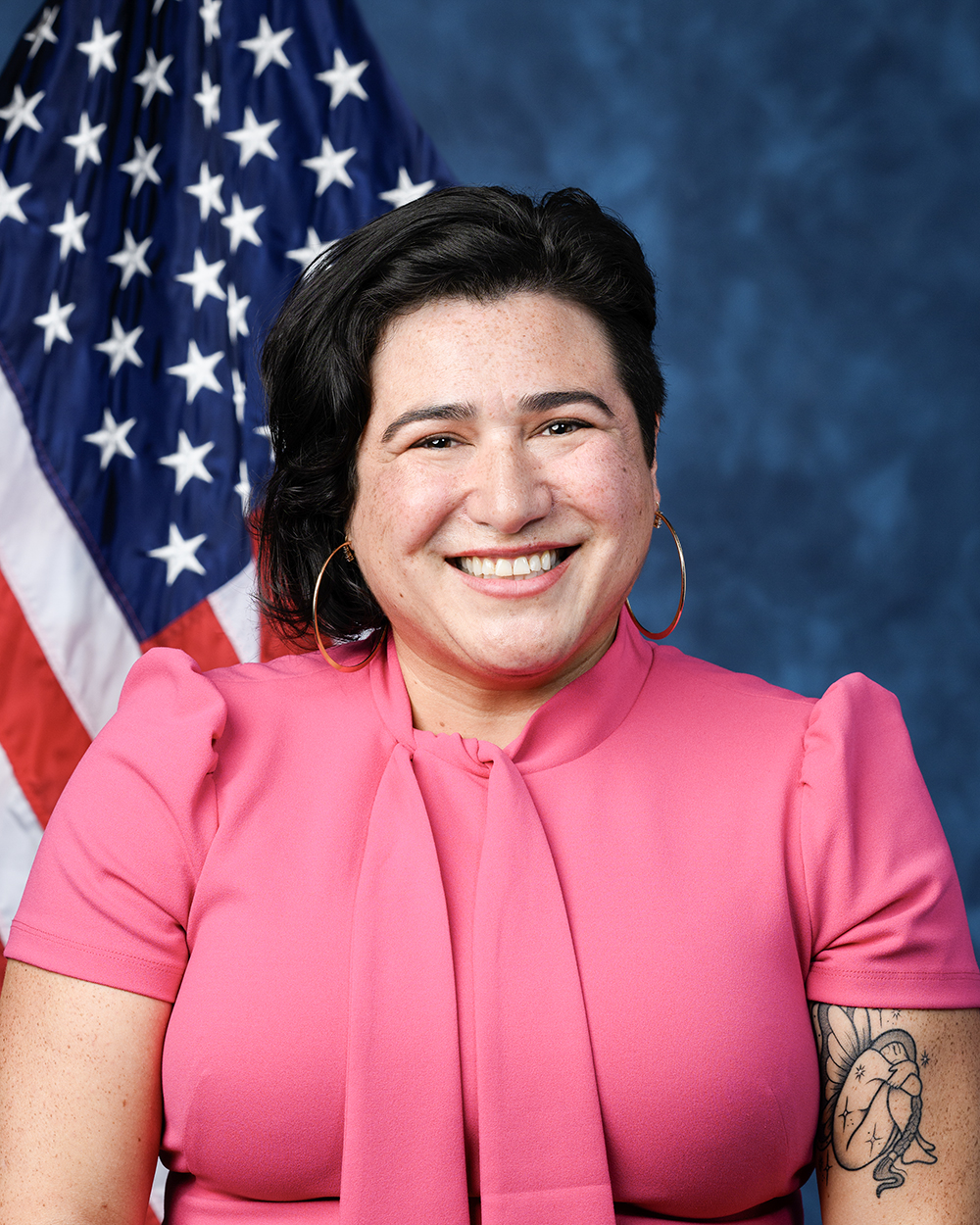
Rep. Emily Randall
Sponsored bills
Maddy summaryHR 3277, the Ensuring Lasting Smiles Act, requires group health plans and health insurance issuers to cover medically necessary outpatient and inpatient treatments for congenital anomalies or birth defects primarily affecting the eyes, ears, teeth, mouth, or jaw. This includes reconstructive procedures, dental/orthodontic support during treatment, and follow-up care, but excludes purely cosmetic surgery not tied to a medical diagnosis. Cost-sharing (like copays) for these services must not be stricter than for other medical benefits. The law takes effect for plan years beginning January 1, 2026, and mandates insurers to provide notice about this coverage to beneficiaries.
Maddy summaryHR 3243, the Therapeutic Fraud Prevention Act of 2025, bans the provision of paid conversion therapy aimed at changing a person's sexual orientation or gender identity, and prohibits advertising such therapy as effective, safe, or without risk. It directly affects LGBTQ+ individuals and their families who might be targeted by these practices, as professionals have determined conversion therapy is ineffective and harmful. The law treats violations as deceptive acts under consumer protection laws, empowering the Federal Trade Commission and state attorneys general to enforce it through civil actions. It explicitly excludes legitimate gender transition support and non-discriminatory counseling from the ban.
Maddy summaryHR 3184, the PFAS Alternatives Act, funds research to develop turnout gear (firefighter safety clothing) without harmful PFAS chemicals, directly affecting firefighters who wear this gear. It authorizes $25 million annually (2025-2029) for grants to eligible organizations to research and test PFAS-free gear, requiring partnerships with firefighting groups to translate findings into practice. The bill also allocates $2 million yearly (2027-2031) for training programs on safe gear use and decontamination. Its goal is to reduce firefighters' exposure to chemicals linked to occupational illnesses during operations.
Maddy summaryHRES 384 is a non-binding House resolution recognizing Cinco de Mayo's cultural and historical significance. It commemorates Mexico's 1862 victory at the Battle of Puebla against French forces, highlighting its role in Mexico's fight for independence and freedom. The resolution encourages U.S. citizens to observe Cinco de Mayo through ceremonies and activities, acknowledging its importance to Mexican and Mexican-American communities. As a ceremonial resolution, it has no legal effect or policy changes.
Maddy summaryHR 3202, the MIDWIVES for Service Members Act of 2025, creates a 5-year pilot program to provide certified midwife services to military service members and their families through the TRICARE health plan. The program requires the Secretary of Defense to begin implementation within one year of enactment, with detailed annual reports on costs, patient outcomes, satisfaction, and access metrics. It mandates that midwives meet international standards and state licensing requirements, focusing on maternal and infant health outcomes like preterm births and C-section rates. The pilot’s success would determine if midwife services become a permanent TRICARE benefit.
Maddy summary# Summary of the SHIPS for America Act This comprehensive legislation focuses on strengthening the U.S. maritime industry, shipbuilding capacity, and maritime workforce to enhance national security and economic competitiveness. ## Key Areas of Focus 1. **Shipbuilding & Maritime Infrastructure** - Establishes a United States Center for Maritime Innovation to accelerate adoption of commercial technologies - Creates a National Shipbuilding Research Program - Requires an annual survey of anticipated commercial vessel construction - Includes provisions for streamlined environmental reviews of maritime infrastructure 2. **Workforce Development** - Establishes the United States Merchant Marine Career Retention Program to maintain mariner qualifications - Creates Centers of Excellence for Domestic Maritime Workforce Training and Education - Implements military-to-maritime transition programs - Establishes a Maritime Career and Technical Education Advisory Committee 3. **Education & Training** - Expands educational assistance for merchant mariners - Creates eligibility for Naval Postgraduate School for merchant mariners - Establishes maritime education programs from K-12 through higher education - Provides for international exchanges for mariners and naval architects 4. **National Security & Strategic Readiness** - Requires reports on National Defense Reserve Fleet utilization - Includes measures to de-risk the maritime sector from Chinese influence - Enhances shipbuilding capacity for national security needs - Establishes programs to ensure sufficient mariner workforce for national defense 5. **Funding Mechanisms** - Authorizes appropriations from the Maritime Security Trust Fund - Includes funding for workforce programs, education, and shipbuilding initiatives - Establishes specific funding levels for various programs over multiple fiscal years The legislation aims to create a sustainable domestic maritime industrial base that supports both commercial shipping and national defense requirements, with a particular emphasis on developing and retaining a skilled U.S. maritime workforce.
Maddy summaryThis resolution requests the President to provide unredacted documents within 14 days about government use of electronic communication platforms like Signal, WhatsApp, and Slack for official communications. It specifically seeks information on how the administration preserves national security communications sent via these platforms and ensures compliance with federal recordkeeping laws. The resolution targets communications containing highly sensitive national security information, whether sent on government or personal devices. It does not change policy but seeks transparency regarding current practices.
Maddy summaryHRES 286 is a non-binding House resolution (not a law) requesting the President to provide specific documents about a fictional "United States DOGE Service" and its AI use. It asks for records related to AI deployments at federal agencies since January 2025, including data sources, personnel involved in decisions, and analyses of potential program cuts, all framed around alleged violations of privacy laws and transparency requirements. The resolution specifically targets documents concerning "Elon Musk or an individual associated with the United States DOGE Service," which does not exist as a government entity. This is a procedural request for information, not a policy change, and references fictional elements (e.g., "Trump Administration" in 2025).
Maddy summaryThis resolution (HRES 264) requests the President to provide the House of Representatives with unredacted documents about security clearances held by specific individuals, including Elon Musk and six others (Akash Bobba, Edward Coristine, Ethan Shaotran, Luke Farritor, Gautier Cole Killian, and Gavin Kliger). It specifically targets documents related to security clearances for people associated with the "United States Department of Government Efficiency Service" (referred to as "DOGE" in the bill). The request requires the President to submit all relevant communications and background investigations within 14 days of the resolution's adoption. This is a procedural inquiry resolution, not a policy bill, and references fictional government entities (DOGE is not a real agency).