

Maddy summaryHR 3566, the ANCHOR for Military Families Act, requires the Department of Defense to provide military members and their families with comprehensive relocation assistance information at least 45 days before a permanent change of station. The bill mandates that this information cover educational resources for children (including school transitions, special education, and Individualized Education Programs), housing options, mental health support, spouse employment assistance, and legal/financial counseling. It directs the Secretary of Defense to integrate these details into accessible briefings, online resources, and materials at military installations. The law also requires annual reports to Congress on implementation progress and family awareness of available support programs. This bill directly affects active-duty service members and their families facing relocation due to military orders.
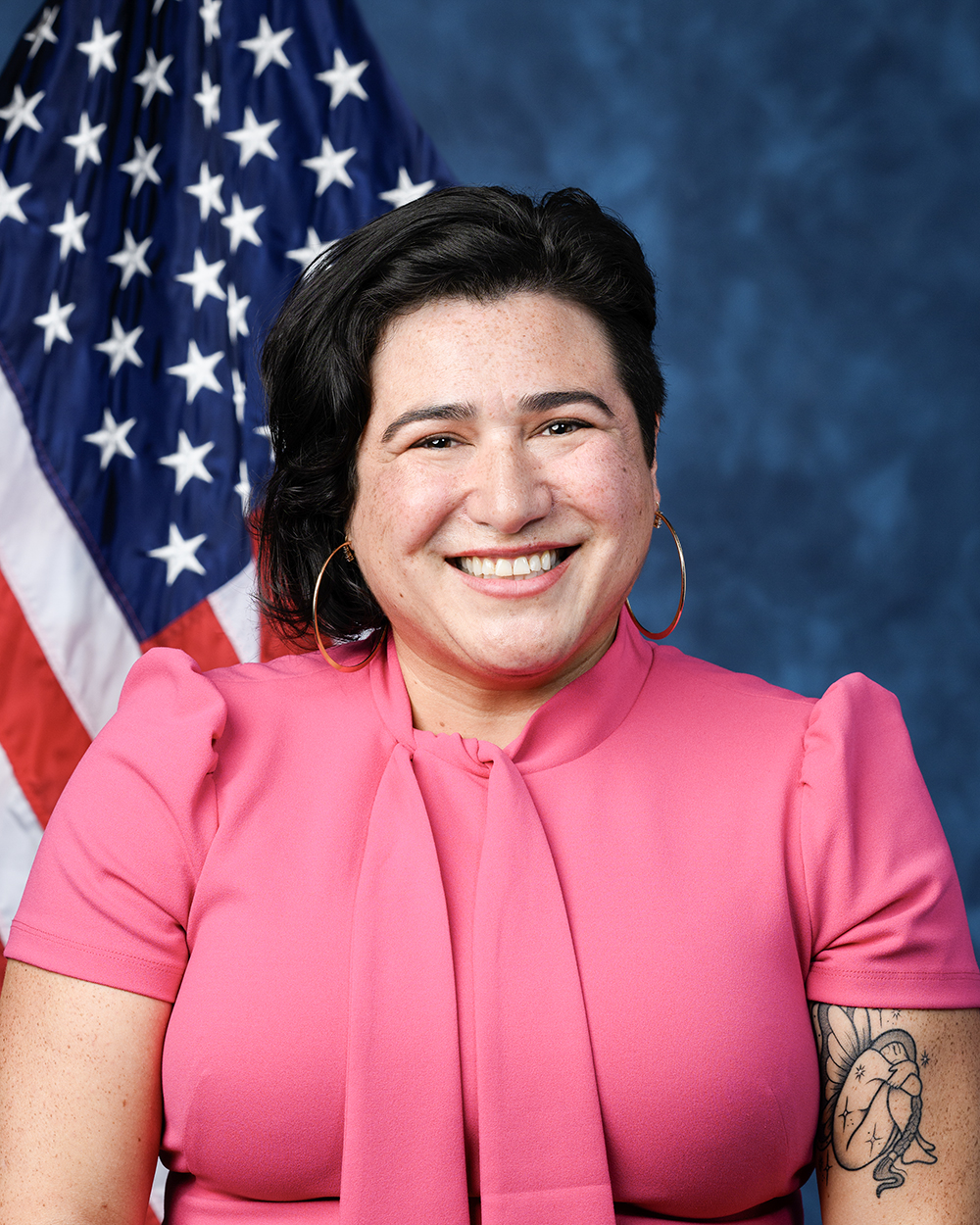
Rep. Emily Randall
Sponsored bills
Maddy summaryHR 3532, the Striking and Locked Out Workers Healthcare Protection Act, prohibits employers from terminating or altering an employee’s employer-sponsored health coverage during a lawful strike or a lockout (when an employer withholds work to influence bargaining). It directly affects workers participating in strikes or facing lockouts, ensuring continued healthcare access during these labor disputes. The bill adds penalties: $75,000 per violation for lockout-related coverage termination (up to $150,000 for repeat offenses), and $50,000 per violation for strike-related termination (up to $100,000 for repeat offenses), with penalties applied alongside other remedies. These provisions amend the National Labor Relations Act to protect workers’ healthcare rights during collective bargaining actions.
Maddy summaryThis bill establishes a code of conduct for Supreme Court justices, requiring them to disclose gifts, income, and potential conflicts of interest. It creates a formal process for handling complaints about justices, including a judicial investigation panel to review allegations. The bill adds specific circumstances requiring recusal, such as when a justice or family member has financial ties to a party in a case. Additionally, it mandates that parties and amicus briefs disclose any gifts given to justices and lobbying activities related to their nomination. These provisions aim to increase transparency and accountability in the Supreme Court's operations.
Maddy summaryHR 3452, the "Six Assurances to Taiwan Act," formally codifies six longstanding U.S. policy commitments regarding Taiwan that were established in 1982. It reaffirms that the U.S. has never agreed to set a date for ending arms sales to Taiwan, consult with China on such sales, mediate between Taiwan and China, revise the Taiwan Relations Act, take a position on Taiwan's sovereignty, or pressure Taiwan to negotiate with China. The bill’s key mechanism requires the President to notify Congress before taking any action that could alter these assurances, giving Congress 30 days (or 60 days during a specific period) to review proposals through a joint resolution process. This applies to actions like pausing arms sales, negotiating with China on arms, or changing U.S. policy on Taiwan’s status. The bill directly affects U.S. executive branch decisions on Taiwan policy and Congressional oversight authority.
Maddy summaryHR 3418, the Historic Preservation Fund Reauthorization Act, extends the federal Historic Preservation Fund through 2035 and increases its annual funding from $150 million to $250 million. This bill directly affects historic preservation programs nationwide, including state and local grants for protecting historic sites and buildings. The key provision updates the funding levels and duration in existing law (54 U.S. Code § 303102), ensuring continued support for preservation efforts. The change maintains current program operations without creating new requirements or altering eligibility.
Maddy summaryThis bill establishes minimum nurse-to-patient ratios for hospital units across the country, requiring hospitals to maintain specific staffing levels (such as 1:1 in trauma units, 2:1 in critical care units, and 3:1 in emergency rooms) to improve patient safety and quality of care. Hospitals must develop transparent staffing plans that account for patient acuity, involve direct care nurses in planning, and document actual staffing levels for each shift. The bill includes strong whistleblower protections for nurses who object to unsafe staffing levels and prohibits hospitals from retaliating against nurses who report violations. It requires hospitals to comply with these standards as a condition for receiving Medicare and Medicaid payments, with enforcement through audits and civil penalties of up to $50,000 for repeated violations. The bill also includes provisions to support nurse recruitment and retention through workforce initiatives and training programs.
Maddy summaryHR 3368, the "Born in the USA Act of 2025," prohibits federal funding for Executive Order 14160 (which aimed to restrict birthright citizenship for children born in the U.S.). The bill directly affects federal agencies that might implement the executive order by blocking their use of funds for that purpose. Its key provision is a funding ban targeting the executive order and any similar future policies, without changing citizenship law. The bill does not alter birthright citizenship rights but prevents federal resources from being used to enforce the controversial executive order. It is a procedural measure focused on funding, not a substantive policy change to citizenship rules.
Maddy summaryThe CHEERS Act creates a new tax deduction for restaurants, bars, and entertainment venues that purchase energy-efficient draft beer equipment. It amends tax code Section 179D to treat stainless steel or aluminum draft containers and tap systems as "qualified energy-efficient property," allowing businesses to deduct these costs. The deduction applies only to equipment used specifically for distributing and selling alcohol in eligible venues, meeting existing energy efficiency standards. The provision takes effect for equipment placed in service after December 31, 2024.
Maddy summaryHR 3373, the GHOST Act of 2025, requires entities shipping certain firearm parts (barrels, slides, or bolts) across state lines to register shipments with the Attorney General within 5 business days. This includes providing sender/recipient details, shipping method, and proof of delivery via certified mail or recipient signature. The bill creates a confidential database for law enforcement access but prohibits public disclosure under the Freedom of Information Act. Violations carry fines or up to 1 year in prison for single shipments, and up to 10 years for shipping 50+ parts in one transaction.
Maddy summaryThis bill designates 14 new wilderness areas totaling approximately 126,554 acres in Washington's Olympic National Forest as part of the National Wilderness Preservation System. It also designates 22 river segments across western Washington as "wild," "scenic," or "recreational" rivers under the Wild and Scenic Rivers Act, protecting them from development. The wilderness areas will be managed by the Forest Service under the Wilderness Act, while rivers will be managed by the Department of Agriculture or Interior depending on location. The bill preserves these natural areas for public enjoyment while respecting existing rights and treaty obligations, with management plans required to be updated within 3-5 years of enactment.