

Rural STEM Education Research Act This bill specifies federal scientific research and development efforts towards STEM (science, technology, engineering, and mathematics, including computer science) workforce development and rural STEM education. (Sec. 3) The bill amends the objectives of the Manufacturing Extension Partnership program to include the provision to secondary schools of information about the job skills needed in manufacturing companies, and the promotion and expansion of certification systems offered through local high schools. The activities of a manufacturing extension center are expanded to include local high schools in the facilitation of collaborations and partnerships between manufacturing companies and schools to help those entities better understand the specific needs of manufacturers and to help manufacturers better understand the skill sets that students learn in school programs. The National Institute of Standards and Technology (NIST) must award prizes to stimulate research and development of creative technologies in order to deploy affordable and reliable broadband connectivity to underserved rural communities. NIST may award not more than a total of $5 million in prizes. (Sec. 4) The Office of Science and Technology Policy must establish a broadband research and development working group to address national research challenges and opportunities for improving broadband access and adoption across the United States. (Sec. 5) The National Science Foundation (NSF) shall enter into an agreement with the National Academy of Sciences under which the National Academy of Sciences agrees to evaluate aspects of STEM education and workforce development in rural areas. (Sec. 6) The Government Accountability Office shall conduct a study on the engagement of rural populations in federal STEM programs. (Sec. 7) Experimental Program to Stimulate Competitive Research (EPSCoR) programs shall consider modifications to award structures to increase the capacity of rural communities to provide quality STEM education and STEM workforce development programming to students and teachers. (Sec. 8) The NSF must award grants to institutions of higher education or nonprofit organizations for (1) research and development to advance innovative approaches to support and sustain high-quality STEM teaching in rural schools, (2) research and development of programming to identify the barriers rural students face in accessing high-quality STEM education, (3) development of innovative solutions to improve the participation and advancement of rural students in grades Pre-K through 12 in STEM studies, and (4) research on online STEM education courses for rural communities. The NSF may establish a pilot program of regional cohorts in rural areas to provide peer support, mentoring, and hands-on research experiences for rural STEM educators of students in grades Pre-K through 12 in order to build an ecosystem of cooperation among educators, researchers, academia, and local industry.
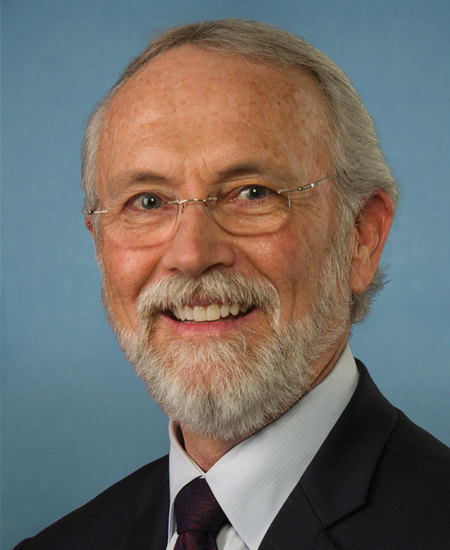
Rep. Dan Newhouse
Sponsored bills
National Signing Bonus Act of 2021 This bill replaces existing Federal Pandemic Unemployment Compensation payments for unemployed individuals with two-time signing bonuses for newly employed individuals. Specifically, the bill allows states to provide up to two direct payments to individuals who are eligible for Federal Pandemic Unemployment Compensation prior to commencing employment with a new employer. The individual must continue employment with the new employer for at least four weeks before July 4, 2021, to be eligible for the first $1,212 payment under the bill and for at least eight weeks before July 4, 2021, to be eligible for the final $1,212 payment. The bill otherwise eliminates federal reimbursement for Federal Pandemic Unemployment Compensation payments.
Recognizing the Protection of Motorsports Act of 2019 or the RPM Act of 2019 [ sic ] This bill authorizes the modification of a vehicle's air emission controls for vehicles that are not legal for operation on a street or highway and are used solely for competition.
Violence Against Women Extension Act of 2021 This bill reauthorizes for FY2022 various programs and activities authorized by the Violence Against Women Act of 1994 and subsequent legislation and administered by the Office on Violence Against Women within the Department of Justice.
Regulations from the Executive in Need of Scrutiny Act of 20 21 This bill revises provisions relating to congressional review of agency rulemaking. Specifically, the bill establishes a congressional approval process for a major rule. A major rule may only take effect if Congress approves of the rule. A major rule is a rule that results in (1) an annual effect on the economy of $100 million or more; (2) a major increase in costs or prices for consumers, individual industries, government agencies, or geographic regions; or (3) significant adverse effects on competition, employment, investment, productivity, innovation, or the ability of U.S.-based enterprises to compete with foreign-based enterprises. In addition, the bill establishes a congressional disapproval process for a nonmajor rule. A nonmajor rule may only take effect if Congress does not disapprove of the rule.
Defending Our Defenders Act This bill establishes federal criminal offenses involving the murder of federal, state, or local law enforcement officers. Violators are subject to life in prison or death. The bill sets forth aggravating factors (e.g., intent to ambush or prior history of promoting violence against a law enforcement officer) to be considered in determining whether to impose the death penalty.
Farm Workforce Modernization Act of 2021 This bill contains provisions related to alien farmworkers, including provisions establishing a certified agricultural worker (CAW) status and changing the H-2A temporary worker program. The Department of Homeland Security (DHS) may grant CAW status to an applying alien who (1) performed at least 1,035 hours of agricultural labor during the two-year period prior to March 3, 2021; (2) on that date was inadmissible, deportable, or under a grant of deferred enforced departure or temporary protected status; and (3) has been continuously present in the United States from that date until receiving CAW status. The bill imposes additional crime-related inadmissibility grounds on CAW applicants and makes some other grounds inapplicable. CAW status shall be valid for 5.5 years and may be extended. DHS may grant dependent status to the spouse or children of a principal alien. An alien with a pending application may not be detained or removed by DHS and shall be authorized for employment until DHS makes a final decision on the application. A CAW alien (and dependents) may apply for lawful permanent resident status after meeting various requirements, including performing a certain amount of agricultural labor for a number of years. DHS shall create an electronic platform for (1) filing H-2A petitions, (2) facilitating the processing of H-2A cases, and (3) providing agencies a single tool for obtaining H-2A-related case information. The bill makes various changes to the H-2A program, such as (1) modifying the method for calculating and making adjustments to the H-2A worker minimum wage, (2) specifying how an employer may satisfy requirements that it attempted to recruit U.S. workers, (3) requiring H-2A employers to guarantee certain minimum work hours, (4) making the program available for agricultural work that is not temporary or seasonal, and (5) reserving a visa allocation for the dairy industry. DHS shall establish a pilot program allowing certain H-2A workers to apply for portable status, which gives the worker 60 days after leaving a position to secure new employment with a registered H-2A employer. DHS shall establish an electronic system patterned on the E-Verify Program for employers to verify an individual's identity and employment authorization. Employers hiring individuals for agricultural employment must use the system. This bill permanently establishes the Housing Preservation and Revitalization Program, which provides financing assistance for rural rental housing and off-farm labor housing and rental assistance for qualified tenants of such housing. It also authorizes the Department of Agriculture to provide various assistance, including funding for insuring loans and grants for new farmworker housing.
Stop Forced Organ Harvesting Act of 2021 This bill establishes specified measures to combat forced organ harvesting and the international trafficking in persons for the purpose of removing their organs. These measures include (1) establishing property-blocking and visa-blocking sanctions, (2) prohibiting exports of certain surgery devices to entities that are identified as being responsible for forced organ harvesting or related human trafficking, and (3) requiring the Department of State to report on these practices.
This concurrent resolution expresses the sense of Congress that a carbon tax would be detrimental to American families and businesses and is not in the best interest of the United States.
This resolution calls on the Office for Civil Rights within the Department of Education and state attorneys general to assist elementary and secondary schools in complying with existing civil rights laws and investigate and enforce such laws. In addition, the resolution condemns the practice of requiring teachers to receive education in critical race theory as a condition of certification.