

Accessing America's Critical Minerals Act of 2021 This bill establishes deadlines to complete the environmental review of critical mineral projects on federal land and sets forth related requirements to expedite the review of such projects under the National Environmental Policy Act of 1969 (NEPA). If an environmental assessment or environmental impact statement is required for such project, then all necessary federal review and permit considerations must be completed within 18 or 24 months, respectively. However, the review may exceed the time limit if the project sponsor agrees. The lead agency of the environmental review of such project must allow a state or local government, an Indian tribe, a project sponsor, or another appropriate entity to assume certain federal responsibilities regarding the environmental review of the project upon the request of such entity. Further, the bill authorizes a lead agency to determine that the requirements of NEPA have been satisfied if a state or federal agency acting under state or federal law has addressed specified factors, such as the environmental impact of the action to be conducted under the permit. If the lead agency does not make such a determination, then the agency must enter into an agreement with the project sponsor to set time limits for each part of the permitting process.
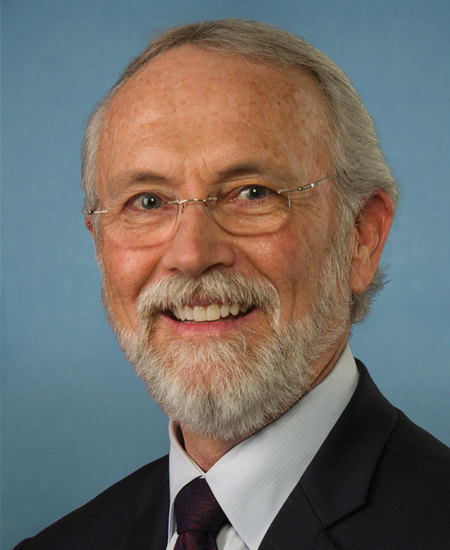
Rep. Dan Newhouse
Sponsored bills
Hamas International Financing Prevention Act This bill imposes sanctions targeting Hamas, the Palestinian Islamic Jihad, and any affiliate or successor groups. The President shall periodically report to Congress a list of each foreign person or instrumentality that knowingly assists, provides significant support or services to, or is involved in a significant transaction with a senior member or supporter of any of the targeted groups. The President shall impose two or more sanctions on the named persons. Specifically, the person may be (1) denied credit and services from the Export-Import Bank, (2) barred from purchasing certain controlled defense articles, (3) denied exports of items on the U.S. Munitions List, (4) prevented from receiving exports of certain goods or technology controlled for national security reasons, (5) prohibited from receiving financing of more than $10 million from any U.S. financial institution, or (6) subject to property-blocking restrictions. The President shall periodically report to Congress a list of foreign governments that have repeatedly provided material support for the targeted groups' terrorist activities. The President shall bar these governments from receiving for one year (1) U.S. assistance, or (2) exports of controlled munitions. The Department of Treasury shall instruct U.S. leadership of international financial institutions to oppose the provision of assistance to an identified government for one year. The bill provides for certain exceptions and waivers, such as for transactions that would serve U.S. national interests. The President shall report to Congress and periodically provide briefings on other specified topics related to the targeted groups, such as where these groups secure financing and surveillance equipment.
This resolution calls on the people of the United States to observe Memorial Day to honor the men and women who died in the pursuit of freedom and peace.
This resolution expresses support for Israel's efforts of self-determination and collective security against external forces, recognizes Jerusalem as the legitimate capital city of Israel, and condemns actions by Hamas against the people of Israel.
This resolution condemns the rocket attacks by Hamas against Israel beginning the week of May 9, 2021. It also states that the United States must continue to invest in and support Israel's security and sovereignty.
Secure Rural Schools Reauthorization Act of 2021 This bill extends through FY2023 payments made to states and eligible counties containing certain federal land under the Secure Rural Schools and Community Self-Determination Act of 2000. The Department of the Interior and the Department of Agriculture shall carry out a pilot program to allow the Chief of the Forest Service or the Director of the Bureau of Land Management to nominate members of resource advisory committees. County funds may be used to provide or expand access to (1) broadband telecommunications services at local schools, or (2) the technology and connectivity necessary for students to use a digital learning tool at or outside of a local school campus. Any county funds that were obligated by a county before October 1, 2017, but are unspent on October 1, 2020, may be used by the county for any authorized use and shall be available for projects initiated after October 1, 2020. No county funds may be used for lobbying activity, regardless of the purpose for which the funds are obligated on or before the enactment of this bill.
Agricultural Security Risk Review Act This bill expands the membership of the Committee on Foreign Investment in the United States to include the Secretary of Agriculture. (The committee reviews the national security implications of certain foreign investments in U.S. businesses or real estate, including critical infrastructure or technologies.)
Local Opportunities, Conservation, and American Lands Act or the LOCAL Act This bill directs that the headquarters for the Bureau of Land Management (BLM) shall remain located in Grand Junction, Colorado. The Department of the Interior shall study the feasibility of relocating more existing BLM employee positions to Grand Junction or Alaska, Arizona, California, Colorado, Idaho, Montana, Nevada, New Mexico, Oregon, Utah, Washington, or Wyoming. Interior must determine, among other things, whether such relocation will improve management of federal lands, increase coordination with local communities, and strengthen tourism, conservation, outdoor recreation, grazing, or responsible energy production.
Emergency Rural Community Relief Act This bill authorizes the Department of Agriculture to provide emergency grants to associations, local governments, nonprofit corporations, and Indian tribes to purchase vehicles, equipment, or services needed for the immediate safe operation of an essential community facility or a temporary installation necessary to support the public response to an emergency in a rural area. The bill also provides funding for the grants.
This resolution recognizes that the national debt is a threat to national security and that deficits are unsustainable, irresponsible, and dangerous. It also commits to (1) restoring regular order to the appropriations process, and (2) addressing the fiscal crisis faced by the United States.