

Making Aid for Local Disasters Equal Now Act or the MALDEN Act This bill modifies requirements pertaining to the time frame for approval of major disaster or emergency declarations and the ability to make federal resources available to rural communities. Specifically, a major disaster or emergency declaration must be made not later than 30 days after a request by a governor or the chief executive of an affected Indian tribal government. Failure to meet the 30-day requirement shall result in an automatic approval of the request. Additionally, if a disaster or emergency occurs in a rural area, regardless of whether a declaration has been made, the Small State and Rural Advocate within the Federal Emergency Management Agency (FEMA) shall work in coordination with local agencies to provide guidance on developing a recovery team, including resources to help prevent flooding, mudslides, rockslides or any other natural disaster that could result after a wildfire and identifying available resources for both short-term and long-term recovery. If a request for individual assistance for residents in a rural area is made but denied, the Small State and Rural Advocate shall work in coordination with local agencies to make disaster case workers available to such residents.
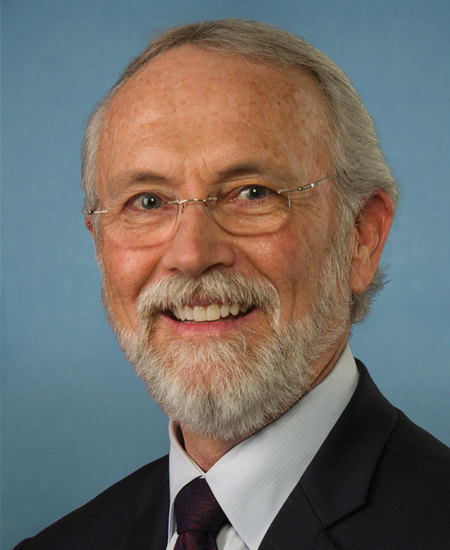
Rep. Dan Newhouse
Sponsored bills
Making Obligations Right by Enlarging Payments In Lieu of Taxes Act or the MORE PILT Act This bill directs the Department of the Interior to develop a modeling tool that calculates the approximate market value of land covered by the payments in lieu of taxes (PILT) program and the approximate amount of local tax revenue the land would generate if privately owned. The PILT program compensates local governments for tax revenue lost due to tax-exempt federal lands within their boundaries. Interior must annually report on the value of land covered by the PILT program, the tax revenue the land would generate if privately owned, and how PILT payments could more accurately reflect that tax revenue.
Toxic Exposure in the American Military Act or the TEAM Act This bill requires the Department of Veterans Affairs (VA) to expand health care, benefits, and resources for veterans with conditions related to exposure to toxic substances. Specifically, the bill expands eligibility for VA hospital care, medical services, and nursing home care to include veterans who (1) were exposed to toxic substances, radiation, or other conditions, and were awarded certain medals (e.g., the Armed Forces Service Medal); (2) are eligible for inclusion in the Airborne Hazards and Open Burn Pit Registry; or (3) have been identified by the Department of Defense to have been possibly exposed during service to an open burn pit, toxic substance, or specified hazardous sites. (A burn pit is an area used for burning solid waste in open air without equipment.) The bill establishes a presumption of service-connection for diseases associated with exposure to certain toxic substances and that become manifest within a certain time period; the VA must specify such diseases and requirements through regulations. Under a presumption of service-connection, specific conditions diagnosed in certain veterans are presumed to have been caused by the circumstances of their military service. Health care benefits and disability compensation may then be awarded. The bill also requires the VA to take specified actions to (1) evaluate scientific evidence regarding associations between diseases and exposure to toxic substances; (2) train its health care personnel on identifying, treating, and assessing illnesses related to such exposure; and (3) provide resources to veterans exposed to toxic substances.
Aluminum Pricing Examination Act or the APEX Act This bill extends the jurisdiction of the Commodity Futures Trading Commission (CFTC) to include the markets for aluminum premiums. Specifically, the CFTC has jurisdiction over (1) the process and manner in which reference prices for such premiums are set or reported, and (2) whether the mechanism for setting such reference prices is fair and transparent. Additionally, the CFTC must consult with the Department of Justice regarding relevant information, including allegations of anticompetitive conduct.
Trillion Trees Act This bills establishes a variety of requirements and incentives to plant trees and conduct other land management practices for the purposes of capturing and storing carbon in domestic and international trees and forests. Additionally, the bill provides incentives to research or develop other carbon sequestration tools. Specifically, the bill directs the Department of Agriculture (USDA) to set targets to increase forest carbon stock through January 1, 2100, for the purposes of sequestering and storing carbon in U.S. forests. It also establishes and provides funding for the Trillion Trees Challenge Fund to provide grants to nonfederal entities for activities related to reforestation efforts on public or private lands. In addition, it raises the cap on the Reforestation Trust Fund to enhance forest health in the National Forest System and requires the USDA to establish a Tree City USA Grant Program. The bill also allows the U.S. Agency for International Development to enter into an agreement with a nonprofit organization to establish an International Forest Foundation to promote reforestation and prevent deforestation. Additionally, it establishes requirements and incentives to address seedling shortages and support nurseries. Finally, the bill provides market incentives to research or develop other carbon sequestration tools relating to biochar, sustainable building practices, biochemical and bioplastic products, and biomass energy.
Conservation and Innovative Climate Partnership Act of 2021 This bill requires the Department of Agriculture to award competitive grants to land-grant colleges or universities for raising public awareness, conducting workshops, and providing technical assistance to increase agricultural producers' voluntary adoption of conservation practices (e.g., alley cropping) and innovative climate practices (e.g., carbon sequestration). Grantees must carry out activities in partnership with at least one other entity, such as the Natural Resources Conservation Service, a land-grant college or university, a state entity, or a nonprofit organization.
Biochar Innovations and Opportunities for Conservation, Health, and Advancements in Research Act of 2021 or the BIOCHAR Act of 2021 This bill establishes two temporary programs to encourage research, development, and commercialization of biochar. This is carbonized biomass produced by converting plant matter through reductive thermal processing for nonfuel uses. First, the Department of Agriculture (USDA) and the Department of Energy (DOE) must fund biochar demonstration projects through state, tribal, or local governments; land-grant colleges or universities; or private, nonprofit, or cooperative entities. In selecting projects, the departments must prioritize, for example, projects that (1) have the greatest potential for carbon sequestration; and (2) create new jobs and economic benefits, particularly in rural areas. Projects may use funds for various activities, including developing commercially and technologically viable biochar production units and demonstrating cost-effective market opportunities for biochar and biochar-based products. At least 50% of the plant matter used in a project must come from forest thinning and management activities on National Forest System land. In addition, USDA and DOE must conduct research related to the biochar produced from the projects. Second, USDA must establish a grant program for land-grant colleges and universities to conduct applied research on environmental and economic benefits of biochar. For the duration of the two programs, USDA and DOE must periodically report to Congress about issues related to commercialization of biochar and the status of the programs. The programs terminate after 10 years.
Flexible Financing for Rural America Act This bill allows rural utility service providers to submit to the Department of Agriculture (USDA) a request to adjust the interest rate or modify the terms of certain loans. The request shall include a report summarizing how the adjustment or modification will assist the borrower in providing critical utility services to a rural community. Specifically, on receipt of a request, USDA or the Department of the Treasury (in the case of a loan owned by the Federal Financing Bank) must adjust the interest rate on the loan to match certain interest rates for obligations of comparable maturity to the term remaining on the loan (or a higher rate requested by the borrower), and make modifications to the loan terms as necessary to address changes in the financial position of the borrower due to the COVID-19 public health emergency and to promote the financial sustainability of the borrower. In carrying out the adjustments or modifications, USDA or Treasury shall not impose or collect any fee from, or impose any penalty on, a borrower. The bill also provides funding to implement the adjustments and modifications and for the liquidation of residual intragovernmental amounts owed by the Federal Financing Bank in connection with certain loans.
Solving Our Shortages for Seedlings Act or the SOS for Seedlings Act This bill requires various activities to alleviate a shortage of tree seedlings. Specifically, the Forest Service must implement a national strategy to address the shortage by expanding the capacity of governmental and private nurseries. In addition, the Department of Agriculture (USDA) must carry out a loan program for state, tribal, or local governments; or private, nonprofit, or cooperative organizations to establish or expand facilities that grow, store, extract, or monitor tree seedlings. The bill also reauthorizes through FY2030 a program that permits USDA to establish and operate nurseries, purchase tree seeds or seedlings, plant trees, and otherwise support reforestation.
Forest Technology Enhancements for Conservation and Habitat Improvement Act or the Forest TECH Improvement Act This bill directs the Department of Agriculture (USDA) to either establish a research and development pilot program or expand an applicable existing program to assess new technologies, including unmanned aircraft system, geospatial, or remote sensing technologies, across all reforestation activities; accelerate the deployment and integration of such technologies into the operations of USDA and the Department of the Interior; collaborate and cooperate with state, tribal, and private geospatial information system organizations with respect to such technologies. USDA and Interior shall enter into an agreement to develop consistent protocols and plans for the use of unmanned aircraft system technologies for reforestation activities. Any unmanned aircraft system technology or component of such technology that is used pursuant to this bill shall be made and manufactured in the United States.