

Maddy summaryHRES 1594 is a symbolic House resolution supporting the designation of "National Rural Health Day," observed annually on the third Thursday of November. It recognizes rural health care providers and the communities they serve, highlighting challenges like hospital closures, workforce shortages, and access barriers in rural areas. The resolution expresses the House's commitment to improving rural health care accessibility and affordability but does not create new laws or allocate funding. It is a non-binding gesture aligning with an existing observance since 2011, organized by the National Rural Health Association.
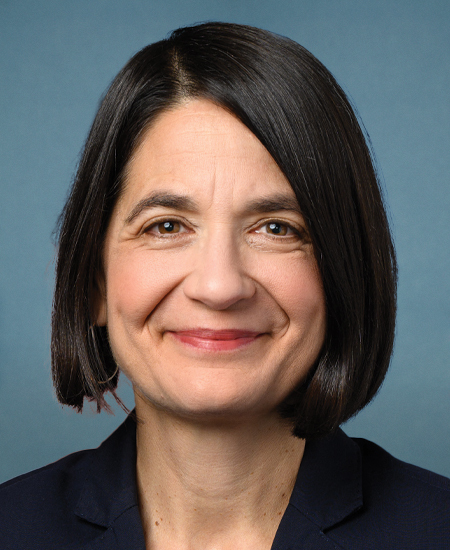
Rep. Becca Balint
Sponsored bills
Maddy summaryHRES 1588 is a House resolution supporting Transgender Day of Remembrance (TDoR) by recognizing the epidemic of violence against transgender people and memorializing those killed between October 1, 2023, and September 30, 2024. It specifically honors 38 transgender or gender-nonconforming individuals whose lives were lost to violence during that period, highlighting that transgender women of color face disproportionate risks. The resolution acknowledges systemic issues like underreporting, barriers to healthcare, and higher rates of homelessness and suicide within the community. It calls for the U.S. government to prioritize solutions to this violence while affirming transgender people's right to dignity and safety. As a symbolic resolution, it does not create new laws or policies but formally recognizes these issues for congressional record.
Maddy summaryThis resolution (HRES 1558) is a symbolic House of Representatives measure supporting October as "National Domestic Violence Awareness Month." It does not create new laws or allocate funding but formally expresses the House's support for raising awareness about domestic violence and its impacts, and urges continued backing for existing programs that address domestic violence. The resolution cites statistics on domestic violence prevalence (e.g., 24 people per minute affected by intimate partner violence) to underscore the importance of the observance. It directly affects public awareness efforts but does not change policies or directly impact individuals.
Maddy summaryHRES 1552 is a symbolic House resolution expressing support for recognizing October 26, 2024, as Intersex Awareness Day. It encourages federal, state, and local governments, schools, healthcare providers, and organizations to observe the day through educational programs and activities that celebrate intersex identity and promote awareness. The resolution specifically urges healthcare systems to provide culturally competent care for intersex individuals and schools to incorporate education about intersex diversity. It does not create new laws or policies but aligns with existing federal actions recognizing intersex rights and health equity. The resolution directly supports the intersex community and aims to foster greater public understanding of their experiences.
Maddy summaryThe VA Employee Fairness Act of 2024 modifies collective bargaining rules for employees of the Veterans Health Administration (VHA). It removes existing subsections (b), (c), and (d) from the law governing VHA employee bargaining and renumbers the remaining provision. This change streamlines the collective bargaining framework but does not alter the Secretary of Veterans Affairs' existing authorities over incentive pay and expedited hiring. The bill directly affects VHA employees by changing how their collective bargaining rights are structured under federal law. The law remains neutral, focusing solely on procedural adjustments to the existing bargaining framework.
Maddy summaryHRES 1501 is a symbolic resolution expressing support for designating the week of October 24-31, 2024, as "Bat Week." It highlights bats' critical roles in controlling crop pests (saving U.S. farmers over $3 billion annually), pollinating plants, and maintaining ecosystems, while noting threats like white-nose syndrome. The resolution encourages public events during Bat Week and acknowledges efforts to conserve bats and combat the disease. As a non-binding gesture, it does not create new laws or funding but aims to raise awareness about bat conservation.
Maddy summaryThe Long COVID Research Moonshot Act establishes a dedicated National Institutes of Health research program to accelerate scientific understanding and treatment development for Long COVID, directly affecting millions of people experiencing persistent health issues after COVID-19 infection. The bill creates a Long COVID Research Program with a specific Director to coordinate all NIH research, develop an annual research plan, and establish a patient-informed advisory board with representation from both patients and scientific experts. It authorizes $1 billion annually for 10 years (2025-2034) to fund research on Long COVID's causes, prevention, detection, management, and treatment, including a clinical trial registry and public health surveillance through the CDC. The legislation also includes provisions for public education campaigns, provider training, and a national network of multidisciplinary Long COVID clinics to improve care access, particularly for underserved populations. This comprehensive approach aims to address Long COVID through coordinated research, surveillance, and clinical care improvements.
Maddy summaryHR 7032, the Congressional Budget Office Data Sharing Act, amends the 1974 Congressional Budget Act to give the Congressional Budget Office (CBO) clearer authority to quickly obtain data from executive branch agencies. The bill removes barriers to CBO requests by allowing data sharing "with or without written agreement," while requiring the CBO to maintain required confidentiality levels. It also prevents future laws from limiting this authority unless specifically referenced. The law directly affects the CBO and federal agencies that provide budget-related data, aiming to improve the CBO's ability to analyze government spending.
Maddy summaryHR 9814, the Rural Homeownership Continuity Act of 2024, simplifies the process for rural homeowners to transfer FHA-guaranteed mortgages when selling their homes. It requires the Secretary of Housing and Urban Development to create a rule within one year establishing a process allowing a qualified buyer to assume the existing loan, while fully relieving the original borrower and any co-borrowers or guarantors of liability. This directly affects rural homeowners using the Doug Bereuter Section 502 Single Family Housing Loan Guarantee Program who wish to sell their property without remaining responsible for the mortgage. The key provision eliminates the seller's ongoing financial obligation upon a successful transfer to a qualified buyer.
Maddy summaryHR 1719, the Honoring Our Fallen Heroes Act of 2023, establishes a presumption that certain cancers diagnosed in public safety officers (like police and firefighters) are work-related if linked to their duties. It defines 22 specific cancers (including lung, mesothelioma, and WTC-related cancers) as "exposure-related," allowing officers or their families to receive benefits without proving direct work connection, provided they were diagnosed within 15 years of leaving active service. The bill also creates a process for adding new cancers to the list based on scientific evidence, requiring the Bureau to review petitions and make decisions within 180 days. This applies to deaths or disabilities occurring on or after January 1, 2023, directly affecting officers who developed covered cancers during service.