

Maddy summaryThis bill amends the Marsh-Billings-Rockefeller National Historical Park Establishment Act to expand the park's boundaries. It adds specific areas to the historic zone (including the mansion and surrounding buildings) and protection zone (Billings Farm), while dividing the King Farm between these zones. The bill also clarifies land acquisition rules for the King Farm, allowing the park to use it for agriculture, conservation, and education that preserves its historic character. Finally, it establishes a National Park Service Stewardship Institute at the park to advance conservation practices through workshops and research.
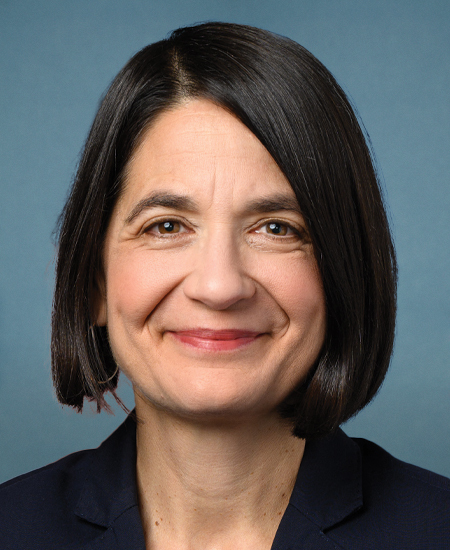
Rep. Becca Balint
Sponsored bills
Maddy summaryThe Homes Act of 2024 would establish a new Housing Development Authority within the Department of Housing and Urban Development to develop permanently affordable housing. The Authority would acquire properties and convey them to eligible entities (including community land trusts, tenant organizations, and public housing agencies) under strict requirements for permanent affordability, climate resilience, and community control. The bill would set rents at 25% of household income, limit annual rent increases to 3% or the Consumer Price Index, and require "just-cause" evictions with tenant protections. It would also create a tenant right to purchase their rental properties through a "first look" process and prioritize housing for underserved communities and families experiencing homelessness.
Maddy summaryThis bill directs the U.S. government to immediately restore funding to the United Nations Relief and Works Agency for Palestine Refugees (UNRWA), reversing a temporary funding pause. It repeals two appropriations acts that halted payments and requires the Secretary of State to resume UNRWA funding under existing authorities. The legislation specifically aims to support UNRWA’s critical humanitarian work - providing shelter, education, healthcare, and aid to Palestinian refugees across Gaza, the West Bank, Syria, Lebanon, and Jordan - during an acute famine risk in Gaza. It also mandates quarterly reports to Congress on UNRWA’s implementation of reforms from an independent review, ensuring accountability for its humanitarian mission.
Maddy summaryThis bill allows states to require boaters to pay state fees related to boating (such as for search and rescue, safety programs, or invasive species control) as a condition for receiving a vessel number. It affects boaters who need vessel registration and state agencies that issue vessel numbers. States can collect these fees together with other vessel numbering fees, and must use the funds exclusively for recreational boating safety, access, waterway use, or invasive species efforts. The bill amends federal law to clarify that states may implement these fee requirements without conflicting with existing federal provisions.
Maddy summaryHR 6033, the SPEAK Act of 2024, creates a task force within the Department of Health and Human Services to address telehealth barriers for patients with limited English proficiency (LEP). The task force - comprising healthcare providers, tech vendors, language services, and patient advocates - will assess current obstacles and develop best practices for improving access to telehealth platforms, video interpretation, and digital patient portals. Within 90 days of each annual report, the Secretary must publish a public website sharing these best practices, including guidance on integrating interpreters and making telehealth instructions accessible. The bill directly affects LEP patients and healthcare providers who serve them, aiming to make digital health tools more usable through concrete, evidence-based recommendations.
Maddy summaryHRES 1461 is a symbolic resolution designating September 2024 as "National Voting Rights Month" to raise awareness about voting access. It encourages all U.S. citizens to uphold voting rights, supports existing voting rights legislation like the Freedom to Vote Act, and recommends schools teach about voting history and current restrictions. The resolution specifically aims to highlight efforts to address historical and ongoing barriers affecting historically marginalized groups, including Black, Latino, and disabled voters. It does not create new laws but promotes educational initiatives and media campaigns about registration deadlines and election access.
Maddy summaryHR 9614, the ENABLE Act, permanently extends key tax benefits for ABLE accounts, which help people with disabilities save money without losing government benefits. The bill removes an expiration date (previously set for January 1, 2026) for higher contribution limits and the savers credit for ABLE accounts, and allows permanent rollovers of funds from 529 college savings plans into ABLE accounts. These changes directly affect individuals with disabilities and their families who use ABLE accounts for savings. The bill makes these provisions permanent, applying to future taxable years and distributions after enactment.
Maddy summaryThe American Housing and Economic Mobility Act of 2024 provides down payment assistance to first-time homebuyers, expands Fair Housing Act protections to include gender identity, sexual orientation, marital status, source of income, and veteran status, and makes significant reforms to the Community Reinvestment Act to improve access to credit in underserved communities. The bill also provides housing loan benefits for direct descendants of veterans who served between 1944 and 1968, increases accessibility requirements for housing constructed with federal funds, and includes estate tax changes for high-value estates. It aims to address housing affordability, reduce discrimination in housing, and improve access to credit in underserved communities.
Maddy summaryHRES 1448 is a non-binding House resolution stating that the House believes every person has the right to emergency health care, including abortion care, during medical emergencies. It specifically addresses concerns that abortion restrictions force medical providers to choose between treating patients in life-threatening situations or risking criminal charges. The resolution highlights that such restrictions disproportionately harm Black, Indigenous, people of color, immigrants, low-income individuals, and LGBTQI+ patients. It does not change existing laws but expresses congressional support for ensuring access to emergency care without legal barriers. The resolution was introduced by multiple House members and referred to the Energy and Commerce Committee.
Maddy summaryThe Polluters Pay Climate Fund Act of 2024 would require major fossil fuel companies that emitted more than 1 billion metric tons of carbon dioxide between 2000 and 2022 to pay a tax based on their historical emissions. The tax revenue would fund a new Climate Fund that would provide $15 billion annually for disaster response and resilience programs through FEMA, $6 billion for clean air initiatives, and mandate 40% of funds support environmental justice communities. The fund would finance climate resilience projects including climate-resilient infrastructure, ecosystem restoration, and support for vulnerable communities affected by climate change. Companies could pay the tax over nine years, and the bill explicitly states it does not affect existing legal claims against polluters for climate-related damages.