

Maddy summaryHR 415, the "End the Threat of Default Act," repeals the statutory debt ceiling (section 3101 of Title 31, U.S. Code), which currently limits how much the federal government can borrow. This would eliminate the need for Congress to approve increases to the borrowing cap, removing the risk of a government default on its debts. The bill directly affects the Treasury Department’s ability to manage federal borrowing, as it would no longer require congressional action to authorize new debt issuance. The technical amendments update references to the debt ceiling in other laws to reflect this change.
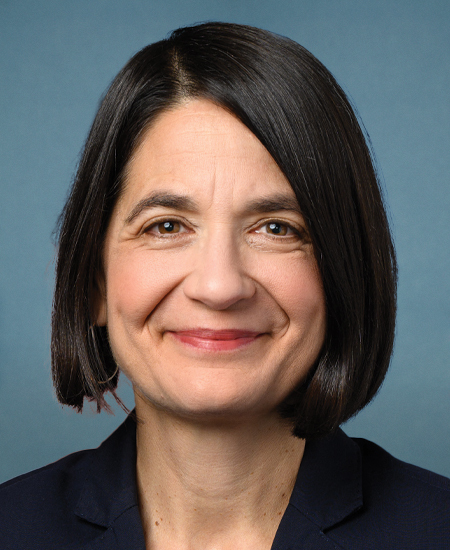
Rep. Becca Balint
Sponsored bills
Maddy summaryHR 33 would expand Medicare to cover dental, vision, and hearing services for beneficiaries, which are currently not covered under Medicare. The bill provides 100% coverage for preventive dental services in 2024, with basic dental services gradually increasing to 80% coverage by 2027. Vision coverage would include routine eye exams and corrective lenses at 80% coverage, while hearing services would cover hearing exams and hearing aids at 80% coverage. The bill includes specific limitations, such as two dental cleanings per year and one pair of glasses every 24 months, with the Secretary of Health and Human Services having authority to apply additional limitations or modify coverage based on medical recommendations. The changes would take effect on January 1, 2024.
Maddy summaryThis bill clarifies and authorizes U.S. government assistance programs focused on humanitarian demining and conventional weapons destruction. It directly affects U.S. agencies (State, Defense, USAID) and partner countries receiving aid, with over 120 nations benefiting since 1993. Key mechanisms include funding for clearing landmines and explosive remnants to return land to agriculture and development, securing weapons stockpiles to prevent diversion to terrorists, and providing community risk education. The bill specifies that these programs aim to save lives, reduce instability, support food security, and build security partnerships - using concrete examples like clearing 60,200 acres of land in 2022. It does not create new funding but formally defines the purposes of existing assistance under the Department of State Authorities Act.
Maddy summaryThis bill extends funding for the existing Public Health Service Act program focused on raising public awareness about Alzheimer's disease and related dementias. It authorizes $33 million annually for fiscal years 2025 through 2029 to support public health education and outreach initiatives. The program directly affects public health organizations and community groups that develop and distribute educational materials about Alzheimer's prevention, diagnosis, and care. The key provision is the multi-year funding extension, ensuring continued support for nationwide awareness efforts without altering the program's core structure.
Maddy summaryHR 10314, the National Resilience and Recovery Fund Act, establishes a new trust fund in the U.S. Treasury to support disaster resilience and recovery efforts. The fund will be financed by taxes on crude oil and natural gas production from the Gulf of Mexico, environmental taxes on petroleum, and windfall profits taxes on oil producers. Funds will be allocated to four specific federal programs: Hazard Mitigation Grant Program, Building Resilient Infrastructure and Communities, Safeguarding Tomorrow Revolving Loan Fund, and Flood Mitigation Assistance. The bill also clarifies tax definitions for crude oil and sets a 10-cent-per-barrel tax rate for the National Resilience and Recovery Fund financing.
Maddy summaryHR 6751 authorizes the U.S. Mint to produce commemorative coins honoring Roberto Clemente, a Hall of Fame baseball player and humanitarian, including 50,000 $5 gold coins, 400,000 $1 silver coins, and 750,000 half-dollar coins. The coins must feature Clemente's image and inscriptions like "Roberto Clemente" and "2027," with all sales including a surcharge ($5-$35 per coin) paid to the Roberto Clemente Foundation. The foundation, which supports youth sports, education, and disaster relief programs, will use these funds for its mission, while the U.S. Treasury must recover all production costs. The coins will be sold exclusively in 2027, with no net cost to the government.
Maddy summaryThis bill amends the Robert T. Stafford Disaster Relief Act to explicitly include substance use disorder and alcohol use disorder treatment in federal disaster relief funding. It expands access to addiction services for disaster survivors by requiring that mental health and counseling assistance programs funded under the Act cover these specific needs. Key provisions revise existing language to add "substance use disorder" and "alcohol use disorder" throughout the law, ensuring these services are directly eligible for disaster-related funding. The bill also mandates a federal report within 180 days to update application forms and guidance documents to reflect these changes, ensuring implementation aligns with the new provisions.
Maddy summaryThis House resolution supports the goals of World AIDS Day by encouraging efforts to end the HIV epidemic by 2030, aiming for zero new infections, zero discrimination, and zero AIDS-related deaths. It specifically urges sharing of U=U (Undetectable=Untransmittable) information and PrEP (pre-exposure prophylaxis) to prevent transmission, and calls for increased funding for HIV prevention, treatment, and research - particularly for communities disproportionately affected by HIV, such as racial minorities, men who have sex with men, and transgender individuals. The resolution commends existing programs like PEPFAR and the Ryan White CARE Act while advocating for expanded testing, antiretroviral treatment, and comprehensive prevention services, including a National PrEP Program.
Maddy summaryThis bill establishes a Truth and Healing Commission to investigate the history and impacts of U.S. Indian Boarding School policies on Native American communities, including cultural, emotional, and physical effects on survivors, descendants, and tribal communities. The Commission will document these impacts through research, public meetings, and testimony, working with two advisory committees focused on Native American perspectives and Federal agency coordination. The Commission will operate for six years, with annual reports to Congress and a final report containing recommendations for Federal action. The bill also includes provisions for managing burial sites related to boarding schools and ensures the Native American Graves Protection and Repatriation Act applies to remains found on Federal lands related to these schools.