

Maddy summaryHR 6575, the CommonGround for Affordable Health Care Act, extends enhanced premium tax credits for health insurance through 2026, directly benefiting millions of lower and middle-income Americans purchasing coverage through the ACA marketplace. The bill modifies income thresholds for premium subsidies, creating new income tiers that maintain or increase financial assistance for households earning up to 1,000% of the poverty level. It includes provisions to prevent fraud in health insurance exchanges by imposing civil penalties on agents and brokers who provide false information, and requires transparency in pharmacy benefit manager contracts to improve drug pricing accountability. The legislation also extends the annual open enrollment period for health insurance exchanges for the 2026 plan year, allowing more time for people to enroll or change coverage.
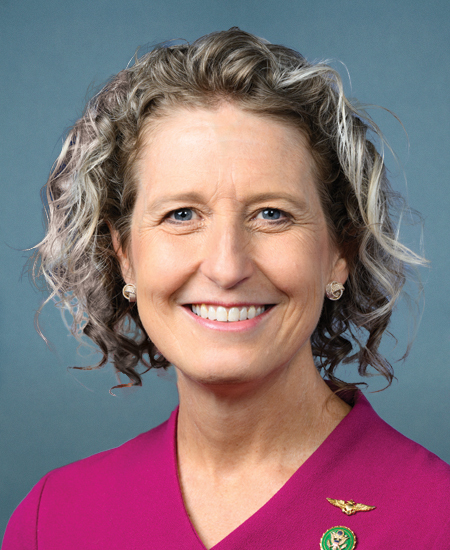
Rep. Jennifer A. Kiggans
Sponsored bills
ePermit Act This bill establishes requirements related to digitizing environmental reviews conducted under the National Environmental Policy Act of 1969 (NEPA). The Council on Environmental Quality (CEQ) must develop, publish, and iteratively update data standards for the collection and curation of certain data related to environmental reviews. CEQ must also design, test, and build prototype tools for environmental reviews. Additionally, CEQ must publish guidance to assist relevant agencies in implementing such standards as well as certain minimum functional requirements, such as data sharing that enables automated transfer of relevant data among federal agencies. Federal agencies responsible for environmental reviews or authorizations must implement the data standards and such minimum functional requirements. To the maximum extent practicable, CEQ and such agencies must iteratively develop and maintain a unified interagency data system consisting of interconnected federal agency systems and shared services for environmental reviews and authorizations, including a common interactive, digital, cloud-based authorization portal. Within a year, CEQ must oversee a pilot of shared services for environmental reviews and authorizations, including the portal. To the maximum extent practicable, CEQ must develop and implement the unified interagency data system by December 1, 2027.
Maddy summaryThe Bipartisan Health Insurance Affordability Act extends and modifies premium tax credit rules to make health insurance more affordable for people with household incomes up to 700% of the poverty line, with specific provisions for different income tiers. The bill requires pharmacy benefit managers to pass through 100% of rebates to health plans, establishes transparency requirements for drug pricing, and creates mechanisms to prevent fraud in health insurance exchanges. It also extends the annual open enrollment period for 2026 and allows qualified Exchange enrollees to establish health savings accounts, with options to prepay annual premiums or direct part of their premium tax credit into a health savings account.
Skinny Labels, Big Savings Act This bill provides a statutory safe harbor from patent infringement claims for generic or biosimilar manufacturers that seek or obtain approval for skinny labels of their drugs. Under current law, the Food and Drug Administration (FDA) may approve generic and biosimilar drugs through a process known as skinny labeling, which allows a generic manufacturer to seek approval only for approved uses of the drug that are no longer protected by patents. However, in GlaxoSmithKline LLC v. Teva Pharmaceuticals USA, Inc. , a court held that a generic manufacturer may sometimes be liable for patent infringement when it markets skinny label generics. The bill specifically lists the following as actions that are not considered infringement of a method of use claim in a patent under the Federal Food, Drug, and Cosmetic Act: submitting or seeking approval of a skinny label for a generic or biosimilar drug; promoting or commercially marketing a drug with skinny labeling approved by the FDA; or describing a drug product approved by the FDA as a generic of, or therapeutically equivalent to, the branded drug. The bill also applies the safe harbor to similar actions under the Public Health Service Act.
Maddy summaryHR 6490 establishes a pilot program (the "Push-Text Initiative") for members of the Marine Corps stationed at installations in Okinawa, Japan, and their adult dependents. The program automatically enrolls eligible participants using their provided contact information (with an opt-out option) to send text messages containing specific, timely information. Key topics covered include military spouse employment resources, childcare services, TRICARE benefits, and updates on DOD policies affecting service members and dependents. The Secretary of Defense must report on the program's implementation, participation, costs, and potential for Department-wide expansion by October 2027.
Maddy summaryHR 6423, the HELP Copays Act, requires health insurance plans and coverage to count financial assistance from non-profits or drug manufacturers toward patient cost-sharing limits like deductibles and copayments. This directly affects patients enrolled in health insurance who receive such assistance for prescription drugs, ensuring the help they get reduces their out-of-pocket costs faster. The bill amends key health laws to mandate that these payments are included when calculating whether a patient has met their deductible or copayment threshold. The change applies to all prescription drugs, including specialty drugs and those subject to prior authorization, but does not alter how insurers manage drug access through tools like step therapy. It takes effect for plan years starting in 2026.
Maddy summaryThis bill expands eligibility for workers' compensation medical care under the Federal Employees' Compensation Act by adding nurse practitioners and physician assistants as covered providers. It directly affects injured federal workers who can now receive care from these professionals within their state-authorized scope of practice. Key provisions redefine "other eligible provider" in the law and update related sections to replace "physician" with "physician or other eligible provider" throughout the statute. The bill requires the Secretary of Labor to issue final regulations within six months of enactment to implement these changes.
Maddy summaryHR 6383, the Brandon Act Training and Protocol Act, requires the Department of Defense to create a strategic plan addressing mental health and suicide prevention among military members. The plan mandates uniform protocols for members seeking mental health help on their own and standardized training for commanders, medical staff, and enlisted leaders on recognizing distress, supporting referrals, and responding appropriately. It also establishes a certification process to confirm personnel complete required training. This bill directly affects all members of the Armed Forces through improved mental health access and support, while requiring commanders and medical personnel to implement new protocols. The focus is on concrete policy changes to standardize mental health services within the military.
Maddy summaryThe Rx ACCESS Act improves prescription drug access for TRICARE beneficiaries, including military service members, retirees, and their families, by establishing fair reimbursement standards for pharmacies and expanding medication choice. It requires pharmacies to be reimbursed at actual drug costs (or the national average drug cost for certain medications) plus a standard dispensing fee, while banning hidden fees like point-of-sale charges. Starting October 1, 2026, beneficiaries can choose how they receive non-generic medications for ongoing health conditions. The law also mandates annual audits to verify reimbursement fairness and ensure pharmacy networks provide accessible care, especially in rural and underserved areas.
Maddy summaryHR 6401, the *Increasing Medication Access for Seniors Act of 2025*, is a procedural bill requiring the U.S. Department of Health and Human Services to submit regular reports on Medicare Part D’s existing "monthly capped cost-sharing" option. The bill mandates detailed reports tracking how many seniors elect to pay a fixed monthly amount for prescription drugs (instead of variable out-of-pocket costs), including breakdowns by region, plan type, and outreach efforts used to inform enrollees. It does not change Medicare Part D benefits or eligibility but requires ongoing data collection to assess current usage and identify potential improvements in access. The reports must cover enrollment trends, outreach methods (like Medicare.gov and provider resources), and efforts to help seniors understand the option until March 2031. This is a transparency measure, not a policy change affecting seniors’ medication access directly.