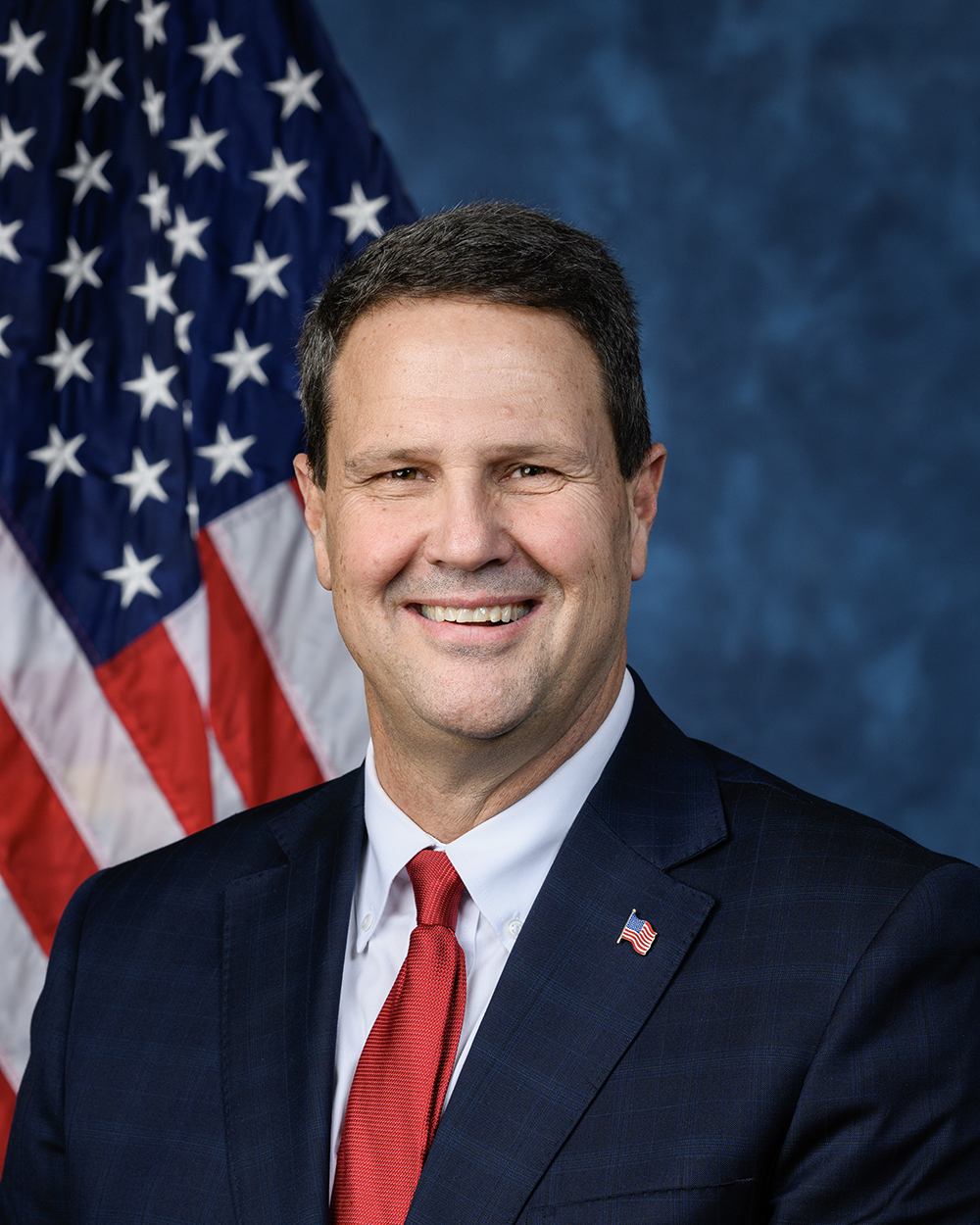
HR 4503 United States House · 119th Congress

ePermit Act

Summary
ePermit Act This bill establishes requirements related to digitizing environmental reviews conducted under the National Environmental Policy Act of 1969 (NEPA). The Council on Environmental Quality (CEQ) must develop, publish, and iteratively update data standards for the collection and curation of certain data related to environmental reviews. CEQ must also design, test, and build prototype tools for environmental reviews. Additionally, CEQ must publish guidance to assist relevant agencies in implementing such standards as well as certain minimum functional requirements, such as data sharing that enables automated transfer of relevant data among federal agencies. Federal agencies responsible for environmental reviews or authorizations must implement the data standards and such minimum functional requirements. To the maximum extent practicable, CEQ and such agencies must iteratively develop and maintain a unified interagency data system consisting of interconnected federal agency systems and shared services for environmental reviews and authorizations, including a common interactive, digital, cloud-based authorization portal. Within a year, CEQ must oversee a pilot of shared services for environmental reviews and authorizations, including the portal. To the maximum extent practicable, CEQ must develop and implement the unified interagency data system by December 1, 2027.
Bill status passed 3 of 5 stages cleared
Introduction
Jul 2025
Committee Review
Dec 2025
House Passage
Dec 2025
Senate Passage
President
Introduced Jul 17, 2025 Last action Dec 10, 2025
Maddy AI version diff · 1 comparison

What changed between versions

Introduced in House Engrossed in House · 11 edits · Dec 9, 2025
MAJOR
The Engrossed version of HR 4503 makes several substantive changes: it accelerates the data standards deadline from 180 days to 60 days while extending the guidance publication deadline from 30 to 120 days, removes a dedicated funding authorization of $1 million per year (FY2026-2032), adds a new congressional access provision for AI systems used in environmental reviews, and threads 'vendor neutrality' language throughout the bill. A new savings clause prevents project-type restrictions on tools that are not inherently limited by project type.
TIMELINE

The deadline for CEQ to develop and publish data standards was shortened from 180 days to 60 days after enactment, a threefold acceleration.

The deadline for CEQ to publish implementation guidance was extended from 30 days to 120 days after enactment, giving agencies four times more time.

FISCAL

The authorization of appropriations providing $1,000,000 per year for fiscal years 2026 through 2032 (to remain available until expended) was removed entirely.

Contract authority for CEQ was made contingent on 'the availability of appropriations' rather than being unconditional.

ENFORCEMENT

A new provision gives Congress access to data, fine-tuning procedures, and prompt configurations specifically created or adapted for AI systems used to support environmental review or authorization activities, excluding proprietary or general pretraining materials.

SCOPE

The word 'centralized' was removed from the description of the authorization portal platform, and a new requirement was added that it be supported by 'a decentralized, cross-network digital infrastructure software that ensures vendor neutrality and interoperability.'

The Senate committee receiving annual progress reports was changed from the Committee on Energy and Natural Resources to the Committee on Environment and Public Works.

REQUIREMENT

A new savings clause (section 10) states that any data system, technology, or tool not limited by project type shall not have its use restricted by project type.

Prototype tools must now include public comment opportunity tracking portals to increase transparency, in addition to the existing application submission and tracking portals.

DEFINITION

The term 'case management systems' was broadened to 'case and project management systems' in multiple locations, expanding the scope of covered tools.

TECHNICAL

The phrase 'vendor neutral' or 'vendor neutrality' was added throughout the bill - in findings, data standards requirements, cybersecurity considerations, and the definition of data standards.

Floor votes

How they voted

This bill passed the House by voice vote (no roll call recorded).
Full legislative history

Actions timeline

Total actions
14
Key actions
4
Committee
5
Amendments
2
Dec 10, 2025
Committee
Received in the Senate and Read twice and referred to the Committee on Environment and Public Works.
upper
Dec 9, 2025
Introduced
On motion to suspend the rules and pass the bill, as amended Agreed to by voice vote. (text: CR H5088-5091)
lower
Dec 9, 2025
Lower · Passed
Passed/agreed to in House: On motion to suspend the rules and pass the bill, as amended Agreed to by voice vote. (text: CR H5088-5091)
lower
Dec 9, 2025
Introduced
Mr. Crank moved to suspend the rules and pass the bill, as amended.
lower
Dec 4, 2025
Lower · Passed
Reported (Amended) by the Committee on Natural Resources. H. Rept. 119-392.
lower
Nov 20, 2025
Lower · Passed
Committee Consideration and Mark-up Session Held
lower
Sep 10, 2025
Lower · Passed
Committee Hearings Held
lower
Jul 17, 2025
Committee
Referred to the House Committee on Natural Resources.
lower
Jul 17, 2025
Introduced
Introduced in House
lower
1 primary · 11 co-sponsors

Sponsors