

Building Resources and Access for Veterans' Mental Health Engagement Act of 2025 or the BRAVE Act of 2025 This bill addresses mental health services and care provided by the Department of Veterans Affairs (VA), including matters related to personnel, Vet Center administration, care for women veterans, and access to care. The bill authorizes the VA to waive the licensure or certification requirement for individual licensed professional mental health counselor appointees for a reasonable period of time. The bill also extends the Staff Sergeant Parker Gordon Fox Suicide Prevention Grant Program and increases the maximum annual grant amount. The VA must provide Vet Centers with guidance for assessing outreach activities and implement processes to periodically assess the extent to which (1) veterans and eligible members of the Armed Forces experience barriers to obtaining services at Vet Centers, and (2) Vet Center staff may encounter barriers to providing services. Among other requirements, the VA must also survey and host listening sessions with women veterans to gauge the effectiveness of the VA’s suicide prevention, lethal-means safety, and mental health resources and messaging campaigns; initiate efforts to modify the Recovery Engagement and Coordination for Health-Veterans Enhanced Treatment (REACH VET) program to incorporate risk factors weighted for women; annually offer a mental health consultation to veterans who are receiving compensation for a service-connected disability relating to a mental health diagnosis; and implement a pilot program to provide access to mental health residential treatment programs for veterans with a spinal cord injury or disorder.
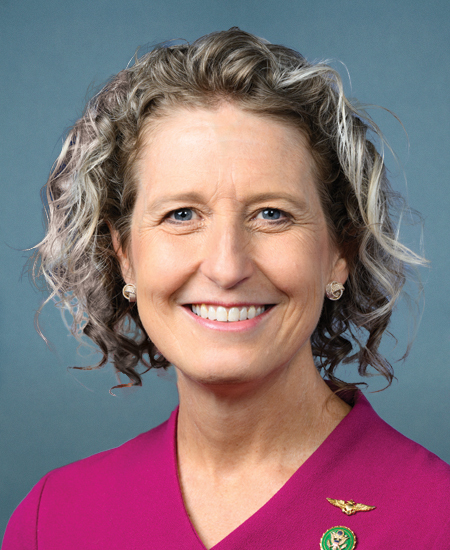
Rep. Jennifer A. Kiggans
Sponsored bills
Give Kids a Chance Act of 2025 This bill expands the Food and Drug Administration’s (FDA’s) authority with respect to research on rare pediatric diseases, including by permitting the FDA to take enforcement action against drug sponsors that fail to satisfy pediatric study requirements and by reauthorizing programs that support pediatric research. Specifically, the bill modifies requirements relating to molecularly targeted pediatric cancer investigations to permit research on new drugs in combination with active ingredients that have already been approved, provided certain conditions are met; permits the FDA to take enforcement action against drug sponsors that fail to comply with pediatric study requirements, if such sponsors demonstrated a lack of due diligence in satisfying the requirement; renews the FDA’s authority to award priority review vouchers to sponsors of new products intended to treat rare pediatric diseases through September 30, 2029; and reauthorizes through FY2027 certain funding for the National Institutes of Health to support priority pediatric research. The bill also provides statutory authority for the FDA’s interpretation of the orphan drug exclusivity period. The bill specifies, consistent with FDA regulations, that the seven-year market exclusivity period for drugs for rare diseases or conditions (i.e., orphan drugs) prohibits the approval of the same drug for the same approved use or indication with respect to the disease or condition. (In Catalyst Pharmaceuticals, Inc. v. Becerra , a court rejected the FDA’s interpretation and held that orphan drug exclusivity extends to all uses or indications for the disease or condition.)
Maddy summaryHR 5566, the Water Infrastructure Resilience and Sustainability Act, extends deadlines for three existing federal water infrastructure programs by five years. It amends the Clean Water Act to extend the deadline for the Clean Water Infrastructure Resiliency and Sustainability Program from 2026 to 2031, and updates the Safe Drinking Water Act to extend deadlines for both the general Drinking Water System Infrastructure Program and the Midsize/Large Drinking Water System Program from 2026 to 2031. These changes directly affect state and local governments administering these programs, giving them more time to complete eligible projects. The bill makes no new funding commitments or policy changes - only adjusts the timeline for existing program requirements.
Maddy summaryHRES 915 formally recognizes the 1932-1933 Ukrainian famine, known as the Holodomor, as a genocide perpetrated by the Soviet Union. The resolution directly affects Ukrainian victims, survivors, and communities by affirming historical truth and condemning Soviet policies that intentionally starved millions. Key provisions include declaring the Holodomor a genocide, commemorating its victims, and condemning ongoing Russian aggression against Ukraine, including Vladimir Putin’s denial of Ukrainian sovereignty. This symbolic resolution aims to educate the public and align U.S. policy with historical facts about Soviet repression.
Maddy summaryThis bill requires Medicare to cover lung cancer biomarker testing for beneficiaries diagnosed with lung cancer, starting January 1, 2027. It defines the testing as procedures analyzing tissue, blood, or bodily fluids to identify specific biomarkers (like genes or proteins) for treatment planning. Medicare will pay 100% of reasonable charges for these tests, removing out-of-pocket costs for patients. The policy directly affects Medicare patients with lung cancer who need this specialized testing to guide personalized treatment options.
Maddy summaryHRES 912 is a ceremonial resolution recognizing the 75th anniversary of the Battle of the Chosin Reservoir (November 27-December 13, 1950) during the Korean War. It commemorates the military campaign involving U.S. and UN forces, highlighting their resilience against Chinese forces amid extreme cold, the evacuation of over 105,000 troops, and the valor of units like the 1st Marine Division. The resolution urges the House to honor the sacrifices of service members who suffered over 10,500 battle casualties and 7,310 nonbattle casualties (primarily from frostbite). As a non-binding commemorative measure, it does not create new policies or affect any individuals or entities.
Maddy summaryHR 6304, the "AI for America Act," requires federal agencies to develop an action plan by July 2027 focused on AI leadership, security risks, and bias mitigation, along with biennial updates. It mandates identifying regulatory barriers to AI adoption in healthcare, scientific research, and transportation within one year of enactment. Additionally, the bill directs the National Institute of Standards and Technology (NIST) to submit a report within one year on methods to detect security risks and ideological bias in AI systems, including third-party audits and public disclosure protocols. The bill primarily affects federal agencies like OSTP and NIST, setting procedural deadlines without creating new funding or direct regulatory changes for AI developers.
Maddy summaryThis bill requires military child and youth programs - including military child development centers, Department of Defense youth programs, and family home day care providers receiving DoD funding - to notify parents or guardians within 24 hours of suspecting child abuse or neglect. It also mandates that these programs report such incidents to the Senate and House Committees on Armed Services, state senators representing the location, and the local House representative within 72 hours. The law directly affects military-connected families and child care providers operating under DoD programs, ensuring faster transparency for both families and oversight bodies. The policy creates a clear timeline for reporting suspected abuse, aiming to improve responsiveness without altering existing child welfare protocols.
Maddy summaryHRES 898 is a non-binding resolution recognizing November 2025 as "National Family Caregivers Month" in the U.S. It directly acknowledges the work of approximately 63 million family caregivers who provide unpaid care worth an estimated $600 billion annually. The resolution encourages federal agencies, states, and the private sector to support existing efforts like the 2022 National Strategy to Support Family Caregivers, and urges policies such as tax credits, paid leave, respite care, and home-based services. It does not create new laws or funding but aims to raise awareness and advocate for caregiver support. This is a symbolic recognition measure, not a legislative change.
Maddy summaryThis bill would expand Medicare Part B coverage to include medical nutrition therapy for beneficiaries with a wider range of chronic conditions beyond current limits (diabetes and kidney disease). It specifically adds conditions like obesity, hypertension, eating disorders, cancer, gastrointestinal diseases, and HIV to the list of covered illnesses, allowing coverage for prevention, management, or treatment. The bill also allows more healthcare providers - including dietitians, nurse practitioners, and clinical psychologists - to deliver these services. This change would directly affect millions of Medicare beneficiaries managing these conditions who previously lacked coverage for medically necessary nutrition therapy.