

Maddy summaryThis bill amends the Ysleta del Sur Pueblo and Alabama-Coushatta Indian Tribes of Texas Restoration Act to align their gaming regulations with the standard Indian Gaming Regulatory Act (IGRA). It eliminates redundant language that previously created an exception for these two tribes, ensuring they are regulated identically to all other tribes operating gaming facilities on tribal lands. The key provision adds a "Rule of construction" requiring IGRA to fully apply to their gaming activities and removes two sections (107 and 207) that caused regulatory overlap. This directly affects the Ysleta del Sur Pueblo and Alabama-Coushatta tribes in Texas, removing their unique regulatory status. The change ensures consistent federal oversight for tribal gaming across all 28 states with regulated tribal casinos.
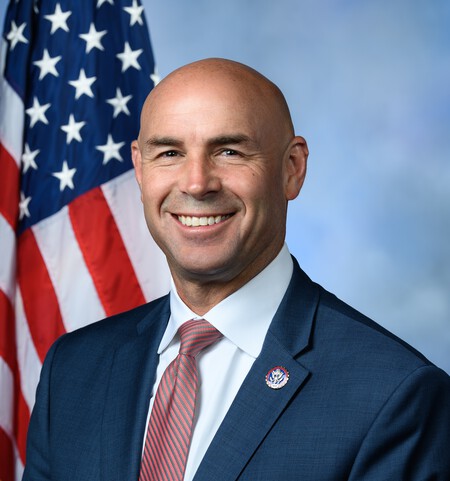
Rep. Jake Ellzey
Sponsored bills
Maddy summaryThis resolution (HRES 459) is a symbolic gesture recognizing National Poppy Day, observed the Friday before Memorial Day. It supports the tradition of wearing red poppies as a symbol honoring U.S. military veterans who died in service, referencing the historical connection to World War I poetry and veterans' organizations. The resolution encourages all U.S. citizens, residents, and visitors to wear poppies on this designated day to express appreciation for those who died preserving freedom. It does not create new laws, funding, or obligations, but formally acknowledges the poppy's role in commemorating military sacrifice.
Clinical Trial Modernization Act This bill authorizes a grant program and provides certain exemptions to support the participation of individuals in clinical trials. Specifically, the bill authorizes a grant program to support outreach, education, and recruitment efforts for clinical trials that may benefit certain underrepresented populations or communities in need, such as rural or tribal areas. The bill also exempts from anti-kickback laws for federal health care programs (1) remuneration that is offered to cover participants' expenses to participate in clinical trials, (2) the provision of free digital health technologies to support participation of underrepresented populations in clinical trials, and (3) payment for participants' cost-sharing obligations in relation to clinical trials. Finally, the bill exempts up to $2,000 in remuneration that is received for participating in a clinical trial from income tax.
Maddy summaryHR 3464 creates two federal funds to support state and local border security efforts. The DHS fund ($11 billion) provides grants for constructing border barriers, surveillance systems, and relocating undocumented immigrants along the southern border. The DOJ fund ($3.5 billion) funds state efforts to locate, apprehend, prosecute, and detain undocumented immigrants for crimes, including gang activity and human trafficking. Both funds cover eligible expenses from 2021 onward and expire on January 20, 2029, with unused funds returned to the Treasury.
Maddy summaryHR 3392, the STOP Screwworms Act, requires the U.S. Department of Agriculture to build modular facilities for rearing sterile New World screwworm flies within 180 days of enactment. These facilities will disperse sterile flies into at-risk agricultural areas - identified based on migratory patterns and suitability for dispersal - to prevent infestations that threaten livestock. The bill authorizes $300 million in funding for construction, operation, and annual reporting to Congress on threat assessments and effectiveness. It directly affects livestock producers and agricultural regions vulnerable to screwworm fly migration, using sterile insect technique as a preventive measure.
Maddy summaryHRES 402 is a symbolic House resolution honoring mothers and recognizing the significance of motherhood on Mother's Day. It affirms that mothers are women who raise children, supports policies recognizing mothers as mothers, and encourages the public to celebrate mothers' contributions to families and society. The resolution does not create new laws, allocate funds, or affect specific policies - it is a ceremonial gesture expressing support for traditional definitions of motherhood. It directly addresses the public and the House's recognition of mothers, with no concrete policy changes or impacts on individuals or programs.
Maddy summaryThe ACES Act (HR 530) mandates a study by the National Academies to examine cancer rates and deaths among veterans who served as aircrew members (e.g., pilots, navigators) in fixed-wing military aircraft. The study will identify potential exposure risks (like chemicals) linked to 12 specific cancers (including brain, lung, prostate, and melanoma) and use VA, DoD, and CDC data to analyze prevalence and mortality. It does not change benefits or laws but requires a final report to the VA and congressional committees. The study directly affects veterans with the defined aircrew service history.
Maddy summaryThis bill provides a 3-year transition period for newly insured banks to meet federal capital requirements, easing compliance for institutions that recently became federally insured. It allows these banks to request temporary deviations from approved business plans, with regulators required to respond within 30 days (or the request is automatically approved). Small rural banks with less than $10 billion in assets located in rural areas receive a lower 8% leverage ratio requirement during this transition. Additionally, the bill expands lending authority for certain banks to include agricultural loans and requires a federal study on increasing new bank formations in underserved areas.
Maddy summaryThis bill amends the Small Business Act to allow surviving children of service-disabled veterans to maintain a business's status as "owned and controlled by service-disabled veterans" after the veteran owner's death. It adds surviving children (biological or adopted) to the definition of eligible owners, enabling them to inherit the veteran's ownership stake if they acquire it immediately after the death. The business must have been previously certified under the program, and the child must hold the ownership for up to three years (or until they relinquish it) to keep the business eligible for veteran-owned business benefits. This change directly affects small businesses owned by service-disabled veterans that would otherwise lose their veteran-owned status upon the owner's death.
Maddy summaryHR 2968 prohibits the Small Business Administration (SBA) from using its programs or funds to assist with voter registration. It requires all SBA contracts to include terms banning recipients from using assistance for voter registration and prevents state or local governments receiving SBA funds from doing so. The bill directly affects SBA operations and its grant recipients, including state agencies, by restricting how federal funds can be utilized. It does not create new programs but limits the SBA’s existing authority to avoid involvement in voter registration activities.