

Safeguard American Voter Eligibility Act or the SAVE Act This bill requires individuals to provide documentary proof of U.S. citizenship when registering to vote in federal elections. Specifically, the bill prohibits states from accepting and processing an application to register to vote in a federal election unless the applicant presents documentary proof of U.S. citizenship. The bill specifies what documents are considered acceptable proof of U.S. citizenship, such as identification that complies with the REAL ID Act of 2005 that indicates U.S. citizenship. Further, the bill (1) prohibits states from registering an individual to vote in a federal election unless, at the time the individual applies to register to vote, the individual provides documentary proof of U.S. citizenship; and (2) requires states to establish an alternative process under which an applicant may submit other evidence to demonstrate U.S. citizenship. Each state must take affirmative steps on an ongoing basis to ensure that only U.S. citizens are registered to vote, which shall include establishing a program to identify individuals who are not U.S. citizens using information supplied by certain sources. Additionally, states must remove noncitizens from their official lists of eligible voters. The bill allows for a private right of action against an election official who registers an applicant to vote in a federal election who fails to present documentary proof of U.S. citizenship. The bill establishes criminal penalties for certain offenses, including registering an applicant to vote in a federal election who fails to present documentary proof of U.S. citizenship.
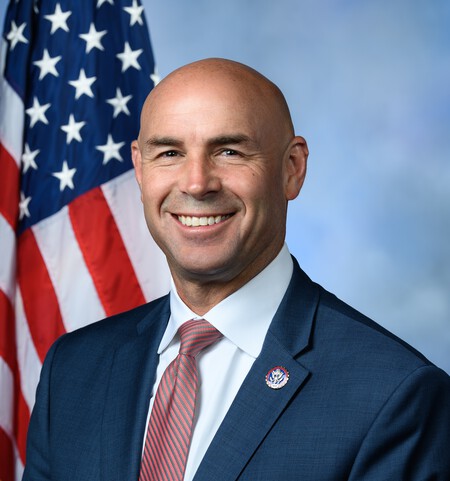
Rep. Jake Ellzey
Sponsored bills
Maddy summaryThis bill amends federal law (18 U.S.C. § 1362) to explicitly include broadband internet access service infrastructure under protections against destruction. It directly affects entities that operate or damage broadband facilities, such as internet service providers, infrastructure owners, and individuals who might intentionally destroy such infrastructure. Key changes expand the definition of protected "means of communication" to specifically cover broadband facilities and broaden liability to include "any other person or entity" beyond government-controlled systems. The amendment removes the prior exemption for infrastructure used in "military or civil defense functions," ensuring all broadband infrastructure receives equal legal protection. This strengthens existing penalties for damaging broadband networks but does not create new regulatory requirements for service providers.
Maddy summaryThis bill creates a $500 non-refundable tax credit for homeowners who purchase emergency generators for their primary residence. It applies only to individuals whose homes were in areas affected by two or more federally declared major disasters (excluding public health emergencies) within the past five years, and who previously received individual disaster assistance. The credit phases out for higher-income households ($300,000 joint filer limit, $150,000 for others) and expires two years after the bill becomes law. The credit covers generator costs up to $500 per household, aiming to help disaster-prone communities prepare for power outages.
Maddy summaryHRES 277 is a non-binding resolution designating May 2025 as "National Myositis Awareness Month" to raise public awareness about myositis, a rare autoimmune muscle disease affecting millions of Americans. It specifically highlights the challenges of diagnosis, delayed treatment, and health disparities faced by patients - particularly women and people of color - with conditions like dermatomyositis and inclusion body myositis. The resolution encourages Americans to learn about myositis and support those affected, without creating new laws or funding. As a symbolic measure, it does not change policy or provide resources but aims to foster greater public understanding of this underrecognized condition.
Maddy summaryHR 2398, the Rural Veterinary Workforce Act, amends federal tax law to exempt certain student loan repayment or forgiveness assistance from income tax for veterinarians working in rural areas. It specifically expands existing tax exclusions to include programs under the National Agricultural Research, Extension, and Teaching Policy Act (7 U.S.C. 3151a) and similar state-level programs designed to increase rural veterinary access. This change directly affects veterinarians participating in qualifying loan repayment or forgiveness programs in states prioritizing rural veterinary services. The policy change modifies IRS tax treatment to reduce the financial burden on veterinarians serving underserved rural communities.
Maddy summaryThe Safer Skies Act of 2025 requires specific smaller airlines to adopt enhanced security screening protocols currently used by larger carriers. It mandates that "covered air carrier operations" - defined as airlines operating under certain FAA rules, offering individual seats with public schedules, using planes with more than nine passenger seats, and not using TSA checkpoints - to follow the Aircraft Operator Standard Security Program (49 CFR §1544.101(a)) within 360 days of the bill's enactment. The Transportation Security Administration must revise its rules to enforce this requirement. This directly affects regional and private charter airlines that currently skip TSA checkpoint screening but serve the public with scheduled passenger flights.
Maddy summaryHR 2128, the Reimbursing Border Communities Act of 2025, creates a federal grant program to reimburse eligible local governments within 200 miles of the U.S.-Mexico land border for costs related to border security measures, such as additional law enforcement wages. To qualify, communities must be local governments (not sanctuary jurisdictions), submit applications to the DHS Secretary, and cannot use funds for legal aid, housing, healthcare, or other services for immigrants. Grants are capped at $500,000 per community per year, with $25 million authorized annually from 2026-2036. The program requires annual reports to Congress detailing grant usage and implementation, including recommendations for future funding adjustments.
Maddy summaryThis bill reauthorizes federal funding for children's hospitals operating graduate medical education (GME) programs through 2030, extending current support until fiscal year 2030. It prohibits payments to any hospital that provided "specified procedures and drugs" to minors under 18 during the prior fiscal year, including surgeries like hysterectomies or puberty-blocking medications. Exceptions apply for medically necessary treatments, such as puberty suppression for precocious puberty or genetic disorders, and care for life-threatening conditions. The bill specifies annual funding levels: $124 million for hospital GME support and $261 million for other program payments from 2026-2030. It directly affects children's hospitals receiving federal GME funding, requiring them to comply with the new restrictions on certain medical services for minors.
Radiation Oncology Case Rate Value Based Program Act of 2025 or the ROCR Value Based Program Act This bill establishes a specialized payment program under Medicare for providers and suppliers of radiation oncology services. Specifically, the Centers for Medicare & Medicaid Services (CMS) must establish a program under which radiation therapy providers (i.e., hospital outpatient departments) and suppliers (i.e., physician group practices and freestanding radiation therapy centers) receive payments for each episode of care provided to individuals with specified types of cancer. An episode of care means the period beginning on the day radiation therapy planning is furnished to the individual and ending (1) for individuals with bone or brain metastases, 30 days later; and (2) for individuals with other cancer types, 90 days later. Participation in the program is mandatory for providers and suppliers that participate in Medicare, unless the provider or supplier is part of a state-based Center for Medicare & Medicaid Innovation model or qualifies for a significant hardship exemption. The CMS must set payment rates for the program based on national payment rates with specified adjustments (e.g., geographic adjustments). Providers and suppliers who provide certain transportation services for individuals under their care may receive an additional payment. Providers and suppliers must be accredited in accordance with certain standards, subject to payment reductions. The Government Accountability Office must report on (1) implementation of the program, and (2) underserved areas that are in need of more or newer radiation therapy resources.
Homes for Every Local Protector, Educator, and Responder Act of 2025 or the HELPER Act of 2025 This bill establishes a program administered by the Department of Housing and Urban Development to provide mortgage assistance to law enforcement officers, elementary and secondary school teachers, firefighters, or other first responders. Specifically, these individuals may be eligible for a first-time mortgage on a primary family residence with no down payment. Instead, the mortgage is subject to a one-time, up-front mortgage insurance premium.