

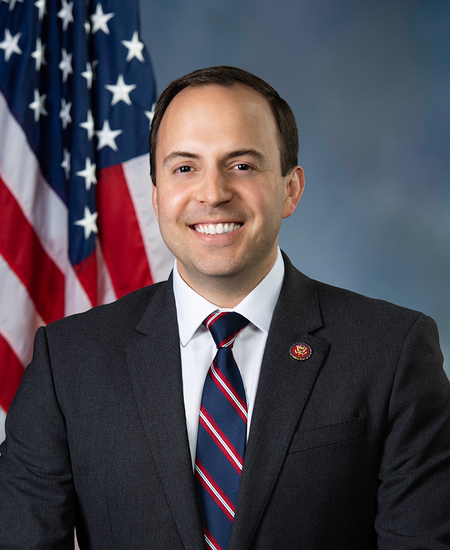
This resolution supports the designation of National FFA Week. It also (1) recognizes the important role of the National FFA Organization (Future Farmers of America) in developing the next generation of globally conscious leaders who will change the world; and (2) celebrates the 10th anniversary of the Give the Gift of Blue program, which has donated more than 17,000 FFA blue jackets to FFA members in need.
Rep. Lance Gooden
Sponsored bills
Maddy summaryHR 9388, the Modern Firearm Safety Act, prohibits federal, state, and local governments from requiring certain safety features on handguns sold in interstate commerce. The bill specifically bans mandates for: loaded indicators, magazine insertion mechanisms, microstamping (microscopic markings on shell casings), or attachment points for such features. This directly affects handgun manufacturers and state/local governments that might have proposed or implemented such requirements. The law prevents new regulations requiring these features on handguns commonly used by the public, focusing on removing specific technical mandates rather than broader safety measures.
Maddy summaryHR 9374, the Stand with Israel Act, prohibits U.S. federal funds from being used to support the United Nations or its entities if they restrict Israel's full participation as a member state. The bill specifically blocks funding for any UN body that expels, downgrades, or suspends Israel's membership or limits its ability to participate equally with other nations. This affects U.S. government contributions to the UN, requiring the Department of State and other agencies to halt funding for such UN actions. The key mechanism is a new provision in the UN Participation Act that mandates this funding restriction whenever Israel's UN participation is impaired.
Maddy summaryHJRES 127 is a congressional disapproval resolution targeting a Securities and Exchange Commission (SEC) rule requiring public companies to standardize climate-related financial disclosures. It seeks to block the SEC’s March 2024 rule (89 Fed. Reg. 21668), which would mandate consistent reporting on climate risks for investors. If passed, this resolution would prevent the SEC rule from taking effect, directly affecting publicly traded companies required to comply with the proposed disclosure standards. The bill uses a specific congressional process under Title 5, U.S. Code, to nullify the rule without creating new regulations.
Maddy summaryThis bill defines "sex," "male," and "female" in federal law based on biological characteristics present at birth, specifically referencing reproductive anatomy (e.g., sperm production for males, egg production for females). It mandates that all federal agencies, courts, and laws interpret these terms strictly according to this biological definition, excluding self-identification or gender identity. The bill directly affects how federal programs, regulations, and legal decisions interpret terms like "sex," "gender," and "gender identity" in all federal contexts. Key provisions clarify that "gender" refers only to biological sex differences and explicitly states that gender identity does not override these definitions.
Maddy summaryThis bill reauthorizes the Debbie Smith DNA Backlog Grant Program, which provides federal funding to state and local law enforcement agencies to reduce backlogs in processing DNA evidence from crime scenes. It extends the program's funding period from fiscal years 2024 through 2029 (previously ending in 2024). The bill also updates audit requirements to ensure grant funds are used properly through 2029. This directly affects law enforcement agencies that receive these grants to accelerate DNA analysis for criminal investigations.
Maddy summaryThe Respect State Housing Laws Act amends the CARES Act by removing subsection (c) of Section 4024, which governed notice requirements for housing assistance programs. This change eliminates a specific federal notice provision that applied to tenants and landlords receiving CARES Act housing aid. The bill directly affects the administrative process for housing assistance under the CARES Act, streamlining or removing a requirement for notice delivery. It modifies an existing provision without creating new policy or altering broader housing protections.
Maddy summaryHR 9154, the Bankruptcy Administration Improvement Act of 2024, would increase compensation for chapter 7 bankruptcy trustees from $60 to $120 per case, with automatic inflation adjustments. This directly affects chapter 7 trustees who handle consumer bankruptcy cases, as their pay has not risen since 1994 despite inflation. The bill amends Section 330 of bankruptcy law to set the new rate and ensures the remainder of filing fees funds the U.S. Trustee System Fund without changing chapter 7 filing fees. It also extends terms for temporary bankruptcy judgeships to address caseload pressures.
Maddy summaryThis resolution establishes a House task force to investigate the July 13, 2024, attempted assassination of Donald J. Trump in Butler, Pennsylvania. The task force, composed of up to 11 members appointed by the Speaker (with minority leader input), will examine actions by federal, state, local, and private entities related to the incident and must issue a final report with recommendations by December 13, 2024. It has standing committee authority to hold hearings, issue subpoenas, and access relevant records, and will terminate 10 days after submitting its report. The task force directly affects the House of Representatives and the entities under investigation.
Maddy summaryHR 9110, the Ending Corporate Bankruptcy Abuse Act of 2024, tightens rules for Chapter 11 bankruptcy cases to prevent corporate abuse. It requires courts to dismiss cases within 24 months of filing (amending Section 1112(b)), and establishes new criteria for dismissing cases filed in "bad faith" (e.g., to delay creditors, gain litigation advantages, or cap liability to multiple creditors). The bill also defines "protected claims" (like product liability claims affecting 100+ people or claims tied to corporate restructuring) and bars lawsuits against non-debtors related to these claims during bankruptcy. This primarily affects corporations restructuring via mergers, spinoffs, or corporate reorganizations within 4 years of filing.