

Maddy summaryThe SAVE Act (HR 8281) requires U.S. citizens to provide documentary proof of citizenship when registering to vote in federal elections. It defines acceptable proof as documents like passports, REAL ID-compliant IDs, military IDs, or birth certificates, and mandates that states verify citizenship using information from government agencies like DHS and Social Security. States must establish processes for voters without required documentation to provide an attestation under penalty of perjury. The law also requires states to remove noncitizens from voter rolls when verified evidence shows they're not citizens. This bill directly affects all applicants registering to vote in federal elections and state election officials who must implement these requirements.
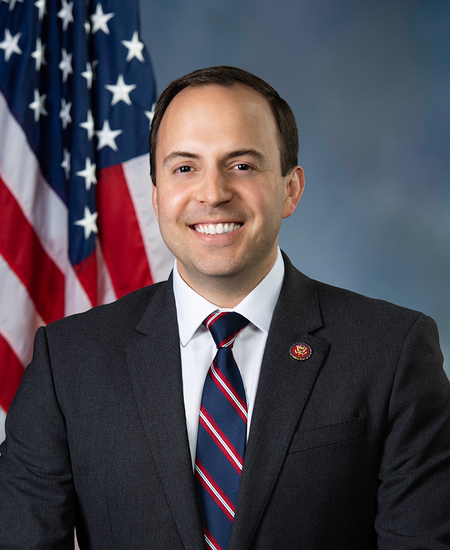
Rep. Lance Gooden
Sponsored bills
Maddy summaryThis is a commemorative resolution (HRES 1369) honoring Corey Comperatore, a volunteer firefighter, U.S. Army Reserves veteran, and community leader from Sarver, Pennsylvania, who died on July 13, 2024. The resolution formally mourns his passing and celebrates his life, noting he left behind his wife, Helen, and two daughters, Allyson and Kaylee. It recognizes his service to the Buffalo Township Volunteer Fire Department, his military service, and his role as a devoted member of Cabot Methodist Church. As a ceremonial resolution, it has no policy impact or direct effect on legislation or constituents beyond this formal acknowledgment.
Maddy summaryHR 1631, the Pro Codes Act, requires standards development organizations (like ANSI or IEEE) to make technical standards publicly accessible online for free if those standards are referenced in federal, state, or local laws or regulations. This directly affects the organizations that create these standards and government agencies that incorporate them into rules. The key provision mandates that organizations must provide free, online access to all referenced standards within a reasonable time after learning they’re incorporated, without charging users or requiring payment. It ensures the public can access current standards used in government rules while allowing organizations to maintain revenue models through paid subscriptions for other users. The law balances public access with the need for standards organizations to fund their work through copyright licensing.
Maddy summaryThis resolution honors Corey Comperatore, a former Buffalo Township Volunteer Fire Department chief from Pennsylvania, who was killed shielding his family during the July 13, 2024, attempted assassination of former President Donald J. Trump at a rally in Butler. It recognizes his service and sacrifice, specifically noting he died protecting his wife and two daughters. The resolution also condemns the assassination attempt and political violence in all forms. As a commemorative resolution, it has no binding policy effect.
Maddy summaryHJRES 164 is a congressional resolution seeking to block a rule issued by the Department of Commerce regarding firearms license requirements. It directly targets the rule published in the Federal Register (89 Fed. Reg. 34680), which would have revised licensing procedures for firearms dealers. If passed, the resolution would prevent this rule from taking effect by invoking the congressional disapproval process under federal law. The bill does not create new regulations but aims to halt an existing rule affecting gun license applicants and dealers.
Maddy summaryHRES 1323 is a House resolution rejecting a United Nations report that listed the Israel Defense Forces (IDF) as failing to protect children in conflict. It condemns the UN for what the resolution describes as "longstanding bias against Israel" and reaffirms U.S. support for Israel's right to defend itself. The resolution does not alter any laws or policies but expresses congressional opposition to the UN's decision. This procedural resolution has no binding effect and focuses solely on symbolic congressional stance.
Maddy summaryHR 4848, the Censorship Accountability Act, allows individuals to sue federal employees who, while acting in their official capacity, deny others their First Amendment rights (such as free speech or assembly). It directly affects federal employees (excluding the President/Vice President) who may restrict protected expression under federal law. Key provisions create a private right of action for victims to seek legal redress in court, with courts able to award attorney fees to the winning party. The bill explicitly excludes lawsuits against the federal government for employment-related conduct and clarifies that unconstitutional sections won’t invalidate the rest of the law.
Maddy summaryThis bill amends U.S. immigration law to make certain military property trespassing a basis for denying entry or deporting non-citizens. It adds to the Immigration and Nationality Act that anyone convicted of entering military, naval, or Coast Guard property without authorization (as defined under 18 U.S.C. §1382) is both inadmissible upon arrival and deportable if already in the U.S. The law directly affects non-citizens with prior convictions for this specific offense. The key mechanism is updating existing immigration grounds for inadmissibility and deportability to include unauthorized entry onto military installations.
Maddy summaryHR 4132 would require the U.S. to impose sanctions on Chinese officials responsible for forced organ harvesting from Falun Gong practitioners, including blocking their property and denying visas. It mandates a report on China's organ transplant system within one year, assessing organ sources, procurement timelines, and whether persecution of Falun Gong constitutes an atrocity. The bill directs the U.S. to avoid all cooperation with China's organ transplantation system while the Chinese Communist Party remains in power. It cites findings of systemic persecution and alleged organ harvesting as justification for these policy measures.
Maddy summaryThe Conscience Protection Act of 2024 would strengthen protections for health care providers, facilities, and organizations that refuse to participate in or provide coverage for abortions, assisted suicide, or other procedures conflicting with their religious or moral beliefs. It creates a private right of action allowing individuals or entities to sue when their conscience rights are violated, and requires the Department of Health and Human Services to enforce existing conscience protections through the Office for Civil Rights. The bill prohibits discrimination against health care entities that decline to provide or facilitate these services, while ensuring these protections don't interfere with emergency care requirements under existing law. It also establishes clearer enforcement mechanisms, including the ability to terminate federal funding for non-compliance with conscience protections.