

Maddy summaryThis bill requires federal agencies to better assess how regulations impact small businesses by expanding the types of regulations that must be analyzed, requiring consideration of both negative and positive economic effects, and adding detailed analysis requirements. It expands the definition of "small entity" to include tribal organizations, adds requirements for analyzing land management plans and certain tax-related rules, and gives the Small Business Administration's Chief Counsel additional authority to review agency rules. The bill also includes a provision to waive fines for small businesses' first-time paperwork violations, aiming to make the regulatory process more responsive to small business needs.
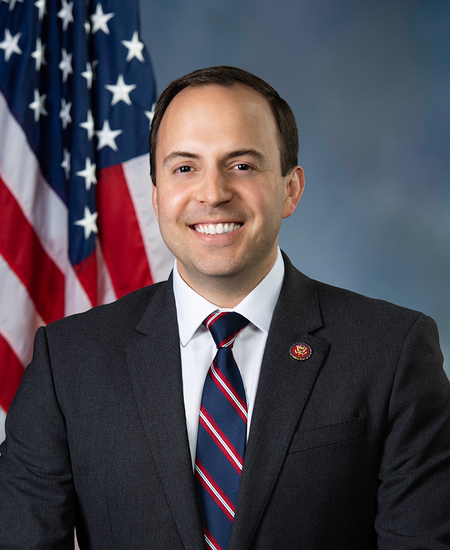
Rep. Lance Gooden
Sponsored bills
Maddy summaryThis bill (HJRES 163) is a congressional disapproval resolution targeting an Environmental Protection Agency (EPA) rule finalized on May 9, 2024. The EPA rule established new emissions standards for greenhouse gases from fossil fuel power plants (both new and existing) and repealed a previous rule called the Affordable Clean Energy Rule. The resolution would block this EPA rule from taking effect by invoking the Congressional Review Act (Chapter 8 of Title 5, U.S. Code). If passed, it would prevent the EPA rule from being enforced, directly affecting fossil fuel power plant operators and the EPA’s regulatory authority over emissions.
Maddy summaryThis bill requires U.S. Immigration and Customs Enforcement (ICE) to create an automated system within 60 days to track unaccompanied alien children who miss immigration court hearings. It mandates sharing this information internally (within ICE offices) and externally with U.S. Customs and Border Protection, the Department of Health and Human Services' Office of Refugee Resettlement, and the Department of Justice. The bill includes annual compliance checks where ICE must certify adherence to the system, with noncompliance penalties including blocked bonus pay for political appointees from 2025-2035. It directly affects ICE operations, child welfare agencies, and the immigration court process for unaccompanied minors. The bill focuses solely on administrative information sharing, not on altering immigration law or trafficking prevention.
Maddy summaryHRES 1457 is a symbolic House resolution (introduced September 17, 2024) that condemns Vice President Kamala Harris for her past statements and policy positions related to law enforcement and criminal justice. The resolution cites specific past remarks by Harris (as a U.S. Senator) regarding policing, immigration, and criminal justice reform - including supporting decriminalizing immigration, opposing ICE, and endorsing bail reform groups - and claims these policies "encouraged lawlessness." It does not create new laws or affect anyone legally, as it is purely a non-binding expression of disapproval. The resolution has no policy impact or enforcement mechanism.
Maddy summaryHR 1425, the "No WHO Pandemic Preparedness Treaty Without Senate Approval Act," requires the U.S. Senate to approve any World Health Organization (WHO) pandemic preparedness treaty through a two-thirds vote. The bill deems any convention, agreement, or international instrument on pandemic prevention drafted by the WHO’s International Negotiating Body (INB) as a treaty subject to Senate ratification, rather than allowing it to take effect as an executive agreement. This directly affects U.S. foreign policy implementation regarding WHO agreements, ensuring Congress has a formal role in approving such binding international commitments. The bill stems from congressional concerns about WHO’s pandemic response and public skepticism toward the organization, as outlined in its findings.
Maddy summaryHR 1398 establishes the "CCP Initiative" within the Department of Justice's National Security Division to counter threats from the Chinese Communist Party targeting U.S. innovation. The initiative focuses on prosecuting trade secret theft, hacking, and economic espionage; protecting academic institutions and critical infrastructure; and applying foreign agent laws to unregistered Chinese political actors. Key mechanisms include designating these investigations as top priorities with dedicated resources, requiring annual congressional briefings, and setting a 6-year sunset date. The bill directly affects DOJ operations and aims to safeguard U.S. intellectual property, academic freedom, and supply chains from foreign economic threats.
Maddy summaryHR 9561, the Pay Our Border Patrol and Customs Agents Act of 2025, ensures that U.S. Border Patrol Agents and Customs and Border Protection officers working during a government shutdown receive their salaries. It appropriates funds from the Treasury (not regular appropriations) to cover their pay during any lapse in discretionary funding in fiscal year 2025. This bill directly affects these specific federal employees who are required to work during shutdowns but would otherwise face pay delays. It is a procedural measure focused solely on payment mechanisms, not on changing work requirements or policy.
Maddy summaryThe context provided for HR 9146 does not include the full text of the amendment or the specific language added to Section 1703(d)(2) of title 38, U.S. Code. Without the actual provisions of the new subparagraph (F) titled "Continuity of care," it is impossible to describe the bill's key mechanisms, who it affects, or its concrete policy changes. The bill's title suggests it relates to veterans' health care continuity under the Veterans Community Care Program, but the details are omitted in the provided excerpt. Therefore, a complete and accurate summary cannot be generated from the available information.
Maddy summaryHR 8282, the "Illegitimate Court Counteraction Act," imposes U.S. sanctions on foreign individuals or entities supporting the International Criminal Court (ICC) in investigating or prosecuting "protected persons." Protected persons include U.S. military personnel, officials, and allied personnel (from non-ICC member countries) who are not under ICC jurisdiction. The bill requires the President to block assets and deny visas to targeted foreign persons and their immediate family members within 60 days of the ICC attempting such actions. It mandates congressional notification of sanctions and allows termination if the ICC ceases all such efforts against protected persons. The law focuses on restricting U.S. economic and travel access to ICC supporters targeting specific U.S. and allied personnel.
Maddy summaryHRES 1420 is a disapproval resolution that stops a rule issued by the Department of Homeland Security regarding the "Keeping Families Together process." The resolution directs Congress to reject the rule, meaning it will have no legal effect and cannot be enforced. This resolution specifically targets a procedural rule related to immigration procedures, not new policy. It does not change immigration law or directly affect individuals but prevents the rule from being implemented. As a disapproval resolution, it is procedural and focuses solely on blocking the rule's enforcement.