

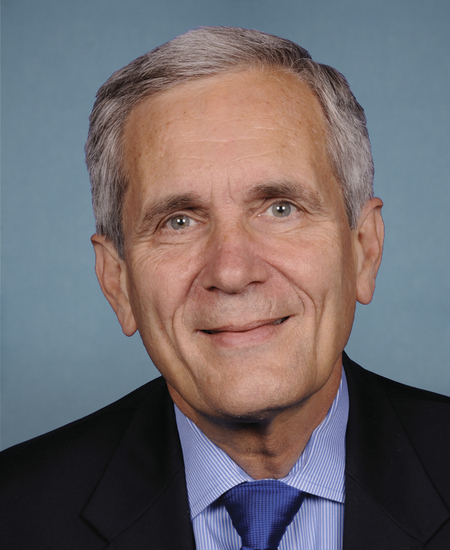
Photo of Lloyd Doggett
D United States House · District 37 · Texas

Rep. Lloyd Doggett

Compare
Total votes
2,837
all sessions
Attendance
98%
61 missed
Near the chamber average
With party
97%
of cast votes
Near the chamber average
Bipartisan score
1%
crosses aisle rarely
Near the chamber average
Sponsored
1,247
bills & resolutions
Higher than 77% of chamber peers
Committees
6
assignments
1,247 bills and resolutions

Sponsored bills

Total
1,247
Primary
83
Co-sponsor
1,164
This page
1,247
matching current filters
Co-sponsor HR 5222
In committee · Indiana House · Co-sponsor
ESP, Paraprofessional, and Education Support Staff Family Leave Act

Maddy summaryThis bill modifies the Family and Medical Leave Act (FMLA) to extend eligibility to school support staff, including paraprofessionals, cafeteria workers, bus drivers, and clerical staff. It allows these employees to qualify for FMLA leave if they work 60% of their expected monthly hours (instead of the standard 1,250 hours), based on their school’s assigned schedule. Employers must maintain records of expected hours for each staff member. The change directly benefits part-time and seasonal education support staff who previously faced barriers to FMLA coverage.

In committee Sep 9, 2025 1 co-sponsor
Co-sponsor HR 1510
In committee · Indiana House · Co-sponsor
Due Process Continuity of Care Act

Maddy summaryHR 1510, the Due Process Continuity of Care Act, expands Medicaid eligibility to cover individuals in jail or custody while awaiting trial or disposition of charges, at a state's option. This allows states to provide Medicaid benefits to this population without requiring them to be convicted first. The bill provides $50 million in planning grants to states to develop implementation plans, including assessing healthcare needs, recruiting providers (especially for behavioral health and substance use treatment), and creating electronic billing systems for correctional facilities and outpatient providers. States must also consult with stakeholders like jails, providers, and Medicaid advocates before finalizing their plans.

In committee Sep 8, 2025 1 co-sponsor
Co-sponsor HR 5009
In committee · Indiana House · Co-sponsor
Fine Arts Protection Act of 2025

Maddy summaryHR 5009, the Fine Arts Protection Act of 2025, requires the Comptroller General to conduct a comprehensive review of the General Services Administration’s (GSA) Fine Arts Program within one year of the bill’s enactment. The review will survey every artwork in the GSA’s public collection - including New Deal-era pieces - estimate its economic value, assess management practices, staffing, funding, and compare GSA’s approach to other art collections. The Comptroller General must then submit a report to Congress within two years, detailing findings and recommending whether the GSA should continue managing the collection. This bill directly affects the GSA’s Fine Arts Program and provides Congress with data to inform future decisions about the collection’s preservation.

In committee Aug 20, 2025 1 co-sponsor
Co-sponsor HR 4992
In committee · Indiana House · Co-sponsor
FEMA Critical Staffing Act

Maddy summaryHR 4992, the FEMA Critical Staffing Act, requires the Federal Emergency Management Agency (FEMA) to reinstate employees who were involuntarily separated between January 20, 2025, and the bill’s enactment date, within 30 days of passage. It directly affects FEMA staff who lost their positions during that period and ensures continued support for communities relying on FEMA programs. The bill mandates reinstating two key programs: the Building Resilient Infrastructure and Communities program (for state/local disaster preparedness) and the flood mitigation assistance program (for flood risk reduction projects), while prohibiting cuts to existing disaster resource access. These provisions aim to maintain FEMA’s workforce and program continuity amid increasing climate-driven disasters.

In committee Aug 20, 2025 1 co-sponsor
Co-sponsor HR 4998
In committee · Indiana House · Co-sponsor
SUN Act

Maddy summaryThe SUN Act (HR 4998) requires the President to submit a detailed report to Congress within 15 days whenever National Guard members are deployed domestically for non-disaster purposes under specific laws. The report must include the legal basis for the deployment, evidence of reduced violence, input from local law enforcement, total costs, and a certification that the deployment won’t interfere with disaster response capabilities. It applies to all domestic uses of the National Guard except for responses to natural disasters under the Stafford Act. The bill aims to enhance congressional oversight of military deployments on U.S. soil.

In committee Aug 19, 2025 1 co-sponsor
Co-sponsor HJRES 113
In committee · Indiana House · Co-sponsor
Original Slavery Remembrance Day Resolution

Maddy summaryHJRES 113 designates August 20 as Slavery Remembrance Day to commemorate the arrival of the first 20 enslaved Africans in Virginia in 1619 and honor the enduring legacy of slavery. The resolution requests the President issue a proclamation encouraging the public to observe this day through ceremonies and activities that acknowledge slavery's horrors and its lasting impacts. It includes historical context about the transatlantic slave trade, the Middle Passage, and figures like Harriet Tubman, while posthumously recognizing Reconstruction-era Black Congress members. As a symbolic commemorative resolution, it does not create new laws or directly affect any group, but serves to raise awareness about slavery's history and consequences.

In committee Aug 15, 2025 1 co-sponsor
Co-sponsor HJRES 115
In committee · Indiana House · Co-sponsor
Terminating the emergency determined by the President on August 11, 2025, in the Executive Order titled "Declaring a crime emergency in the District of Columbia".

Maddy summaryThis bill (HJRES 115) terminates a presidential emergency declaration made on August 11, 2025, which claimed a "crime emergency" in Washington, D.C. It directly affects the District of Columbia by ending federal restrictions that prevented D.C. from using $1 billion in locally-raised funds for public safety, law enforcement, fire services, and schools. The resolution cites that the emergency declaration was legally flawed - section 740 of the DC Home Rule Act does not permit federalizing the Metropolitan Police Department - and notes that D.C. violent crime has reached a 30-year low. The bill formally ends the emergency under the DC Home Rule Act, restoring D.C.'s authority over its own budget and public safety resources.

In committee Aug 15, 2025 1 co-sponsor
Co-sponsor HR 4917
In committee · Indiana House · Co-sponsor
Expanding the VOTE Act

Maddy summaryHR 4917, the Expanding the VOTE Act, amends the Voting Rights Act to increase language access for voters. It expands the definition of "voting materials" to include digital formats and requires states to provide language assistance (both written and oral) for minority language groups, with special provisions for American Indian and Alaska Native languages when written translations aren't feasible. The bill creates grants to help jurisdictions provide voting materials in languages that don't currently trigger Section 203 coverage, and mandates a study on lowering population thresholds for language assistance requirements. This directly affects states, local election jurisdictions, and voters who speak minority languages, including those in communities not currently covered by existing language access rules.

In committee Aug 5, 2025 1 co-sponsor
Co-sponsor HR 4916
In committee · Indiana House · Co-sponsor
Youth Voting Rights Act

Youth Voting Rights Act This bill expands voting access for youth. Specifically, the bill establishes a private right of action to enforce the Twenty-Sixth Amendment, which prohibits denying or abridging the right to vote based on age. Further, the bill authorizes the Department of Justice to enforce the Twenty-Sixth Amendment against age-based restrictions for voting by mail. Additionally, the bill directs each state to designate as voter registration agencies all offices within public institutions of higher education (IHEs) that provide assistance to students, implement a preregistration process to allow minors who are 16 years or older to register to vote in federal elections that take place when or after the preregistered individual turns age 18, and ensure the availability of polling places on campuses of IHEs (with the availability of waivers). The bill prohibits durational residency requirements for voting in all federal elections. Currently, this prohibition applies only to voting for the offices of President and Vice President. States and local jurisdictions with voter identification requirements must treat IHE-issued student identification cards as voter identification. The Election Assistance Commission (EAC) must make grants to states to increase the involvement of individuals under age 18 in public election activities. The Government Accountability Office must report to Congress on trends related to voter registration, absentee voting, and provisional voting. The EAC must also collect and make publicly available certain data from states.

In committee Aug 5, 2025 1 co-sponsor
Co-sponsor HR 4915
In committee · Indiana House · Co-sponsor
Election Mail Act

Maddy summaryThe Election Mail Act (HR 4915) establishes new standards for handling voting-by-mail materials in Federal elections. It requires the Postal Service to process absentee ballots the same day received, add postmarks showing mailing dates, and treat election mail as first-class with free postage for completed ballots. States must provide ballot return envelopes with tracking barcodes and accept mailed ballots postmarked on election day if received within 7 days. These provisions apply to Federal elections starting in 2026, with some requirements taking effect sooner.

In committee Aug 5, 2025 1 co-sponsor
Showing 201 to 210 of 1,247 bills
Previous 1 … 20 21 22 … 125 Next