

Maddy summaryThe FAMILY Act would establish a national paid family and medical leave insurance program that provides wage replacement benefits for workers needing time off for caregiving or medical reasons. It defines "qualified caregiving" to include caring for a family member with a serious health condition, personal medical needs, or recovery from violence (including domestic violence, sexual assault, or stalking). Benefits would be calculated based on earnings, with a minimum monthly benefit of $580 and maximum of $4,000, administered by a new Office of Paid Family and Medical Leave within the Social Security Administration. Eligible individuals would need to have worked for at least 8 quarters in the previous year and file an application with required documentation, while existing state paid leave programs would continue to operate alongside this federal program.
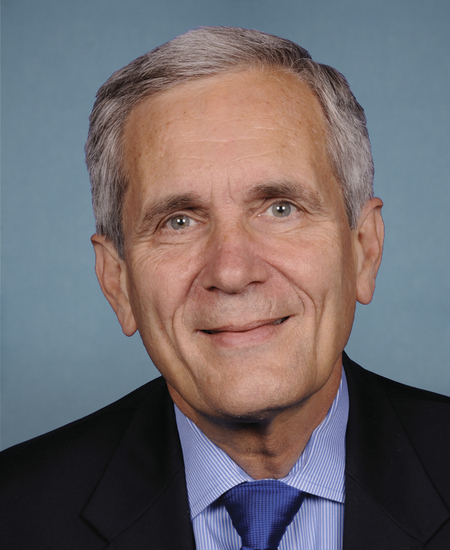
Rep. Lloyd Doggett
Sponsored bills
Saving the Civil Service Act This bill generally prohibits changes to the classification of positions in the competitive service and excepted service unless certain conditions are met. (Competitive service positions are subject to competitive examination while excepted service positions are appointed under one of five schedules. Competitive service positions have notice and appeal requirements for adverse actions that are not applicable to most excepted positions, including those of a confidential, policy-determining, policy-making, or policy-advocating character under Schedule C.) On October 21, 2020, President Donald Trump issued an executive order that placed executive agency positions that are of a confidential, policy-determining, policy-making, or policy-advocating character, and that are not normally subject to change as a result of a presidential transition, under a new Schedule F in the excepted service. The order was subsequently revoked by President Joe Biden. The bill prohibits executive agency positions in the competitive service from being placed in the excepted service, unless such positions are placed in a schedule in the excepted service as in effect on September 30, 2020. The bill also prohibits positions in the excepted service from being placed in any schedule other than the aforementioned schedules. Additionally, agencies may not (1) transfer occupied positions from the competitive or excepted service into Schedule C without the consent of the Office of Personnel Management, or (2) transfer employees in the excepted service to another schedule or transfer employees in the competitive service to the excepted service without employee consent.
Maddy summaryThe George Floyd Justice in Policing Act of 2025 would establish a National Police Misconduct Registry to track officer complaints, disciplinary actions, and misconduct records across all law enforcement agencies. It would require law enforcement agencies to implement body-worn camera programs with specific recording and retention policies, ban chokeholds and no-knock warrants in drug cases, and reform qualified immunity to make it easier to hold officers accountable for misconduct. The bill mandates comprehensive data collection on use of force incidents, requiring agencies to report detailed information about stops, searches, and force used, disaggregated by race, ethnicity, gender, and other demographics. These provisions would directly affect all Federal, State, and local law enforcement agencies that receive federal grant funding, with requirements for policy changes, training, and data reporting.
Maddy summaryThe FAIR Act of 2025 would prohibit companies from requiring pre-dispute arbitration agreements or waivers that prevent individuals from joining class or collective lawsuits in employment, consumer, antitrust, or civil rights cases. This directly affects workers, consumers, and small businesses who currently face forced arbitration for issues like workplace discrimination, product defects, or unfair business practices. The bill makes such agreements unenforceable while allowing voluntary arbitration after disputes arise and leaving collective bargaining agreements unaffected. It applies to all disputes occurring after the law takes effect, without changing how voluntary arbitration works post-dispute.
Maddy summaryHJRES 121 proposes a constitutional amendment to allow Congress and states to set reasonable limits on money raised or spent to influence elections. It would permit regulations distinguishing between natural persons (individuals) and corporations or other artificial entities, potentially restricting corporate spending in elections. The amendment explicitly states that such regulations cannot abridge press freedom. This is a proposed constitutional change requiring ratification by three-fourths of state legislatures, not yet law.
Maddy summaryHRES 704 is a non-binding resolution expressing the House's opposition to the proposed "Wasteful and Inappropriate Service Reduction Model" (WISeR) for traditional Medicare. It opposes expanding prior authorization requirements for Medicare services by 30% - requiring doctors to seek approval before treatment - using private companies with a history of incorrect denials and AI tools reported to have high error rates. The resolution states this would undermine beneficiary access to timely care, citing data showing prior authorization causes physician burnout and that Medicare Advantage denials are overturned 81.7% of the time. It urges CMS to terminate the model but does not change existing law.
Maddy summaryHRES 701 is a House resolution requesting the President to provide documents about the Department of Government Efficiency's (DOGE) access to Social Security Administration data. It specifically seeks records related to a cloud system hosting the Social Security Numerical Identification System (NUMIDENT), including security plans, the purpose of the cloud copy (e.g., audits, benefits decisions, AI training), and access by named individuals. The resolution requires the President to submit these materials within 14 days of adoption. This is an inquiry, not a policy change, focused solely on transparency about government data access.
Maddy summaryHR 5309, the Congressional Tribute to Constance Baker Motley Act of 2025, authorizes a posthumous Congressional gold medal for Constance Baker Motley, a pioneering civil rights attorney and judge. The bill directs the Treasury Secretary to strike the medal with her image and name, to be presented to her son, Joel W. Motley III, and her niece, Constance Royster. It also permits the sale of bronze duplicates at cost to cover expenses, with proceeds going to the U.S. Mint fund. This is a commemorative measure with no substantive policy changes, honoring Motley’s legacy as the first African-American woman appointed to a federal judgeship.
Maddy summaryThis bill directs the U.S. President to identify Pakistani officials responsible for undermining democracy and human rights within 180 days of enactment, then impose Global Magnitsky sanctions on them. It targets senior government, military, or security officials found to have committed gross human rights violations or interfered with democratic processes, such as during Pakistan’s 2024 elections or through constitutional changes. Sanctions would include asset freezes and travel bans, with exceptions for humanitarian aid, UN obligations, and national security activities. The bill expires on September 30, 2030, and aims to pressure Pakistan to uphold democratic norms, human rights, and judicial independence.
Maddy summaryHR 5220, the Congressional Power of the Purse Act, strengthens Congress's authority over federal spending by preventing the executive branch from withholding appropriated funds. The bill requires federal agencies to report on budget management, adds penalties for failing to comply with congressional oversight requirements, and establishes new procedures for congressional review of national emergencies. It directly affects federal agencies, the executive branch, and the balance of power between Congress and the President regarding budget authority. The law aims to increase transparency and accountability in how government funds are managed and spent.