

Exposing China's Belt and Road Investment in America Act of 2021 This bill requires the Committee on Foreign Investment in the United States to review certain investments made by China in the United States. Specifically, the committee must review any investment by a foreign person that (1) involves the acquisition of real estate in the United States and the establishment of a U.S. business on such real estate, and (2) could result in direct or indirect control of that U.S. business by China. A party to any such investment must submit to the committee a declaration containing basic information regarding the transaction.
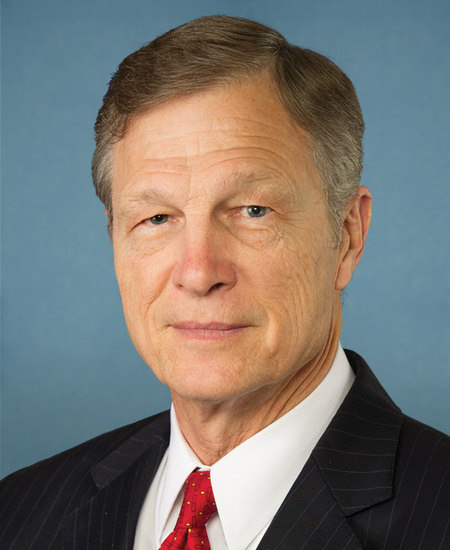
Rep. Brian Babin
Sponsored bills
This bill prohibits the use of federal funds to require a member of the Armed Forces to receive a COVID-19 vaccination. The bill also prohibits adverse action (e.g., punishment) being taken against a member of the Armed Forces because the member refuses to receive a COVID-19 vaccination.
Pay Our Correctional Officers Fairly Act This bill provides increased locality pay rates to certain Bureau of Prisons employees whose duty stations are located in the pay locality designated as Rest of U.S. The Rest of U.S. GS (general schedule) locality is the default locality area that applies to GS employees in any city that does not fall within another specified GS locality. Such an employee shall not be subject to this bill if his or her official work site is not located within 100 miles of any pay locality other than Rest of U.S .
China Watcher Act This bill establishes the China Watcher Program within the Department of State. The program must (1) monitor and combat China's malign influence in foreign countries, (2) monitor China's military trends abroad and counter its activities and advancements in foreign nations that pose a threat to U.S. interests and the rules-based order, and (3) strengthen U.S. government capacity to engage with foreign countries and international organizations to counter China's malign influence. Under this program, the State Department must place officers in select U.S. diplomatic and consular posts to engage with Chinese and third-party nationals, as well as host governments and nongovernment entities, on the above-referenced matters.
Championing our Parents Act of 2021 This bill prohibits the use of federal funds to facilitate certain law enforcement partnerships to address threats against school personnel.
Ensuring Workers Get PAID Act of 2021 This bill reestablishes the Payroll Audit Independent Determination program, which is administered by the Department of Labor and allows employers to self-report federal minimum wage and overtime violations as an alternative to litigation. Employers may apply to the program by submitting certain information from a self-audit that includes calculations of any unpaid minimum or overtime wages. Labor must verify the calculations and, if the application is approved, supervise a settlement with affected employees that provides payment of any unpaid wages. Employees who accept a settlement under the program waive their private right of action to recover the unpaid wages provided under the settlement.
State, Local, Tribal, and Territorial Fiscal Recovery, Infrastructure, and Disaster Relief Flexibility Act This bill allows states, tribes, territories, and localities to use certain COVID-19 relief funds for new categories of spending, including for natural disasters and infrastructure projects. It also makes changes to expenditure deadlines and other aspects of this funding. Specifically, recipients may use funds for emergency relief from natural disasters and associated negative economic impacts of natural disasters. In addition, recipients may use a portion of their COVID-19 relief funds for designated infrastructure projects, such as nationally significant freight and highway projects. Furthermore, the bill allows recipients to expend COVID-19 relief funds on these types of infrastructure projects until September 30, 2026. Under current law, recipients must expend the funds by December 31, 2024. Other changes in the bill include (1) modifying eligibility and allocation requirements for funding set aside for counties and Indian tribes that are near public lands, (2) allowing Indian tribes an additional year to expend their COVID-19 relief funds, and (3) establishing a process for government entities to decline COVID-19 relief funds and requiring any declined funds to be used to reduce the federal deficit.
Treatment Restoration for Emergency Antibody Therapeutics Act or the TREAT Act This bill prohibits the Department of Health and Human Services (HHS) from implementing any policy that restricts health care facilities from ordering and receiving COVID-19 monoclonal antibody therapies directly from manufacturers and distributors. In addition, the bill expressly nullifies a policy announced on September 13, 2021, under which HHS allocated supplies of these therapies through state or territorial governments.
Simon Crosier Act This bill requires hospitals and other health care providers, as a condition of Medicare and Medicaid participation, to have certain written policies and procedures in place that limit the implementation of do-not-resuscitate (DNR) orders for unemancipated minors in accordance with specified criteria. Among other provisions, such policies and procedures must (1) require the informed consent of at least one parent and a reasonable attempt to contact the other parent before instituting a DNR order, (2) allow either parent to refuse to consent to a DNR order, and (3) allow a parent to transfer a minor to another facility after being informed of an intent to institute a DNR order.
This resolution recognizes the rights of parents to engage in the development and implementation of decisions impacting their children's school environment, curriculum, health, and well-being practices. It also condemns designating parents as domestic terrorists.