

Chinese Communist Party (CCP) Politburo Accountability Act This bill authorizes the President to impose visa- and property-blocking sanctions on certain senior officials of the Chinese Communist Party (CCP) and addresses related issues. The President may impose sanctions on senior CCP officials who have engaged in or provided support for (1) any malign disinformation campaign or political warfare operation against the United States; (2) the theft of intellectual property belonging to a U.S. individual or entity; (3) actions undermining Taiwan's sovereignty; or (4) restrictions against the practice of religion in China, including the forced closure of any place of worship. The President must impose sanctions on four named senior CCP officials. The Department of State must report to Congress on whether any CCP Politburo members meet the criteria for sanctions under various authorities. (The Politburo and the Politburo Standing Committee are China's highest decision-making bodies.)
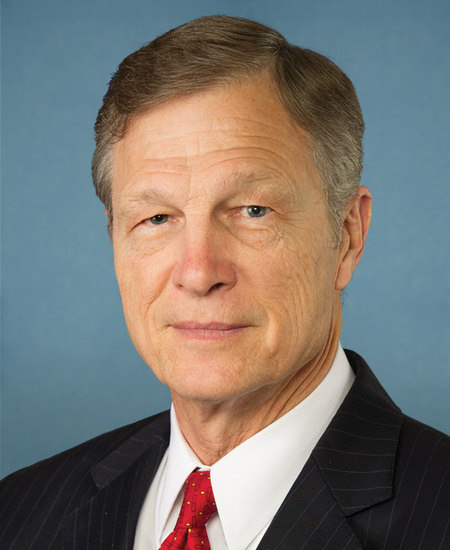
Rep. Brian Babin
Sponsored bills
Stop Vaccine Mandates Act This bill rescinds the executive order titled Ensuring Adequate COVID Safety Protocols for Federal Contractors and the executive order titled Requiring Coronavirus Disease 2019 Vaccination for Federal Employees , both published on September 9, 2021. The bill provides that these executive orders shall have no force or effect.
Having Employees Return to Duty Act or the HERD Act This bill addresses federal employees who comply with Executive Order 14043 (requiring COVID-19 vaccination for federal employees). Specifically, the bill requires each federal agency to require employees who comply with the order to work from their duty station and to work the hours required as of February 15, 2020. The bill's requirement does not apply to immunocompromised employees. Additionally, the bill does not prohibit an agency from implementing different policies at a particular work site if the agency finds that (1) there is substantial transmission of COVID-19 within a community in which such requirements would otherwise be carried out; and (2) implementing those different policies will not degrade the level of service that the agency provides to the public.
Protecting Our Kids from Harmful Research Act This bill prohibits the use of federal funds for research or publications concerning gender transitions in individuals under the age of 18.
Our Veterans Earned It Act This bill prohibits members of the Armed Forces who refuse to receive a COVID-19 vaccination from being denied a federal benefit they are entitled to by reason of their service in the Armed Forces.
This resolution recognizes the importance of gig workers (i.e., workers hired on a per-project basis) and other independent contractors to the economy.
Equal Treatment of Public Servants Act of 2021 This bill phases in a new funding formula for determining benefit amounts under the windfall elimination provision (WEP). The WEP reduces Social Security retirement and disability benefits for those who receive pensions for certain non-covered employment. The new formula adjusts an individual's total lifetime earnings based on the proportion of those earnings subject to Social Security payroll taxes. It applies to individuals who (1) become eligible for Social Security benefits after 2061, and (2) have earnings from non-covered service performed in a year after 1977. Beneficiaries who become eligible for benefits between 2023 and 2061 receive the higher of their benefit calculated under the existing WEP or the new formula. In addition, certain beneficiaries currently impacted by the WEP receive an additional payment. The Social Security Administration must include non-covered earnings in Social Security account statements and must study the feasibility of partnering with certain pension systems to address data sharing issues related to non-covered pensions.
National Informed Consent Exemption (NICE) Act This bill restricts the federal government and federally funded entities from mandating that U.S. citizens receive a vaccination or a test for an infectious disease in order to participate in federal programs or activities such as travel. It also specifies that laws, regulations, or policies that discriminate on the basis of a citizen's vaccination status are unenforceable, subject to limited exceptions. The bill establishes a national vaccination exemption that may be exercised by any individual, including on behalf of the individual's children or dependents. Further, the bill prohibits vaccinating a child without the consent of each parent or guardian. One parent or guardian may consent if the other parent or guardian received, at least three days prior, written notice of the child's vaccination appointment. The bill's provisions do not apply (1) to lawfully incarcerated or institutionalized individuals, (2) to a specific individual subject to an individualized court order that meets due process protections, or (3) during declared emergencies if the jurisdiction's governing authority formally applies to the President for an exception to the national vaccination exemption that meets specified standards. An aggrieved individual may enforce the bill through a private right of action. Additionally, an entity that provides false information to influence an individual's decision about receiving a vaccine shall be liable for damages resulting from the vaccination. The Surgeon General must establish an independent commission to evaluate the safety of COVID-19 vaccines and other vaccines recommended by the Centers for Disease Control and Prevention.
No Vaccine Mandate Act This bill prohibits certain funding made available for the Departments of Labor, Health and Human Services, and Education and related agencies from being used for implementing or enforcing a rule that requires a COVID-19 vaccine.
Maddy summaryHRES 754 is a non-binding resolution expressing the House of Representatives' opposition to proposed "punitive natural gas taxes" on U.S. businesses, families, and workers. It cites claims that such taxes would raise average energy bills by 17%, reduce GDP by $9 billion, and eliminate 90,000 jobs, while disproportionately harming low-income households. The resolution argues that opposing these taxes supports U.S. energy security, national security, and continued leadership in reducing emissions through domestic natural gas production. As a procedural resolution, it does not create law but formally states the House's position against this policy approach.