

American Tech Workforce Act of 2021 This bill eliminates the Optional Practical Training Program and modifies requirements for H-1B visas (nonimmigrant workers in specialty occupations and fashion models). (The Optional Practical Training Program provides an eligible F-1 student visa holder temporary employment authorization before or after completion of the student's studies, or both.) Under this bill, the employer must pay an H-1B visa holder the greater of (1) the annual wage paid to a U.S. worker who did identical or similar work in the two years before the employer's H-1B application; or (2) $110,000, with this amount to be adjusted annually for inflation. Currently, the H-1B visa holder must be paid the greater of (1) the employer's actual wage for similarly qualified U.S. workers in the specific position, or (2) the local prevailing wage for the occupational classification. The bill also removes a requirement for the employer to provide the visa holder with working conditions such that the working conditions of similarly employed workers will not be affected. The bill imposes limits on assigning H-1B visa holders to third-party work sites, such as limiting the visa validity period to one year if the visa holder performs any part of their assignment at a third-party work site. The bill requires the H-1B applications with the highest listed compensation to be granted before those with lower listed compensation.
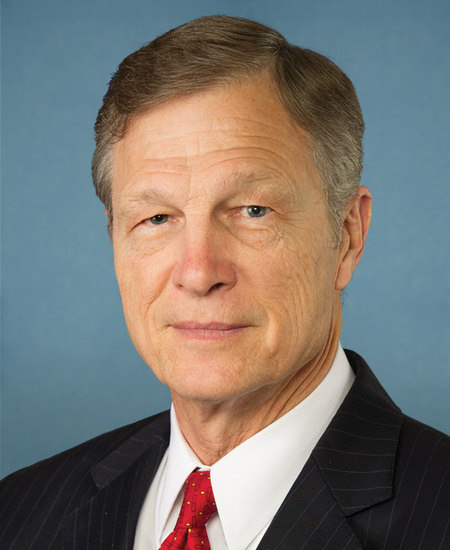
Rep. Brian Babin
Sponsored bills
No Foreign Adversaries Residing in our Communities Act or the No FARC Act This bill bars any alien who is a present or former member of the Revolutionary Armed Forces of Colombia (also known as FARC) from being admitted into the United States or receiving a visa. The President may waive this prohibition on a case-by-case basis only by certifying to Congress that the waiver is in the U.S. national interest.
Upholding the Law at Our Border Act This bill requires the Office of Inspector General of the Department of Homeland Security (DHS) to periodically investigate and report on certain issues until there have been fewer than 35,000 apprehensions at the southwest border for three consecutive months. When required, the reports must address certain issues, including (1) the vetting procedures applicable to aliens seeking entry into the United States who were apprehended along the southwest border, (2) the total number of individuals not lawfully present who have been processed and released into the United States, (3) the number of such individuals who have received parole, and (4) an audit of the parole applications. The office must submit such reports (and provide briefings on the reports) to the President, Congress, DHS, and the Department of Justice.
No More Free Ride Act This bill bars certain non-U.S. nationals ( aliens under federal law) from becoming a U.S. citizen or receiving any federal public benefits. Specifically, this prohibition shall apply to a non-U.S. national who (1) entered the United States unlawfully, and (2) received a payment as part of a settlement of a lawsuit for harm the individual sustained as a result of immigration enforcement.
Common Sense Standards for Visa Applicants Act This bill provides statutory authority for a Department of Homeland Security (DHS) final rule published August 14, 2019, that made it more likely that an alien will not qualify for lawful permanent resident status due to their potential future use of public benefits. (DHS rescinded the rule in 2021.)
Public Safety Enhancement Act of 2021 This bill reauthorizes through FY2026 the Community Oriented Policing Services (COPS) grant program. Additionally, the bill requires a certain amount of funds made available under the COPS grant program to be used for the hiring and retention of law enforcement officers.
Recognizing the Unborn Act of 2021 This bill replaces the term fetus with unborn child throughout federal law, including provisions relating to abortions and medical research. The bill also creates a default statutory definition for unborn child : a child in utero, or a member of the species Homo sapiens , at any stage of development, who is carried in the womb.
Illegal Immigrant Payoff Prohibition Act This bill prohibits the payment of a settlement to an alien for a civil action brought against the United States in connection with the alien's inadmissibility to, or unlawful presence in, the United States.
Protect Communities from a Porous Border Act of 2021 This bill requires the Department of Homeland Security (DHS) to notify a state before placing an alien in that state and gives the state final authority to prohibit such a placement. At least 10 business days before placing (e.g., detaining or housing) such an individual in a state, DHS must provide certain information to that state, including (1) the individual's biographic and biometric information, including DNA; and (2) a certification that the biometric and biographic information has been checked in various law enforcement and counterterrorism databases. No federal court shall have jurisdiction to review (1) the requirements and procedures established under this bill, or (2) a decision by a state to prohibit the placement of such an individual in the state. The bill also prohibits any federal official from waiving any of the bill's requirements.
Better Enforcement of Grievous Offenses by unNaturalized Emigrants Act or the BE GONE Act This bill expands, for immigration purposes, the definition of aggravated felony to include sexual abuse, sexual assault, and aggravated sexual violence. (Under current law, a conviction for an aggravated felony is grounds for deportation and may bar an individual from other immigration-related benefits.)