

Midland Over Moscow Act This bill imposes sanctions related to the Nord Stream 2 pipeline and revises the expedited approval process for natural gas imports and exports in or out of the United States. (Nord Stream 2 is a pipeline constructed to increase the export of natural gas from Russia to Europe.) Within 10 days of this bill's enactment, the President must impose sanctions on any entity responsible for the planning, construction, maintenance, financing, or operation of Nord Stream 2, as well as any corporate officer or principal shareholder with a controlling interest in such an entity. The bill also revokes the President's authority to waive certain sanctions related to Nord Stream 2 and TurkStream, another Russian natural gas pipeline project. The bill also allows any nation, with specified exclusions, to use an expedited process to receive approval to import or export natural gas in or out of the United States (currently only a nation with a free trade agreement with the United States may use the expedited process). Specifically, the bill excludes any nation (1) subject to U.S.-imposed sanctions or trade restrictions, or (2) excluded by the President or Congress for national security reasons.
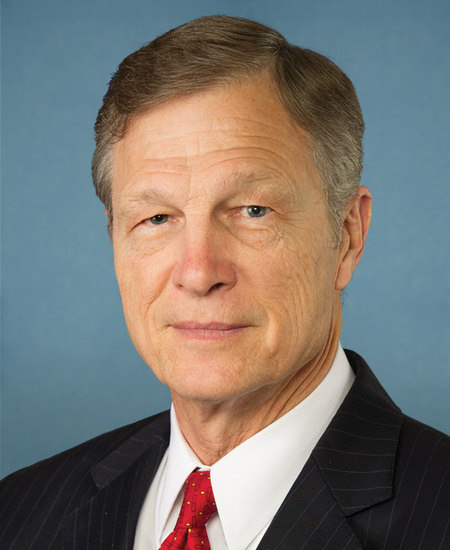
Rep. Brian Babin
Sponsored bills
Sanctioning Tyrannical and Oppressive People within the Chinese Communist Party Act or the STOP CCP Act This bill imposes visa- and property-blocking sanctions on any person who is or was a member of any National Communist Party Congress of China, as well as any adult family member of such a person. The President may waive the sanctions for renewable periods of 30 days by certifying to Congress that China's government and the Chinese Communist Party have ceased (1) any acts of genocide against the Uyghur Muslim population; (2) all threats, military exercises, and aggression toward Taiwan; (3) undermining the autonomy of Hong Kong; and (4) any efforts to steal the intellectual property of U.S. persons. The certification must also be publicly available on a federal government website.
Border Czar Accountability Act of 2022 This bill prohibits any Cabinet member appointed by the President to lead efforts related to immigration or securing the U.S.-Mexico border from expending any federal funds if that Cabinet member fails to meet certain reporting requirements. The bill also requires that Cabinet member to visit the U.S.-Mexico border at least once every 60 days. Within 30 days of this bill's enactment, the Cabinet member must report to Congress and the President on policy changes that went into effect between January 20, 2021, and this bill's enactment date, including the (1) effect of such policy changes on law enforcement and Department of Homeland Security personnel, and (2) difference in funds expended in FY2021 compared to FY2020 to address the issue of non-U.S. nationals ( aliens in federal law) unlawfully present in the United States. If the report is not submitted, the Cabinet member may not obligate or expend any federal funds until the report has been delivered. After each visit to the U.S.-Mexico border required by this bill, the Cabinet member must report to the President and Congress on (1) issues observed or informed of during the visit, and (2) suggestions for improving the security and situation at the border.
Guaranteeing Enemy Nations Omit from Criminalizing, Impeding, or Detaining Exceptional Global Athletes Magnifying Exploitation during Sporting events Act or the GENOCIDE GAMES Act This bill requires the President to impose sanctions on certain foreign individuals who materially supported a gross violation of internationally recognized human rights against a 2022 Olympic and Paralympic Winter Games participant. Upon receiving credible evidence of such a human rights violation, the President must impose property- and visa-blocking sanctions on any foreign individual associated with the International Olympic Committee (IOC), including the president of the IOC, who the President determines materially supported the violation of human rights, including by providing to participants false, reckless, or negligent assurances of human rights assurances by the government of China. This bill's requirements shall terminate on March 13, 2023.
Immigration Transparency and Transit Notification Act of 2022 This bill requires notifications to certain officials before an unaccompanied alien child or a non-U.S. national ( alien under federal law) without lawful immigration status may be placed in or transported to a state or local jurisdiction. The bill also authorizes the office of the governor of the relevant state to prohibit the placement or transportation. At least seven calendar days before taking such an action, the Department of Homeland Security (DHS) or the Department of Health and Human Services (HHS) must notify (1) the relevant state governor's office, (2) the state attorney general's office, (3) the county or municipal government, (4) local law enforcement, and (5) federal and state legislators representing the relevant jurisdiction. The action may not take place if the state governor's office objects no later than three calendar days after receiving the notification. This authority to object shall not apply if the action is to place an unaccompanied child with, or transport the child to, a family member.
Protecting Federal Funds from Human Trafficking and Smuggling Act of 2022 This bill prohibits a nonprofit entity from receiving federal funds unless the entity certifies compliance with certain federal laws (e.g., laws with respect to human trafficking and smuggling). It also establishes reporting requirements, including that the Government Accountability Office must annually report to Congress on those nonprofit entities that do not certify their compliance with these laws.
Securing Enfranchisement and the Rights of Voters regardless of Inoculation Status Act or the SERVIS Act This bill prohibits requiring voters to present vaccine passports or other information regarding their COVID-19 vaccination status, and also restricts masking requirements, for voting in federal elections. Specifically, the bill makes it unlawful for any state or political subdivision to require a voter to present a vaccine passport or other information regarding the voter's COVID-19 vaccination status. Further, a state or political subdivision may require a voter to wear a mask in order to enter a polling location only under certain circumstances. In particular, the state or political subdivision must (1) make masks readily available and at no cost to the voter and to an individual who accompanies the voter, and (2) provide reasonable accommodation from such masking requirement to an individual with a disability.
Stopping Traffickers and Their Accomplices Act of 2022 This bill requires an abortion provider to notify the National Human Trafficking Hotline if the provider has a reasonable suspicion that the patient is a victim of trafficking. It also requires each abortion provider to complete annual training on how to identify and respond appropriately to individuals who are at risk of or who have experienced trafficking. The bill establishes penalties for violations.
Prenatal Nondiscrimination Act of 2022 or the PRENDA Act of 2022 This bill creates new federal crimes related to the performance of sex-selection abortions (i.e., abortions based on the sex or gender of an unborn child). It subjects a violator to criminal penalties—a fine, a prison term of up to five years, or both. It also authorizes civil remedies, including damages and injunctive relief. A woman who undergoes a sex-selection abortion may not be prosecuted or held civilly liable.
Putin Accountability Act This bill imposes sanctions pertaining to Russia and addresses related issues. The President must impose sanctions, with some exceptions, on individuals and entities that knowingly and directly provide specialized financial messaging services to Russia's central bank (or enables access to such services); entities responsible for constructing, financing, or operating Nord Stream 2 (a pipeline constructed to increase Russian natural gas exports) and the corporate officers and controlling shareholders of such entities; individuals and entities in Russia involved in kleptocracy, Russian government activities to subvert U.S. democratic institutions and interests, or Russian government disinformation campaigns against the United States; and entities that are Russian state development corporations, as well as any officials of such an entity. The President must impose property-blocking sanctions on such individuals and entities and also visa-blocking sanctions on the individuals. The President must also (1) issue regulations to prohibit U.S. individuals and entities from dealing in Russian sovereign debt; and (2) issue a determination as to whether certain specified Russian individuals meet the criteria to be subject to sanctions under various authorities, including this bill. The Department of State must (1) designate Russia a state sponsor of terrorism, and (2) report to Congress a determination of whether Russia-affiliated armed entities in the Donbas region of Ukraine meet the criteria to be designated as foreign terrorist organizations. The bill prohibits expending funds to engage with Russia's government on cyber issues or arms control negotiations until certain conditions have been met.