

Maddy summaryThe Life.Gov Act (HR 5406) requires the U.S. Department of Health and Human Services to create a federal website called life.gov within one year of enactment. The website will provide pregnant and postpartum women with locally tailored resources - such as health services, financial assistance, and mental health support - via zip code searches, multilingual access, and user feedback tools. States must submit resource recommendations meeting strict criteria (e.g., no abortion providers, 3+ years of service), and the website cannot list "prohibited entities" (defined as abortion providers or supporters). The Secretary must report to Congress within 180 days on website usage, user feedback, and gaps in resources, using existing HHS funding.
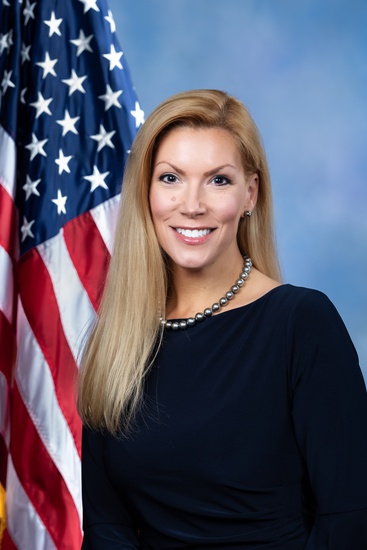
Rep. Beth Van Duyne
Sponsored bills
Safeguarding Endangered Children, Unaccompanied and at Risk of Exploitation Act of 2023 or SECURE Act of 2023 This bill requires regular reports to Congress detailing the status of unaccompanied non-U.S. national ( alien under federal law) children. The bill also rescinds certain funding for the agencies responsible for the report for each day that a report is late. Specifically, the Department of Health and Human Services (HHS), the Department of Homeland Security (DHS), and the Federal Bureau of Investigation must jointly report to Congress every 60 days on such children that have been in the custody of the Office of Refugee Resettlement (ORR) since January 1, 2021, and have been released to a parent, family member, or sponsor within the United States. This report must provide each child’s age, sex, location, and detail the child’s health and well-being. Additionally, the report must provide specified information about adults living in the child’s home, such as whether adults in the home have been subject to a fingerprint-based check of national crime information databases. The report must also specify the number of children that ORR has tried to contact without success on at least three separate attempts. The report must be provided for up to three years or until all of the specified children have been accounted for. The bill also rescinds certain funding from HHS, DHS, and the FBI for each day that a report is late. Up to $10 million may be rescinded from each agency for each fiscal year.
Maddy summaryHR 3995, the Small Business Regulatory Reduction Act, requires the Small Business Administration (SBA) to ensure that regulatory costs imposed on small businesses by the SBA itself remain at or below zero each fiscal year. This means the SBA must offset any new or modified regulations with cost-saving measures for small businesses. The bill also mandates the SBA to submit annual reports to Congress detailing rules issued by other federal agencies that impact small businesses, including rules from the previous and following fiscal years. These provisions directly affect small business concerns by limiting their regulatory burden and increasing transparency about agency rules affecting them.
Maddy summaryHR 5285, the Staff Safety Act, amends federal law to clarify that congressional staff (including Members' employees and committee staff) are exempt from Capitol Grounds firearm regulations under the same constitutional protections as Members of Congress. The bill requires the Capitol Police Board to revise its regulations within 90 days to align with this exemption, removing current restrictions preventing staff from carrying firearms on Capitol grounds. This directly affects congressional staff who are currently barred from carrying firearms under existing Capitol Police regulations. The bill bases its changes on Supreme Court rulings (Heller and Bruen) that affirm the Second Amendment applies to public carry outside the home. It focuses on legal clarification, not new safety measures or policy changes for staff.
This bill increases from 20% to 25% the value of the total assets represented by securities of one or more taxable Real Estate Investment Trust (REIT) subsidiaries (thus restoring the REIT subsidiary asset test).
Maddy summaryThis bill requires the Bureau of Prisons to develop and implement a strategy for scanning all incoming mail at federal prisons to stop fentanyl and other synthetic drugs from entering facilities. It directs the Bureau to evaluate existing scanning technology within 180 days and submit a detailed plan to Congress within 90 days, including how to provide digital copies of mail to inmates within 24 hours and physical copies within 30 days (if safe). The strategy must achieve 100% mail scanning capacity at all federal prisons, prioritize high-security facilities, and include a budget proposal for fiscal years 2024-2026. This directly affects federal prisons, inmates, and Bureau employees by changing mail processing procedures to enhance safety and reduce staffing burdens from manual mail checks.
Maddy summaryThis bill allows funeral trusts and cemetery perpetual care funds to deduct investment advisory costs during the period when most miscellaneous itemized deductions are suspended (2024-2029). It specifically creates a temporary deduction for these organizations' investment advisory expenses, which would otherwise be disallowed. Additionally, it sets a $25 per grave limit for cemetery maintenance distributions (adjusted annually for inflation starting in 2025) to ensure funds are used for grave upkeep. These changes apply to taxable years beginning after December 31, 2023.
Maddy summaryThe ACES Act directs the Department of Veterans Affairs to fund a National Academies study examining cancer rates among active-duty military aircrew members (including pilots and navigators in fixed-wing aircraft). The study will identify potential military-related exposures linked to specific cancers - such as lung, prostate, melanoma, and others - and analyze existing VA, Defense, and CDC health data. It requires the National Academies to report findings to Congress on cancer prevalence and mortality among these service members. This bill focuses on gathering scientific data to inform future policy, not on immediate benefits or changes.
Maddy summaryThis bill approves and implements a new trade agreement between the United States and Taiwan, negotiated by the American Institute in Taiwan and Taiwan's Taipei Economic and Cultural Representative Office. The agreement aims to strengthen economic ties by addressing areas like supply chain security, investment screening, health, science, technology, and the digital economy. The bill establishes requirements for the President to consult with Congress before implementation, submit reports on how the agreement benefits US workers and businesses, and provide transparency about future trade negotiations. It also clarifies that the agreement doesn't override US or state laws and requires any future agreements to follow a similar approval process with congressional review.
Maddy summaryHR 5084 designates the U.S. Postal Service facility at 1106 Main Street in Bastrop, Texas, as the "Sergeant Major Billy D. Waugh Post Office." This bill updates all official federal references - including laws, maps, and documents - to use the new name for the location. It directly affects the Bastrop post office and federal records referencing it, without altering postal services or policies. The change is purely ceremonial and procedural, honoring Sergeant Major Billy D. Waugh through the facility's name.