

Drone Research and Innovation for Law Enforcement Act of 2023 This bill directs the Federal Aviation Administration (FAA) to study, and create an approval process for, nonlethal de-escalation unmanned aircraft (i.e., drones). Under the bill, nonlethal de-escalation unmanned aircraft means an unmanned aircraft that is equipped with one or more nonlethal weapons or devices and is used by law enforcement personnel in scenarios (1) that present significant risk to human life, and (2) in which the suspected criminal is in a position to potentially escalate the situation and expose human life to a high level of risk. Specifically, the FAA must initiate a pilot research program to study the potential use of nonlethal de-escalation unmanned aircraft by law enforcement agencies. As part of the study, the FAA must enter into interagency agreements with various federal, state, and local agencies. The FAA must submit a report on the results of the research program to Congress. The report must include a plan outlining a proposed FAA application process for law enforcement to seek permission to operate nonlethal de-escalation unmanned aircraft. Within 90 days of submitting the report, the FAA must initiate rulemaking to create a process through which the FAA may provide approval to operate these unmanned aircraft.
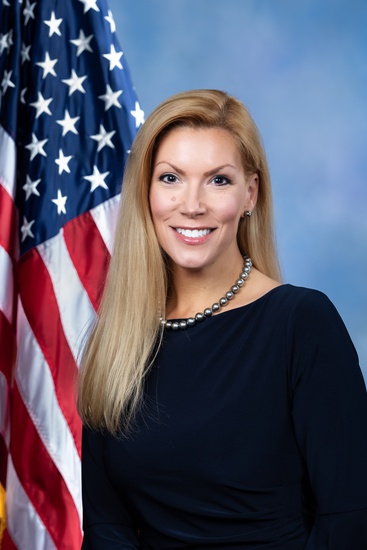
Rep. Beth Van Duyne
Sponsored bills
This bill prohibits the Small Business Administration from directly making a loan under the 7(a) Program, which authorizes loans and loan guaranties to small businesses that meet certain requirements.
Maddy summaryThis bill updates the Opportunity Zones program by requiring designated census tracts to meet specific poverty and income criteria, with a process to replace tracts that no longer qualify. It establishes mandatory annual reporting for Opportunity Zone funds and investors, collecting data on investments, employment, and community impact. The bill extends the tax deferral period for capital gains invested in Opportunity Zones from 2026 to 2028. Additionally, it creates a $1 billion State and Community Dynamism Fund to support investments in underserved communities, with specific requirements for how these funds can be used for affordable housing, small businesses, and community capacity building.
Maddy summaryThis bill amends the Internal Revenue Code to change how certain insurance companies account for debt instruments (like notes or bonds). It excludes these debts from being treated as "capital assets" for tax purposes, meaning gains or losses from selling them won't be taxed as capital gains. It applies only to specific insurance companies, excluding those with certain tax elections (like Section 831(b) companies) or foreign entities. The change affects tax calculations for these insurers but does not create new family-focused policies, despite the bill's misleading title. The amendment applies to dispositions after enactment, with transition rules for existing losses.
Maddy summaryHR 5561, the Protecting the Right to Keep and Bear Arms Act of 2023, prevents federal agencies from using emergency declarations to implement gun control measures. It specifically prohibits the President from declaring a national emergency under the National Emergencies Act or the Robert T. Stafford Act for gun control purposes, and stops the Health and Human Services Secretary from declaring a public health emergency under the Public Health Service Act for the same reason. The bill also amends the Stafford Act to explicitly prohibit any emergency-related restrictions on possessing, manufacturing, selling, or transferring firearms, ammunition, ammunition feeding devices, or firearm accessories. This directly affects how federal agencies can respond during emergencies without violating the Second Amendment. The law aims to limit executive actions during emergencies that could restrict gun rights.
Maddy summaryHRES 684 is a symbolic congressional resolution passed by the U.S. House of Representatives on September 14, 2023, condemning New Mexico Governor Michelle Lujan Grisham's emergency order that temporarily suspended open and concealed carry firearm rights for 30 days. The resolution asserts the order violated the Second Amendment, citing Supreme Court precedents (Heller, McDonald, Bruen) and noting a federal judge had already blocked the order's firearm restrictions. It does not change any laws or impose legal consequences - it is solely a formal expression of disapproval from Congress. The resolution directly addresses the Governor's actions but has no effect on New Mexico's laws or citizens' rights.
Maddy summaryThis bill amends U.S. immigration law to deny asylum to individuals who were members of a Communist or totalitarian party (like the Chinese Communist Party). It specifically targets asylum seekers with such party ties, barring them from asylum unless they meet strict exceptions. The key exceptions require applicants to publicly renounce their party membership and prove their affiliation was involuntary (e.g., forced as a minor or for basic survival), or to provide significant national security information in exchange for a waiver. The policy directly affects asylum applicants with documented ties to Communist or totalitarian parties.
Maddy summaryHR 1435, the Preserving Choice in Vehicle Purchases Act, amends the Clean Air Act to restrict states from implementing vehicle emissions rules that limit the sale or use of new gasoline-powered cars. It directly affects states with stricter emissions standards (like California) by adding a new definition that blocks state rules "directly or indirectly" limiting internal combustion engine vehicles as defined in federal regulations as of January 1, 2023. The bill requires the EPA to revoke existing state emissions waivers granted between January 2022 and the bill’s enactment if they don’t comply with this new definition. This creates a concrete federal standard preventing states from advancing policies that could reduce demand for conventional vehicles.
Maddy summaryHR 5465, the Congressional Access to Bureaucratic Offices Act (CABO Act), requires federal agency heads to allow Members of Congress and their staff access to agency headquarters buildings during regular business hours. It mandates that access be granted upon presentation of valid congressional identification (for Members) or a staff badge while accompanied by the employing Member (for staff), with exceptions for areas requiring secret-level security clearance. The bill also ensures this access applies during declared emergencies (like national emergencies under the National Emergencies Act or public health emergencies), without imposing additional costs by using existing agency funds. This directly affects how federal agencies manage physical access for congressional personnel.
Maddy summaryHR 5495, the Political BIAS Emails Act of 2023, prohibits email providers from automatically labeling political campaign emails as spam without a user’s explicit action. It requires email providers to publish quarterly transparency reports showing spam rates for Republican and Democratic campaign emails separately, including how often algorithms flagged them without user input. Political campaigns can request detailed reports about their own email delivery rates and best practices for reaching inboxes, with limits on how frequently they can request this data. The Federal Trade Commission will enforce these rules as unfair or deceptive practices under existing law. The bill directly affects major email services and political campaigns, aiming to increase transparency in how political communications are filtered.