

Maddy summaryHR 5073, titled the "Promoting Domestic Energy Production Act," is a tax code amendment affecting oil and gas companies. It changes how businesses calculate adjusted financial statement income by removing specific deductions related to intangible drilling and development costs from their financial reports. The bill requires companies to disregard depreciation and depletion expenses taken into account on their financial statements for these costs when computing taxable income. This applies to tax years beginning after December 31, 2022, directly impacting oil and gas producers who use these accounting methods. The bill does not create new energy policies but alters tax accounting rules for the industry.
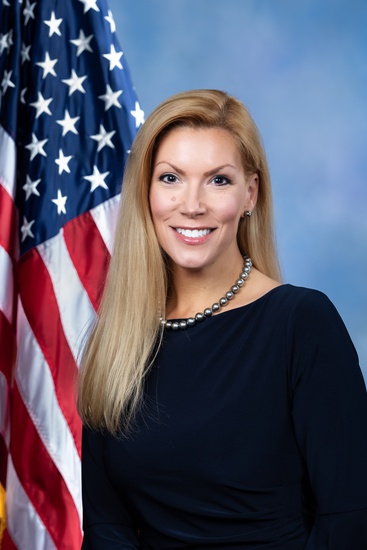
Rep. Beth Van Duyne
Sponsored bills
Maddy summaryHCONRES 57 is a non-binding concurrent resolution expressing Congress's support for Israel. It states three key points: (1) that Israel is not a racist or apartheid state, (2) that Congress rejects antisemitism and xenophobia, and (3) that the U.S. will remain a steadfast supporter of Israel. This resolution does not create new laws or alter policies - it simply records the expressed sentiment of Congress. It directly affects the U.S. government's public stance on Israel, with no legal effect on citizens or other entities.
This resolution condemns Iran for the 1988 massacre of political prisoners. It also urges the Biden Administration and U.S. allies to publicly condemn the massacre and to pressure Iran to provide information to the families of the victims.
Build the Wall and Fight Fentanyl Act of 2023 This bill establishes accounts to fund the construction of physical barriers along the U.S. southern border and to provide grants to address fentanyl abuse. These accounts shall be funded from the sale of assets belonging to cartels that have been seized by the Drug Enforcement Administration, U.S. Immigration and Customs Enforcement, or U.S. Customs and Border Protection. The bill defines cartel as (1) an organization with operations in Mexico and the United States designated as a significant transnational criminal organization; (2) certain named organizations, such as the Sinaloa Cartel and the Juarez Cartel; and (3) other organizations as designated by the President.
Maddy summaryHR 3203, the Stop Chinese Fentanyl Act of 2023, expands U.S. sanctions to target Chinese entities and government officials involved in fentanyl trafficking. It redefines "foreign opioid trafficker" to specifically include Chinese government bodies (like the National Narcotics Control Commission) and officials who fail to prevent fentanyl trafficking or cooperate with U.S. efforts. The bill also extends the statute of limitations for enforcement from 5 to 10 years under key laws and requires annual presidential reports to Congress on sanctions effectiveness. These changes directly affect Chinese government agencies and officials responsible for regulating or failing to combat fentanyl-related activities.
Maddy summaryThis bill directs the U.S. Treasury to mint commemorative coins marking the Marine Corps' 250th anniversary in 2025. It authorizes three coin types: $5 gold coins (max 50,000), $1 silver coins (max 400,000), and half-dollar coins (max 750,000), with surcharges of $35, $10, and $5 respectively. The surcharge proceeds will fund the Marine Corps Heritage Center's educational programs, with no net cost to taxpayers as the Treasury must recover all minting costs through the surcharges. The coins can only be issued during 2025, and the Treasury must ensure all costs are covered before distributing funds to the Heritage Foundation.
Maddy summaryHR 4860, the PROTECT the Second Amendment Act, prevents landlords in specific federally assisted housing from banning or restricting residents' lawful possession of firearms in their private units or during travel between units and common areas. It directly affects tenants in housing funded by HUD or USDA programs, including public housing, Section 8 vouchers, and housing for veterans or people with disabilities. The bill prohibits landlords from imposing firearm bans or additional conditions on residents who lawfully carry firearms within their dwelling units or while moving through common areas to reach their units. This changes current policies in these housing programs by explicitly allowing firearm possession where state law permits.
Stop China’s Continuous Purchase of Land Act or the Stop CCP Land Act This bill requires states that receive certain federal program funds to restrict the purchase of agricultural land by a covered foreign country. Covered foreign country means a country included in Department of State regulations as subject to certain prohibitions (i.e., Belarus, Burma, China, Cuba, Iran, North Korea, Syria, and Venezuela), as well as Russia. Specifically, a state may not receive funds for certain programs funded by the Inflation Reduction Act of 2022 (e.g., certain energy efficiency and conservation programs) unless that state has a law prohibiting a covered foreign country (or persons acting on behalf of the country) from purchasing agricultural land in the state. Further, a state must require that a person from a covered foreign country that holds agricultural land in the state prior to the state law's enactment submit an annual report to the state on the agricultural holdings. The Department of Agriculture must submit a report to Congress on how the Agricultural Foreign Investment Disclosure Act of 1978 should be updated to ensure accurate documentation and monitoring of foreign investment in agricultural land. The Government Accountability Office must submit a report to Congress that includes (1) an assessment of this bill's impact on national security, and (2) any measures that can be taken to better secure U.S. real estate from foreign manipulation.
Stopping Teachers Unions from Damaging Education Needs Today Act or the STUDENT Act This bill revises the federal charter for the National Education Association. The bill specifies that the corporation and its state and local affiliates may only accept payment of membership dues or fees from a state or local government employee if the employee (1) has been notified of the employee's right under the First Amendment to refrain from membership and payment of associated dues or fees, (2) has clearly and affirmatively consented to membership and payment of associated dues or fees, and (3) has authorized the transmittal of membership dues or fees without the use of payroll deduction. Further, the corporation and its state or local affiliates must process and honor cancellation requests for membership or payment of dues as soon as practicable following receipt of the request. The bill also outlines requirements for the corporation, such as prohibiting the corporation or its directors or officers from contributing to, supporting, or participating in political activities; requiring each officer of the corporation to be a U.S. citizen; requiring the corporation to submit annual reports to Congress; prohibiting the corporation and its affiliates from requiring staff, officers, affiliates, or members to affirm, adopt, or adhere to certain principles related to race or sex; and prohibiting the corporation and its affiliates from calling or participating in a strike, work stoppage, or slowdown affecting a state or local government. The bill repeals the corporation's exemption from District of Columbia property taxes.
Maddy summaryHR 4695, the Unfair Tax Prevention Act, amends the tax code to create special rules for certain foreign-controlled companies operating under specific foreign tax regimes. It directly affects multinational entities controlled by foreign owners that face "extraterritorial taxes" (taxes based on income connections through ownership chains, not direct ownership). Key provisions include treating these entities as "applicable taxpayers" for base erosion rules, changing a key deadline to the bill's enactment date, and requiring 50% of their cost of goods sold to be counted as a tax benefit. This targets tax avoidance strategies used by some foreign-owned businesses in jurisdictions with complex cross-border tax structures. The changes apply to taxable years beginning after the bill's enactment.