

Maddy summaryThis bill requires all U.S. flags displayed on federal property or purchased by federal agencies to be 100% made in the United States, meaning all materials and manufacturing must occur domestically. It directly affects federal agencies (including military departments, legislative/judicial branches, and U.S.-owned corporations) and their procurement of flags for display on government property. Key provisions include a 90-day implementation for new flag purchases and a 2-year phase-in for display requirements, with a separate mandate for the FTC to study and report on country-of-origin labeling enforcement for flags within one year. The bill does not apply to private entities or flags displayed off federal property.
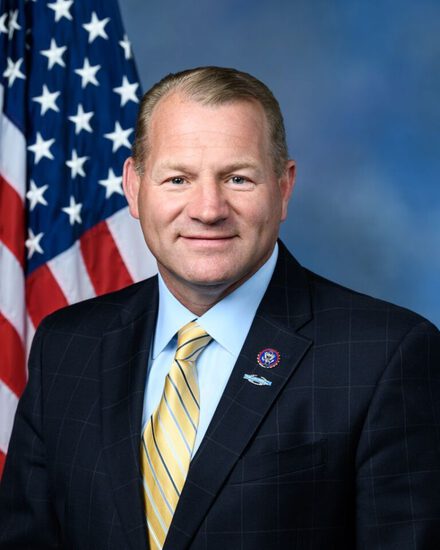
Rep. Troy E. Nehls
Sponsored bills
Pre-Pilot Pathway Act This bill directs the Department of Transportation (DOT) to establish an apprenticeship program with flight schools in order to establish a commercial pilot pipeline; DOT must issue any necessary regulations to implement the program within one year of the bill's enactment. Each flight school participating in the program may select up to eight applicants per academic year to serve as apprentices. DOT must take appropriate actions to develop methods to incentivize pilots, including retired pilots, to become flight school instructors. This includes developing pathway programs for pilots to gain initial qualification or concurrent qualification as certified flight instructors.
Maddy summaryThis bill (HR 4145) requires U.S. colleges and universities to disclose foreign gifts or contracts meeting specific thresholds to the Department of Education. Institutions must report gifts/contracts of $250,000 or more from foreign sources not tied to "covered nations" (as defined in 10 U.S.C. §4872(d)(2)), or *any* amount from covered nations. Within 10 days of receiving such reports, the Education Secretary must forward them to the FBI and National Intelligence Director. The law aims to increase transparency around foreign funding in higher education by mandating these disclosures and automatic intelligence sharing.
Freights First Act This bill eliminates Amtrak's preference over freight transportation in using a rail line, junction, or crossing if such rail line, junction, or crossing is located within 50 miles of a port or rail yard. Currently, Amtrak's priority status does not apply if there is an emergency.
Prioritizing the Removal of Migrants Act This bill directs the Department of Homeland Security to prioritize immigration enforcement actions relating to certain groups of non-U.S. nationals (aliens under federal law), including those who (1) were apprehended in the United States after entering unlawfully after November 1, 2020, (2) have been convicted or charged with any criminal offense, (3) are deportable or removable on grounds related to crime or security, or (4) have abused any public benefits program.
Maddy summaryHR 3919, the Asylum Claims Improvement Act of 2023, prohibits immigration officials from considering an applicant's mental health when reviewing asylum claims or requests for withholding of removal. It amends Sections 208(b) (asylum) and 241(b)(3) (withholding of removal) of the Immigration and Nationality Act to explicitly state that mental health status cannot be a factor in these determinations. This change directly affects immigrants seeking protection in the U.S. who apply for asylum or withholding of removal. The bill makes a specific policy change by removing mental health as a consideration in these immigration decisions.
Maddy summaryHR 3869, the Trucker Bathroom Access Act, requires certain businesses (like warehouses, distribution centers, and shipping/receiving facilities) to allow commercial truck drivers access to their restrooms when delivering or waiting to transport goods. It specifically applies to drivers regulated by the Department of Transportation and excludes small businesses (under 800 sq ft) with employee-only restrooms. The bill mandates that businesses provide access without requiring physical restroom modifications, and for port terminals, requires operators to provide sufficient restrooms with parking access for large cargo trucks (over 33,000 lbs) while avoiding obvious safety risks.
Maddy summaryThe TRACE Act requires the National Missing and Unidentified Persons System (NamUs) to add a data field tracking whether a missing person’s last known location was on federal land (e.g., national parks, military bases). It mandates an annual report to Congress starting in 2025, detailing how many cases involved federal land locations. The bill specifically defines "federal land" as areas under the jurisdiction of the Agriculture, Interior, or Defense departments (excluding tribal trust land), focusing on locations like national forests or Army Corps projects. This policy change directly affects cases involving missing persons near federal properties by improving data collection and transparency for federal agencies.
Short Line Railroad Relief Act This bill authorizes the Department of Transportation to provide emergency grants or enter into contracts and other agreements for capital projects for short line railroads. A project must protect, repair, reconstruct, or replace short line railroad equipment and facilities in danger of suffering catastrophic damage, or that have suffered catastrophic damage, as a result of an emergency. An emergency includes a natural disaster affecting a wide area or a catastrophic failure from any external cause that results in the declaration of an emergency or a major disaster.
Maddy summaryHR 3212, the "Shall Not Be Infringed Act of 2023," repeals or prevents funding for numerous gun control measures across federal agencies. The bill eliminates funding for Bureau of Alcohol, Tobacco, Firearms and Explosives (ATF) modernization efforts, blocks Department of Veterans Affairs programs related to firearm storage, and prohibits CDC and NIH from funding research on firearm injury prevention. It also repeals specific provisions from the Bipartisan Safer Communities Act related to background checks and domestic violence restrictions, and prevents the use of federal funds for red flag laws or gun registries. The bill directly affects federal agencies and programs that implement gun control measures, including ATF, VA, HHS, CDC, NIH, and the Department of Education.